The Art of Korean Banchan: Small Side Dishes Explained
What is Banchan?
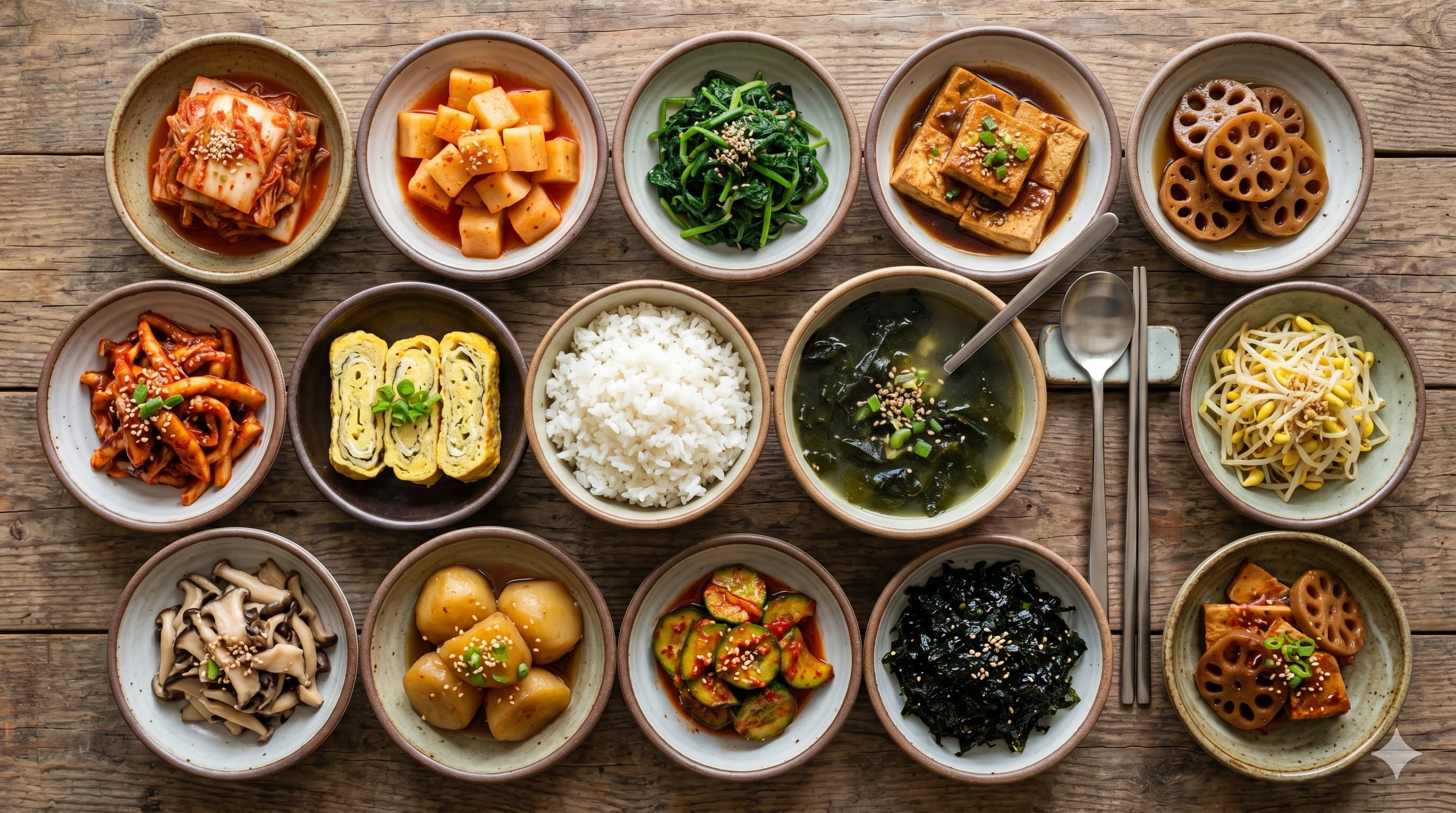
Walk into any Korean restaurant and before you have even placed your order, small dishes begin arriving at the table: kimchi in its vivid red, translucent soy-glazed potatoes, spinach glistening with sesame oil, crispy dried seaweed, pickled radish in shades of yellow. These are banchan (반찬), the side dishes that are the soul of the Korean meal. Unlike Western appetizers that precede the main course, banchan are served simultaneously with rice and soup, forming an integrated whole where no single element dominates.
The word banchan literally means "side dishes to accompany rice." In Korean food philosophy, rice is the main dish, and everything else — from a simple stew to the most elaborate banchan spread — exists to complement it. This is a fundamentally different approach from Western dining, where meat or protein is the centerpiece. In the Korean system, balance, variety, and harmony across flavors and textures define a good meal.
The Philosophy of Balance
Korean banchan culture is deeply rooted in the principle of obangsaek (오방색), the five directional colors: white, black, green (or blue), red, and yellow. A properly composed banchan spread includes dishes representing each color, which in turn corresponds to the five elements, five organs, and five flavors in traditional Korean thought. White foods (radish, rice, tofu) nourish the lungs. Black foods (seaweed, black sesame, black beans) support the kidneys. Green foods (spinach, cucumbers, perilla leaves) benefit the liver. Red foods (kimchi, gochugaru, red peppers) strengthen the heart. Yellow foods (pumpkin, soybeans, egg replacements) tonify the spleen and stomach.
This color-based approach to meal composition is not merely aesthetic. The Donguibogam correlates these categories with specific nutritional and therapeutic functions. By eating across the color spectrum at every meal, Korean diners naturally consume a wide range of phytonutrients, antioxidants, vitamins, and minerals. It is an ancient system that aligns remarkably well with modern nutritional science's emphasis on "eating the rainbow."
Common Types of Banchan
Banchan can be categorized into several families, each with its own preparation method and character:
- Namul (나물): Seasoned vegetable dishes, either blanched or stir-fried, dressed with sesame oil, soy sauce, and sometimes garlic. Examples include sigumchi namul (spinach), kongnamul (soybean sprouts), and gosari namul (fernbrake).
- Kimchi (김치): Fermented vegetables, most famously napa cabbage kimchi (baechu kimchi), but encompassing hundreds of regional varieties made with radish, cucumber, perilla leaves, and more.
- Jangajji (장아찌): Vegetables pickled in soy sauce, doenjang, or gochujang. These keep for months and develop deep, complex flavors over time. Common versions use garlic scapes, perilla leaves, or green chili peppers.
- Jorim (조림): Dishes braised or simmered in a seasoned sauce, such as gamja jorim (soy-glazed potatoes) or dubu jorim (braised tofu).
- Bokkeum (볶음): Stir-fried dishes, like myeolchi bokkeum (stir-fried anchovies, replaced with nuts or mushrooms in vegan versions) or eomuk bokkeum (fish cake stir-fry, made vegan with konjac or tofu).
- Jeon (전): Pan-fried fritters or pancakes made with vegetables, tofu, or mushrooms in a light batter.
- Jeotgal/Jeol-im: Traditional fermented seafood side dishes that are replaced in vegan cooking with fermented vegetable alternatives or seaweed-based preparations.
Temple Banchan: Simplicity as Art
In Korean Buddhist temples, banchan takes on an even more refined character. Without the five pungent vegetables (garlic, onion, scallion, chives, leeks) and without any animal products, temple banchan relies on the pure flavors of seasonal vegetables, wild greens, mushrooms, and fermented pastes. The result is often more subtle and nuanced than secular Korean cooking. Temple cooks use perilla seeds, ginger, and mountain herbs to build complexity where garlic and onion would normally appear.
A typical temple meal might include four to six banchan: a seasonal namul, a simple kimchi made without fish sauce or garlic, a soy-braised root vegetable, a wild green prepared with perilla seed powder, and a piece of seasoned tofu. Each dish is prepared with meditative attention and served in modest portions, encouraging the diner to taste mindfully rather than eat to excess.
Building a Vegan Banchan Spread at Home
Creating an authentic banchan spread at home is one of the most rewarding aspects of Korean vegan cooking. Start with three to four dishes for a weeknight meal. Aim for variety in color, texture, and flavor. A good starter combination might include: one namul (blanched spinach with sesame oil), one kimchi (vegan baechu kimchi or kkakdugi), one braised dish (soy-glazed potatoes or braised tofu), and one raw or pickled item (seasoned cucumber or pickled radish).
Many banchan are excellent for meal prep. Namul dishes keep for three to four days in the refrigerator. Kimchi and jangajji last for weeks or months. Braised dishes like gamja jorim can be made in batches. This make-ahead quality is one reason banchan culture is so sustainable — Korean home cooks typically prepare several banchan on the weekend and serve them throughout the week, adding freshly cooked rice and a different soup or stew each day.
Banchan Etiquette and Serving
Traditionally, banchan are served in small communal dishes and shared among everyone at the table. Each diner uses their own chopsticks to take small portions onto their rice bowl or plate. In Korean dining etiquette, it is polite to taste a little of everything, and banchan at restaurants are typically refilled for free upon request. At home, banchan are arranged symmetrically on the table, with rice and soup closest to each diner and the shared banchan in the center. This communal style of eating fosters connection and ensures that even modest ingredients become a generous, abundant meal.