Buddhist Mindful Eating: The Barugongyang Practice
What Is Barugongyang?
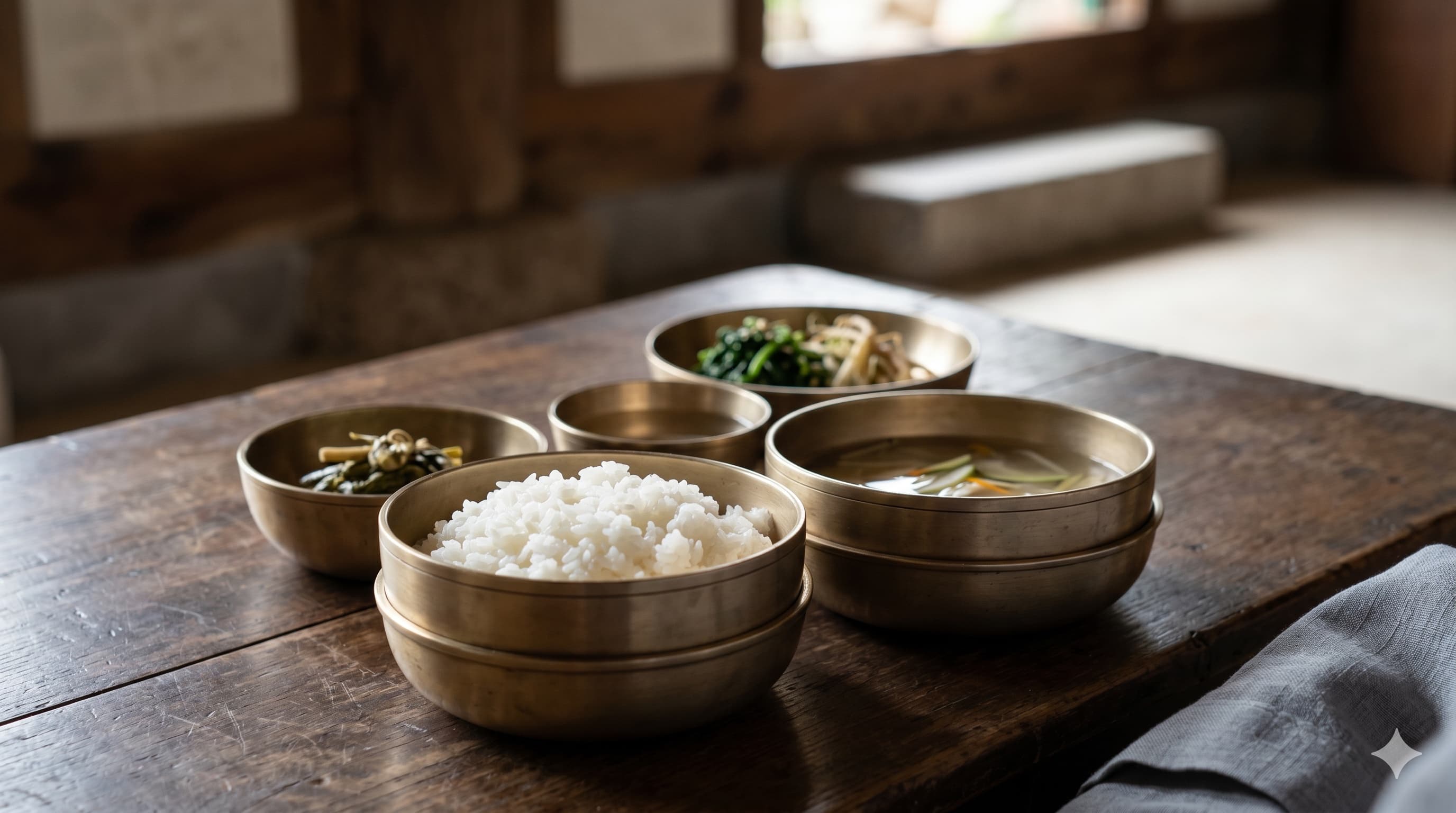
Barugongyang (발우공양) is the formal monastic meal ceremony practiced in Korean Buddhist temples. The name comes from baru (발우), the set of nested bowls used by monks, and gongyang (공양), meaning "offering" or "meal." Far from being simply a way to eat, barugongyang is a complete spiritual practice — a moving meditation that encompasses gratitude, mindfulness, communal harmony, and environmental responsibility. It is perhaps the most profound expression of the Korean Buddhist relationship with food.
During barugongyang, every action is deliberate. Every morsel is eaten with full attention. Not a single grain of rice is wasted. The practice strips eating down to its essence: sustaining the body to enable spiritual practice, while cultivating awareness, humility, and compassion with every bite.
The Four Bowls
Each monk or participant uses a set of four nesting bowls (baru), traditionally made of wood or lacquerware, wrapped in a cloth. The bowls are arranged in a specific order at the beginning of the meal:
- The first bowl (Buddha bowl): The largest, used for rice. This bowl represents the Buddha and is treated with particular reverence.
- The second bowl: Used for soup or stew.
- The third bowl: Used for water, which will later be used to clean all the bowls.
- The fourth bowl: The smallest, used for banchan (side dishes).
The unwrapping and arranging of the bowls is itself a choreographed ritual, performed in unison by all participants. The cloth is spread, the bowls are nested out, and the spoon and chopsticks are placed in their proper positions. This unhurried, precise preparation sets the tone for the mindful eating to follow.
The Five Contemplations
Before eating, the community recites the ogwangge (오관게), the Five Contemplations. These reflections frame every meal in the context of Buddhist ethics and gratitude:
- First: "Where has this food come from? I consider the effort that brought it to my table." This contemplation acknowledges the labor of farmers, cooks, and the earth itself.
- Second: "Am I worthy of receiving this food? I reflect on whether my practice and conduct merit this offering."
- Third: "I will guard my mind against greed, anger, and delusion — the three poisons that arise even during eating." This contemplation addresses the tendency to eat mindlessly or with attachment.
- Fourth: "I regard this food as medicine for the body, not as an object of pleasure." This does not mean food should not be enjoyed, but that its primary purpose is sustenance.
- Fifth: "I accept this food in order to continue on the path of practice and awakening."
The Silent Meal
Barugongyang is conducted in complete silence. Communication is handled through hand signals — raising a hand to indicate you want more rice, covering a bowl to indicate you have enough, nodding to acknowledge the server. This silence is not oppressive but liberating. Without conversation, the full sensory experience of eating emerges: the texture of rice against the tongue, the warmth of soup, the crunch of pickled radish, the lingering sweetness of well-cooked grains. Many people who experience barugongyang report that it is the first time they have truly tasted their food.
Eating in silence also prevents the common tendency to rush through meals while talking. Each mouthful is chewed thoroughly — traditionally thirty to fifty times — which aids digestion and allows the flavors to develop fully. The pace is slow, deliberate, and deeply calming.
Zero Waste: Cleaning the Bowls
Perhaps the most striking element of barugongyang is its conclusion. After eating, a piece of pickled radish (danmuji) is reserved specifically as a cleaning tool. The third bowl's water is poured into the first bowl, and the radish piece is used to wipe every surface clean. The cleaning water is transferred from bowl to bowl, each one scrubbed with the radish, until all four bowls are spotless. The final cleaning water — now containing every last particle of food — is drunk by the practitioner.
This practice of consuming the cleaning water has profound implications. It means that not a single grain of rice, not a drop of soup, not a trace of food is wasted. In an age of staggering food waste — the average American household wastes roughly thirty to forty percent of its food — barugongyang offers a radical counter-practice. It also eliminates the need for dish soap, reducing chemical pollution of waterways. The ecological and ethical dimensions of this simple act are remarkable.
Bringing Barugongyang Principles Home
You do not need to adopt the full monastic ritual to benefit from its principles. Here are ways to incorporate barugongyang mindfulness into your daily eating:
- Pause before eating: Take three breaths and silently acknowledge the effort and resources that produced your meal.
- Eat one meal in silence each week: Turn off screens, put away your phone, and focus entirely on the sensory experience of eating.
- Serve appropriate portions: Take only what you will eat. You can always have more, but wasted food cannot be reclaimed.
- Chew thoroughly: Aim for twenty to thirty chews per mouthful. Notice how flavors evolve as you chew.
- Clean your plate completely: Use bread, rice, or a piece of vegetable to gather every last bit of food. Treat nothing as disposable.
These simple practices, drawn from centuries of Korean Buddhist wisdom, can transform your relationship with food from mindless consumption to a daily practice of awareness and gratitude.