Dashi Without Bonito: Kombu, Shiitake, and Vegetable-Based Japanese Stock
Why Dashi Matters
Dashi is the foundation stock of Japanese cuisine, and its importance cannot be overstated. It underlies miso soup, simmered dishes (nimono), noodle broths, sauces, and countless other preparations. Without good dashi, Japanese cooking loses its essential character. The challenge for plant-based cooks is that the most common form of dashi — awase dashi — combines kombu (kelp) with katsuobushi (dried, smoked bonito fish flakes). However, purely plant-based dashi has a long history in Japan, particularly in the shojin ryori tradition of Buddhist temple cooking.
Kombu Dashi: The Purest Form
Kombu dashi, made from kelp alone, is the simplest and arguably most elegant form of Japanese stock. Kombu is extraordinarily rich in glutamic acid — the compound responsible for umami flavor — and produces a clean, savory broth with a subtle oceanic quality.
To make kombu dashi, soak a piece of dried kombu (about 10 grams per liter of water) in cold water for at least 30 minutes, or ideally overnight in the refrigerator. Then heat the water slowly, removing the kombu just before it reaches a boil. Boiling kombu releases bitter compounds and makes the stock slimy, so this timing is important. The resulting broth should be pale, clear, and gently savory.
Different varieties of kombu produce slightly different dashi. Rishiri kombu from Hokkaido yields a clear, refined stock prized for delicate preparations. Ma-kombu, also from Hokkaido, produces a slightly richer, sweeter stock. Rausu kombu creates the most intensely flavored dashi but can be slightly cloudy.
Shiitake Dashi: Deep Umami
Dried shiitake mushrooms are the second pillar of vegan dashi. They contain high levels of guanylic acid, a nucleotide that produces umami independently but also amplifies the umami of glutamic acid when the two are combined. This synergistic effect — combining glutamate-rich kombu with nucleotide-rich shiitake — is the scientific basis for the extraordinary depth of flavor in vegan Japanese cooking.
To make shiitake dashi, soak 4-5 dried shiitake mushrooms in about a liter of cold water overnight, or for at least 6 hours. The slow, cold extraction produces a more refined flavor than hot extraction. The resulting liquid is amber-colored and deeply savory. The rehydrated mushrooms should be saved for use in other dishes.
Kombu-Shiitake Dashi: The Vegan Gold Standard
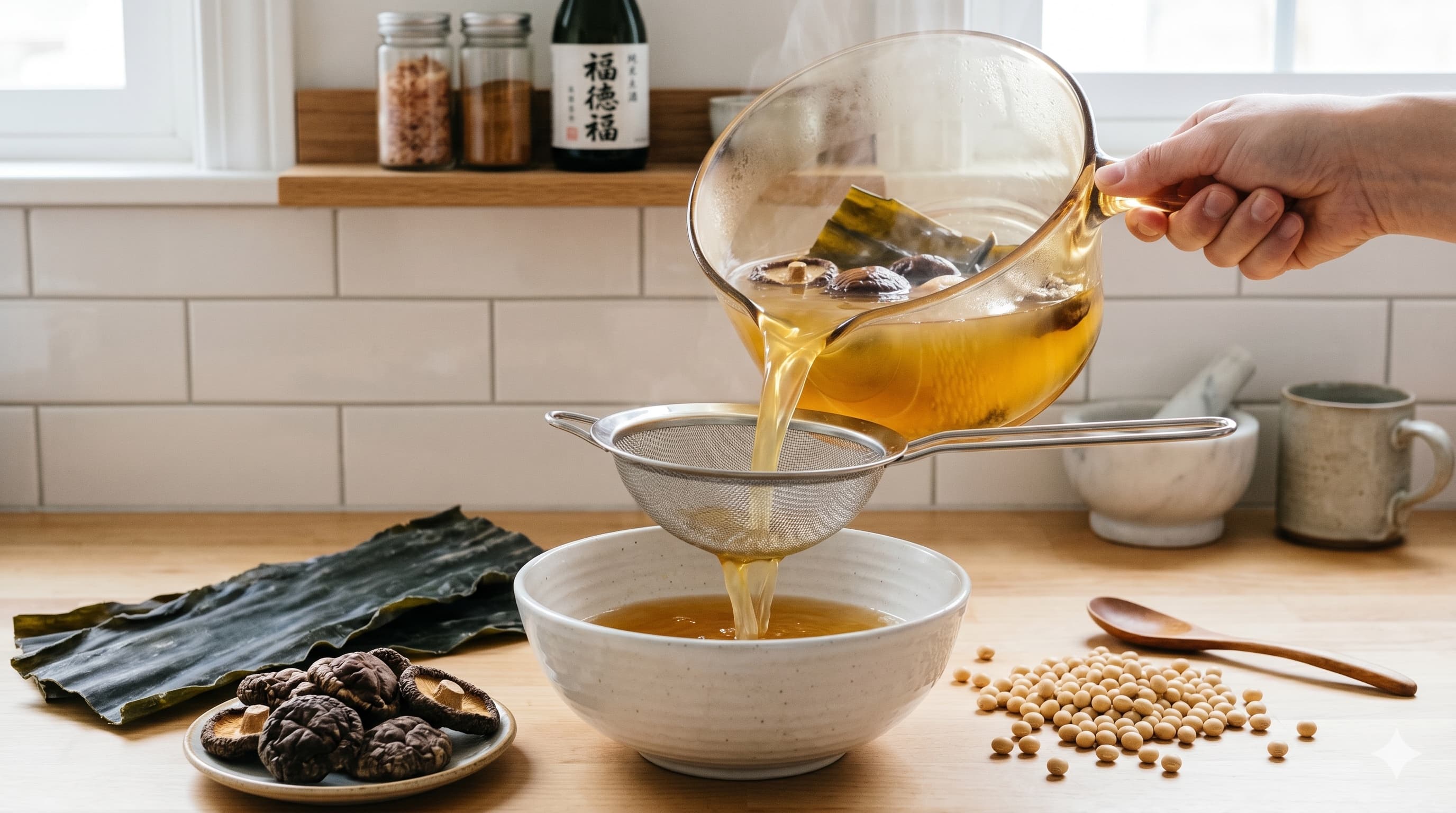
Combining kombu and shiitake produces a dashi with umami depth that rivals — and in some applications surpasses — traditional bonito-based dashi. The glutamic acid from kombu and the guanylic acid from shiitake interact synergistically, each amplifying the other's savory impact. This combination is the standard dashi of shojin ryori and is suitable for virtually any Japanese recipe that calls for dashi.
Method: Soak both kombu and dried shiitake in cold water overnight. The next day, remove the shiitake, then slowly heat the water with the kombu, removing it just before boiling. This produces a clean, deeply flavorful stock that serves as the foundation for miso soup, noodle broths, simmered dishes, and sauces.
Vegetable Dashi Variations
Beyond the kombu-shiitake foundation, Japanese cooks use various vegetables to create dashi with different flavor profiles:
- Dried soybean dashi: Roasted dried soybeans simmered in water produce a subtly sweet, nutty stock used in some regional cuisines.
- Kanpyo and dried gourd: Dried gourd strips add a mild sweetness to stock.
- Root vegetable dashi: Daikon, carrot, and burdock root trimmings simmered slowly create a hearty, earthy stock ideal for winter soups.
- Corn dashi: Corn cobs simmered in water produce a sweet stock used in some modern Japanese cooking.
Tips for the Best Vegan Dashi
Several principles will improve your vegan dashi. First, cold extraction produces cleaner flavors than hot — always soak kombu and shiitake in cold water before heating. Second, never boil kombu; remove it when small bubbles begin to appear at the bottom of the pot. Third, buy the best quality dried ingredients you can find — dashi is so simple that ingredient quality makes an enormous difference. Fourth, store dried kombu and shiitake in a cool, dark, dry place; they keep for months or even years. Finally, use dashi the same day you make it for the best flavor, though it can be refrigerated for up to three days or frozen for longer storage.
Using Vegan Dashi in Everyday Cooking
Once you have good vegan dashi, Japanese cooking opens up completely. Use it as the base for miso soup, adding tofu, wakame seaweed, and seasonal vegetables. Use it to simmer vegetables in nimono preparations, seasoned with soy sauce, mirin, and a touch of sugar. Use it as the broth for udon or soba noodles. Use it to make tamagoyaki-style omelets with silken tofu and chickpea flour. Anywhere a recipe calls for dashi, your kombu-shiitake version will provide authentic Japanese flavor without any animal products.