Donguibogam Food Therapy: Eating for Your Constitution
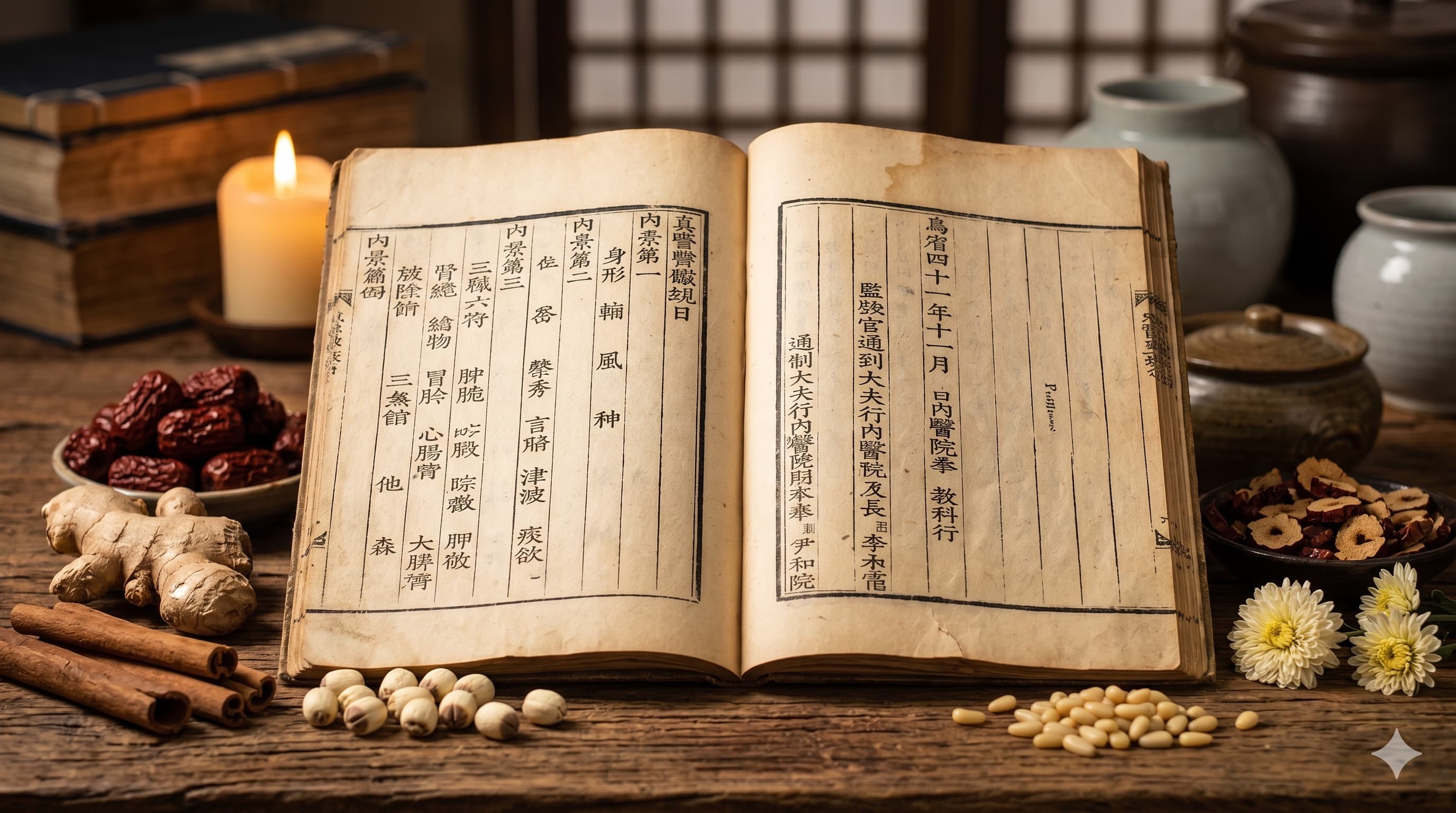
The Donguibogam: Korea's Medical Masterpiece
Written by the royal physician Heo Jun (허준) and published in 1610, the Donguibogam (동의보감, "Mirror of Eastern Medicine") is one of the most important medical texts in East Asian history. Recognized by UNESCO as a Memory of the World document, this encyclopedic work synthesizes centuries of Korean, Chinese, and Japanese medical knowledge into a comprehensive system that remains influential in Korean healthcare today. What makes the Donguibogam remarkable for the modern plant-based eater is its extensive treatment of food as medicine — not as a supplement to treatment, but as the primary foundation of health.
Heo Jun organized the text around the principle that the human body and the natural world are inseparable. Health arises from harmony between the individual's constitution, the foods they eat, the season, and their emotional and spiritual state. Disease, in this framework, results from imbalance — too much heat, too much cold, excess dampness, or deficient energy. Food is the first and most important tool for maintaining or restoring that balance.
The Five Flavors and Their Functions
Central to Donguibogam food therapy is the theory of ohaeng (오행), the five elements, which manifests in food through five flavors, each associated with a specific organ system:
- Sour (산 / sin): Associated with the liver and gallbladder. Sour foods like vinegar, plums, and fermented vegetables have an astringent quality that contracts and consolidates. They are recommended for dispersing stagnant liver energy and aiding digestion. However, excess sour taste can strain the muscles and tendons.
- Bitter (쓴 / sseon): Associated with the heart and small intestine. Bitter foods like lotus root, burdock, balloon flower root, and bitter greens have a drying and descending quality. They clear heat, reduce inflammation, and calm an overactive mind. Korean cuisine embraces bitterness far more than Western palates typically do.
- Sweet (단 / dan): Associated with the spleen and stomach. Sweet foods — not refined sugar, but naturally sweet ingredients like pumpkin, sweet potato, jujubes, rice, and chestnuts — tonify and strengthen. They nourish the digestive system and build energy. The Donguibogam warns, however, that excessive sweetness creates dampness and phlegm.
- Pungent/Spicy (매운 / maeun): Associated with the lungs and large intestine. Pungent foods like ginger, chili pepper, radish, and mustard greens disperse, circulate, and warm. They open the pores, promote sweating, and help expel cold from the body. They are emphasized in autumn and winter eating.
- Salty (짠 / jjan): Associated with the kidneys and bladder. Salty foods like seaweed, soy sauce, and doenjang soften, moisten, and descend. They nourish the kidneys and support fluid metabolism. The Donguibogam advises moderation with salt, as excess damages the bones and blood.
Eating by Season
The Donguibogam emphasizes that the same food can be beneficial or harmful depending on when it is consumed. Seasonal eating is not merely about freshness — it is about aligning the body with the prevailing energy of the natural world:
Spring is the season of the liver. After the contracted, stored energy of winter, the body needs to expand and cleanse. Sour and green foods support this transition: fresh spring greens, young shoots, fermented vegetables, and light preparations. Heavy, greasy foods burden the liver in spring.
Summer is the season of the heart. The body's energy is at its most expansive. Bitter and cooling foods balance the heat: lotus root, bitter melon, cucumber, watermelon, and cold noodle soups. The Donguibogam cautions against excessive cold food and drink, which can shock the digestive system.
Autumn is the season of the lungs. As nature contracts and dries, pungent and white foods support respiratory health: radish, pear, ginger, pine nuts, and rice. This is also the traditional season for preparing fermented foods, as the cooling temperatures create ideal conditions for slow fermentation.
Winter is the season of the kidneys. The body conserves energy and turns inward. Salty and black foods nourish the kidneys: seaweed, black beans, black sesame, soy sauce, and warming soups and stews. Root vegetables, which have stored the earth's energy, are emphasized.
Warm and Cool Natures of Food
Beyond flavor and season, the Donguibogam classifies every food by its thermal nature — hot, warm, neutral, cool, or cold. This is not about the temperature at which the food is served, but about its effect on the body after digestion. Ginger and cinnamon are warming: they increase circulation and raise body temperature. Cucumber and mung beans are cooling: they reduce inflammation and clear heat. Understanding these properties allows one to select foods that correct personal imbalances.
A person who tends to feel cold, has a pale complexion, and prefers warm drinks has a cold constitution and benefits from warming foods: ginger, cinnamon, black pepper, roasted grains, and warm soups. A person who runs hot, has a reddish complexion, and craves cold drinks has a warm constitution and benefits from cooling foods: barley tea, mung bean porridge, raw vegetables, and cucumber. Most people fall somewhere in between and need different adjustments depending on the season and their current state of health.
Applying Donguibogam Wisdom Today
You do not need to become a traditional medicine practitioner to benefit from Donguibogam food therapy. Start by observing your own body: Do you tend toward heat or cold? Do you digest well or poorly? Do certain seasons or foods make you feel better or worse? Begin incorporating the five flavors into every meal, ensuring you do not rely too heavily on any single taste. Eat warming foods in winter and cooling foods in summer. Choose foods that are naturally in season. Pay attention to how you feel after eating, not just how the food tastes.
Korean plant-based cuisine, with its emphasis on seasonal vegetables, fermented foods, diverse grains, and herbal ingredients, is perhaps the world's most natural expression of this food-as-medicine philosophy. Every bowl of mixed grain rice, every array of colorful banchan, every pot of doenjang jjigae carries within it centuries of accumulated wisdom about how food sustains not just the body but the whole person.