From Edamame to Natto: Soy Foods in the Japanese Plant-Based Diet
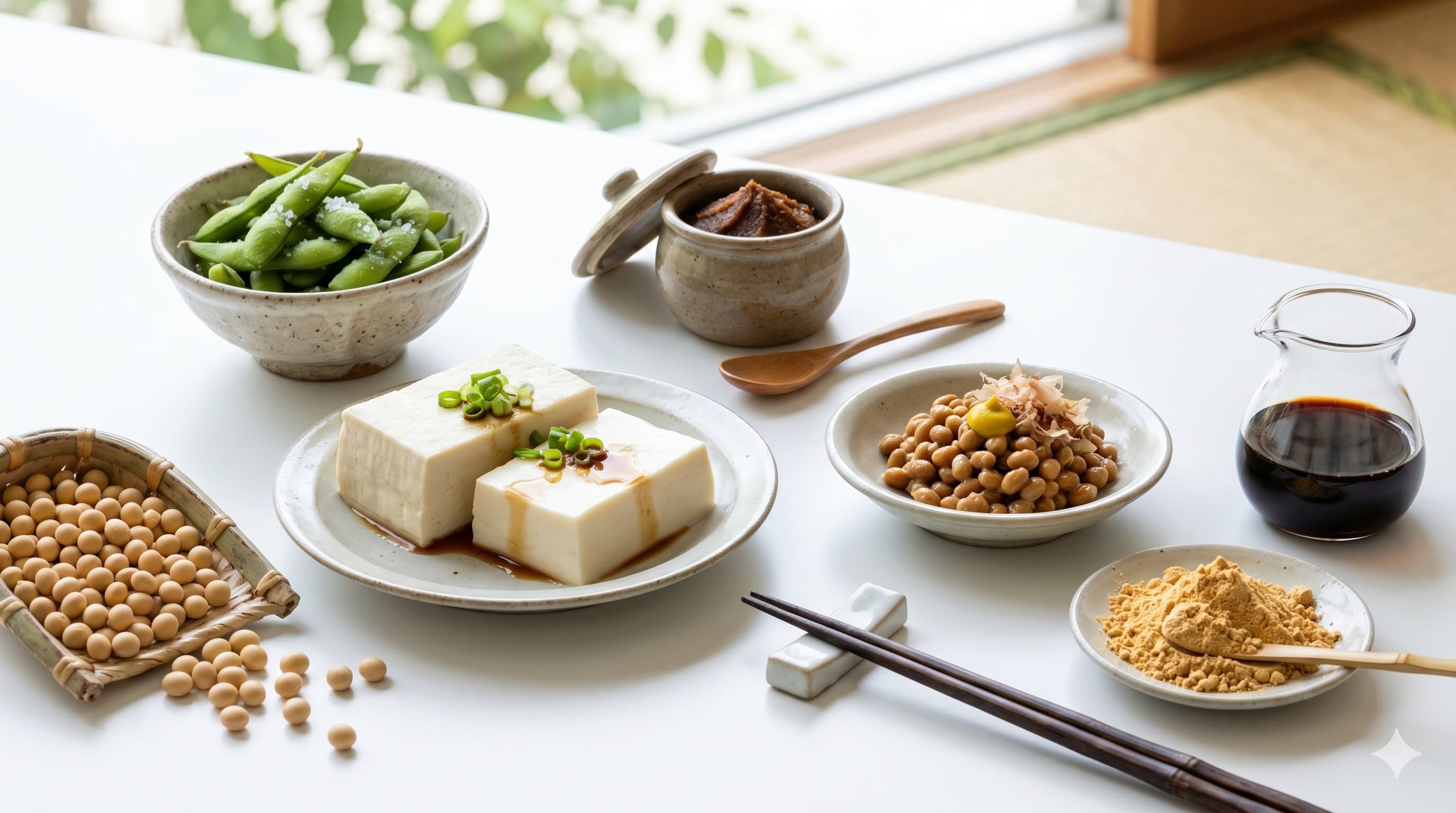
The Soybean in Japanese Civilization
No single crop has shaped Japanese cuisine more profoundly than the soybean (daizu). Originally domesticated in East Asia thousands of years ago, the soybean arrived in Japan from the Asian mainland in prehistoric times. Over the centuries, Japanese artisans developed an extraordinary range of soy-based foods, from simple boiled beans to elaborately fermented products. Together, these foods provide protein, fat, and umami that form the nutritional and flavor backbone of the Japanese diet — and they are all plant-based.
Edamame: Soybeans at Their Freshest
Edamame are young soybeans harvested while still green, before they mature and harden. The pods are boiled or steamed in salted water and served as a snack, appetizer, or beer accompaniment in izakaya (Japanese pubs). The beans are popped from the pod directly into the mouth — a simple pleasure that has become popular worldwide.
Nutritionally, edamame are an excellent source of complete plant protein, dietary fiber, and various vitamins and minerals including folate, vitamin K, and manganese. Their mild, slightly sweet flavor makes them accessible to almost anyone, and they require virtually no preparation beyond brief cooking.
Tofu: The Great Transformer
Tofu (bean curd) is made by coagulating soy milk with a mineral coagulant, most traditionally nigari (magnesium chloride derived from seawater). Japanese tofu comes in many forms — silken (kinu), firm (momen), freeze-dried (koya-dofu), fried (abura-age and atsu-age), and the delicate soy milk skin called yuba. Each variety has distinct textures and culinary applications. Tofu has been produced in Japan for roughly a thousand years and remains one of the most consumed foods in the country.
Miso: Fermented Soybean Paste
Miso is made by fermenting soybeans with salt and a mold culture called koji (Aspergillus oryzae), often with the addition of rice or barley. The fermentation period ranges from a few weeks for light, sweet miso to over a year for dark, intensely flavored varieties. Miso is used daily in Japanese kitchens, most commonly dissolved into dashi to make miso soup (misoshiru), but also as a glaze for grilled foods (dengaku), a pickling medium, a salad dressing base, and a seasoning for simmered dishes.
The variety of miso produced across Japan is staggering. Each region has its own traditions: sweet, pale shiro miso in Kyoto; robust, dark red aka miso in Nagoya and central Japan; rice-based miso in the northeast; barley-based mugi miso in Kyushu. This diversity means that miso cooking never becomes monotonous — different misos in the same recipe produce completely different results.
Soy Sauce: The Universal Seasoning
Japanese soy sauce (shoyu) is brewed from soybeans, wheat, salt, and water, fermented with koji and aged for months. The standard variety, koikuchi shoyu, is a rich, balanced, all-purpose seasoning used in virtually every savory Japanese dish. Usukuchi shoyu (light soy sauce) is lighter in color but saltier, used when you want soy sauce flavor without darkening the dish. Tamari, made with little or no wheat, has a thicker consistency and deeper soy flavor and is often suitable for those avoiding gluten.
The brewing of fine soy sauce is a traditional craft in Japan, with some producers aging their shoyu in wooden barrels (kioke) for years, developing complex flavors that mass-produced soy sauce cannot match.
Natto: Fermented Whole Soybeans
Natto is made by fermenting cooked whole soybeans with Bacillus subtilis bacteria. The result is a food that divides opinion sharply: pungent, sticky, with long threads that stretch as you lift your chopsticks. Natto's aroma is strong and distinctive, and its flavor is earthy and complex. It is traditionally eaten at breakfast, mixed with mustard and soy sauce, and served over hot rice.
Despite its challenging reputation, natto is an exceptionally nutritious food. It is rich in vitamin K2, which plays an important role in bone health. It also contains nattokinase, an enzyme that has been studied for its potential cardiovascular benefits. Natto is a staple of the Japanese diet, particularly in the eastern Kanto region around Tokyo.
Kinako: Roasted Soybean Flour
Kinako is made by roasting and grinding soybeans into a fine, golden powder with a sweet, nutty flavor reminiscent of peanut butter. It is primarily used in Japanese sweets — dusted over mochi (rice cakes), mixed into warabi mochi (bracken starch sweets), or blended with sugar as a coating for dango (rice dumplings). Kinako is also mixed into soy milk or smoothies as a protein-rich flavoring.
Okara: Soy Pulp
Okara is the fibrous pulp left over after soy milk is extracted from soybeans during tofu production. Rather than discarding this byproduct, Japanese cooks transform it into dishes like unohana — okara sauteed with vegetables, soy sauce, and mirin. Okara is high in fiber and protein and represents the zero-waste philosophy embedded in traditional Japanese cooking.
The Soybean Lesson
What Japanese cuisine demonstrates through its soy foods is that a single plant ingredient, treated with creativity and patience, can produce an extraordinary diversity of flavors, textures, and nutritional profiles. From the simplicity of edamame to the complexity of aged miso, from the delicacy of yuba to the boldness of natto, the soybean's journey through Japanese culinary culture is proof that plant-based eating can be endlessly varied and deeply satisfying.