Essential Korean Vegan Pantry: 10 Ingredients You Need
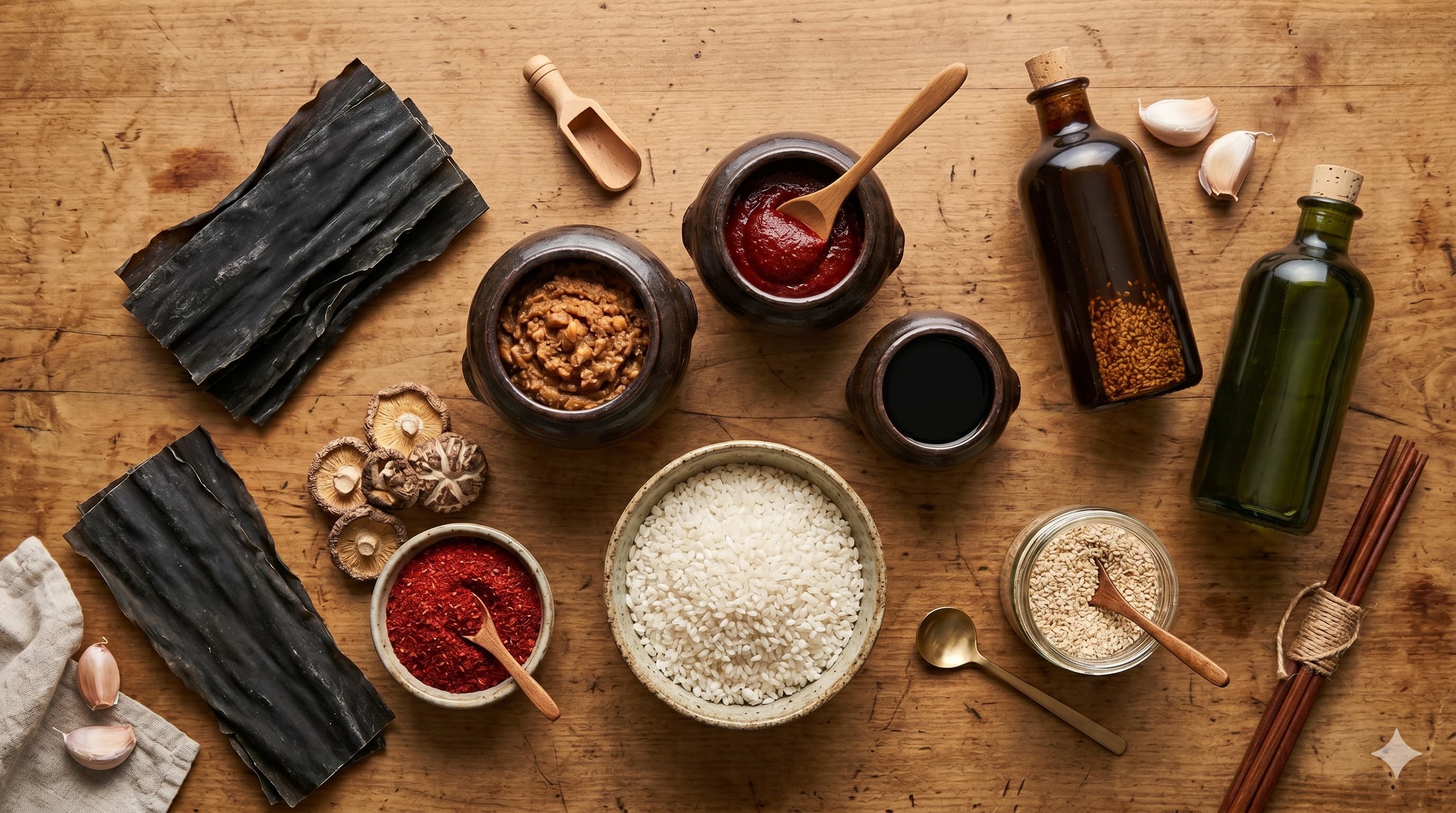
Building Your Korean Vegan Kitchen
Korean cuisine relies on a handful of powerhouse ingredients that create its signature depth of flavor. With these 10 essentials in your pantry, you can prepare hundreds of authentic plant-based Korean dishes.
The 10 Must-Have Ingredients
1. Doenjang (된장) — Fermented Soybean Paste
The backbone of Korean cooking. This thick, pungent paste adds rich umami to soups, stews, and dipping sauces. Unlike Japanese miso, doenjang is fermented with a specific Korean starter (meju) that gives it a deeper, more complex flavor. Look for traditionally fermented versions without fish sauce.
2. Gochugaru (고추가루) — Korean Chili Flakes
These vibrant red flakes have a sweet, slightly smoky heat that's fundamental to Korean cooking. Used in kimchi, stews, and namul seasoning. Buy deul-gi-reum gochugaru (coarse) for kimchi and fine-ground for sauces.
3. Gochujang (고추장) — Fermented Chili Paste
A fermented paste combining chili, glutinous rice, and soybeans. It brings sweet heat and deep umami to bibimbap sauce, tteokbokki, and marinades. Check labels — some commercial brands add anchovy extract.
4. Sesame Oil (참기름)
Toasted Korean sesame oil is intensely aromatic and used as a finishing oil rather than a cooking oil. A few drops transform any namul or rice dish. Store in a dark bottle to preserve freshness.
5. Perilla Oil (들기름)
Pressed from roasted perilla seeds, this nutty oil is distinctly Korean. Essential for authentic namul seasoning and soup finishing. Rich in omega-3 fatty acids.
6. Dried Kelp (다시마) and Dried Shiitake
These two ingredients create the foundation of Korean vegan broth (dashima-yuksu). Simply simmer kelp and shiitake in water for a savory stock that replaces anchovy broth in any recipe.
7. Korean Soy Sauce (국간장)
Lighter and saltier than regular soy sauce, guk-ganjang is made from fermented soybeans without wheat. Used to season soups and namul without darkening the color.
8. Perilla Leaves (깻잎)
These aromatic leaves (often mislabeled as "sesame leaves") add a minty, herbaceous note unique to Korean cuisine. Use fresh in wraps and pickled as banchan.
9. Toasted Sesame Seeds (볶은 참깨)
Sprinkled generously on nearly every Korean dish. Toast them yourself in a dry pan for the freshest flavor, or buy pre-toasted from Korean markets.
10. Rice Syrup (쌀조청)
A natural sweetener made from malted barley and rice. It adds gentle sweetness and glossy sheen to sauces and glazed dishes. Preferable to refined sugar in traditional cooking.
Where to Shop
Korean grocery stores (H-Mart, Lotte, Zion Market) carry all of these. Online retailers like Maangchi's Market and Amazon also stock quality Korean pantry items. When possible, choose traditionally fermented products over factory-made alternatives.