Gochugaru Guide: Understanding Korean Chili Flakes
What Makes Gochugaru Special
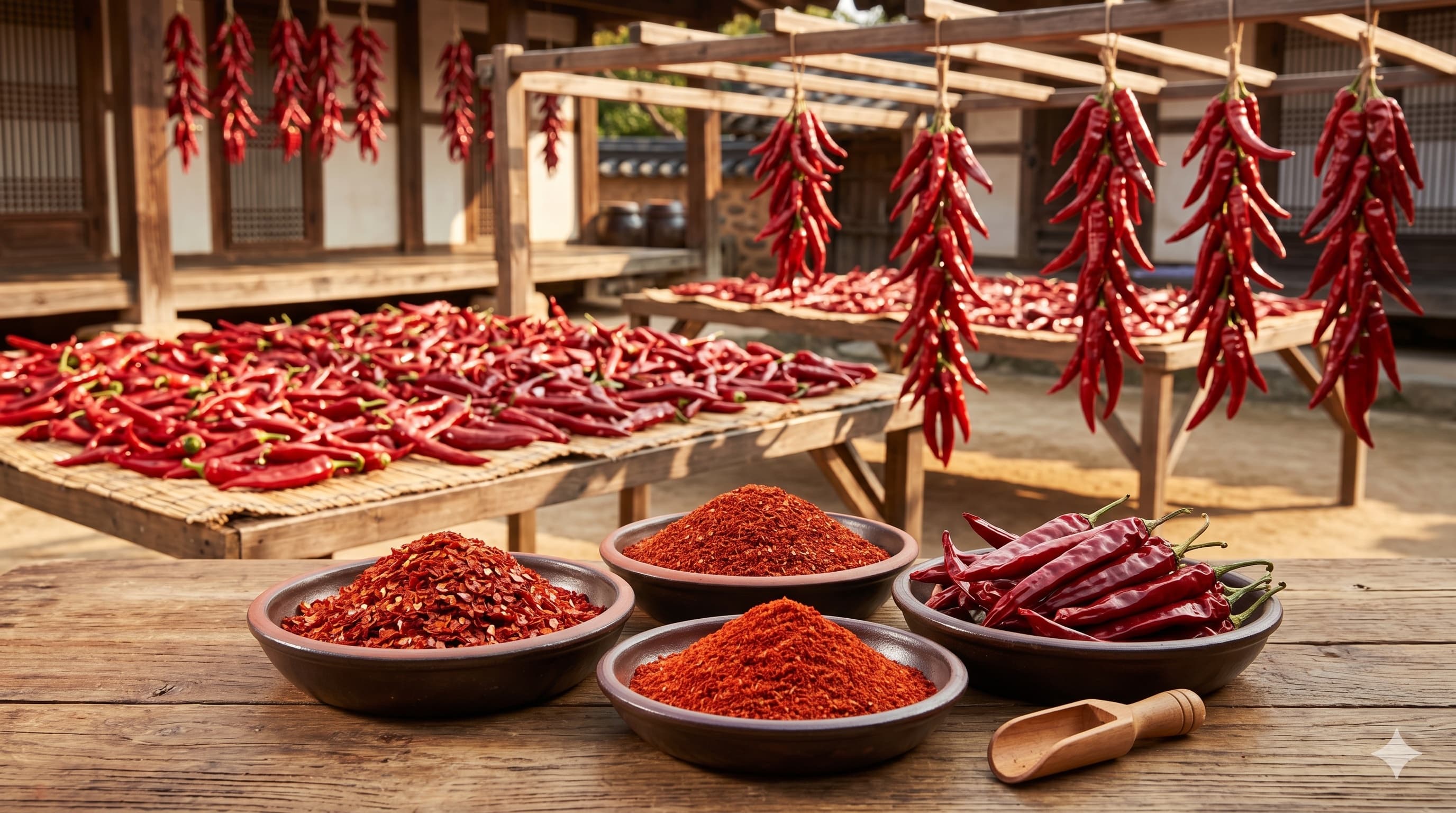
Walk into a Korean grocery store and you will see bags of vibrant red flakes in sizes ranging from small packets to five-kilogram sacks. This is gochugaru (고추가루), Korean chili flakes — and it is not interchangeable with any other chili product in the world. Gochugaru is made from specific Korean chili pepper varieties (gochu), sun-dried and then ground to a texture that ranges from fine powder to coarse flakes. Its flavor profile is completely distinct from cayenne, crushed red pepper, paprika, or any other chili product you might have in your pantry.
The defining characteristic of gochugaru is its balance. It is moderately spicy — significantly milder than cayenne or Thai chilies — but this restrained heat is accompanied by a complex sweetness, slight smokiness (from sun-drying rather than mechanical dehydration), and a fruity depth that reminds some tasters of sun-dried tomatoes. This complexity is why gochugaru can be used in enormous quantities — a kimchi recipe might call for a full cup — without overwhelming the palate. The heat builds gently and the flavor dimensions keep the taste buds engaged.
Varieties and Grades
Gochugaru is sold in two main textures:
- Coarse flakes (gulgun gochugaru, 굵은 고추가루): The standard for making kimchi. The flakes are irregular, roughly the size of crushed red pepper, and they create the characteristically textured, glistening coating that clings to kimchi leaves. Coarse gochugaru also works well in stews, stir-fries, and as a finishing sprinkle.
- Fine powder (goun gochugaru, 고운 고추가루): Ground to a silky powder, this version is used for gochujang-making, tteokbokki sauce, seasoning pastes, and any application where you want the chili to dissolve smoothly into a liquid or sauce.
Quality varies considerably. The finest gochugaru comes from the Yeongyang and Cheonyang regions of Korea, where the climate and soil produce peppers with exceptional flavor. Sun-dried gochugaru (indicated on the package as taeyangcho, 태양초) is considered superior to machine-dried, as the gradual sun-drying process preserves more of the pepper's volatile flavor compounds. The color should be a deep, vibrant red without brown or orange tones, which indicate age or inferior peppers.
Gochugaru vs. Other Chili Products
Understanding what gochugaru is not helps explain its importance. It is not crushed red pepper flakes (the kind you find on pizza parlor tables), which are made from different pepper varieties, are much hotter, and have a harsher, more one-dimensional heat. It is not cayenne powder, which is finer in texture and far spicier. It is not paprika, which comes from different peppers and lacks gochugaru's heat entirely. And it is not Chinese chili flakes or Sichuan chili, which have different flavor profiles and textures.
Using any of these substitutes will produce a fundamentally different result. Kimchi made with crushed red pepper tastes harsh and overly spicy. Tteokbokki made with cayenne is incendiary rather than sweet-spicy. If you plan to cook Korean food with any regularity, gochugaru is a non-negotiable pantry item. Fortunately, it is widely available in Asian grocery stores and online, and a large bag stored in the freezer will last for months.
How Gochugaru Is Used
In kimchi: Gochugaru is the defining ingredient, mixed into the kimchi paste along with garlic, ginger, fish sauce (or vegan alternatives), and rice paste. It provides the color, much of the flavor, and the characteristic texture of the kimchi coating.
In stews and soups: Added to the broth of dishes like kimchi jjigae, sundubu jjigae, and budae jjigae, gochugaru provides a warm, rounded heat that permeates the entire dish. It is typically added early in the cooking process so its flavors meld with the broth.
In namul and banchan: A pinch of gochugaru transforms simple vegetable dishes. It adds color, gentle heat, and a subtle sweetness to blanched spinach, soybean sprouts, or any seasoned vegetable.
As a finishing element: Sprinkled over tofu, noodles, or rice dishes just before serving, gochugaru adds visual appeal and a burst of flavor. The coarse flakes provide a pleasant texture contrast as well.
Storage and Shelf Life
Gochugaru is best stored in the freezer, where it retains its vibrant color and flavor for up to a year. In the refrigerator, it keeps for several months. At room temperature, it gradually loses its bright red color and develops a brownish tint, which indicates oxidation and flavor degradation. Korean home cooks often buy gochugaru in large quantities — especially in autumn, when the new crop of peppers is dried and ground — and freeze it in portions for the year ahead.
A Note on Heat Levels
While gochugaru is significantly milder than many other chili products, its heat level varies by variety and growing conditions. Most standard gochugaru ranges from 4,000 to 8,000 Scoville Heat Units — comparable to a mild jalapeno. For those who prefer more heat, cheongyang gochu (청양고추) varieties, named after the Cheongyang region, are considerably spicier, reaching 10,000 to 23,000 SHU. Some Korean cooks blend standard and cheongyang gochugaru for a custom heat level. As you become familiar with your preferred brand, you will develop an instinct for how much to use — and you will likely find yourself reaching for it more and more often, adding its warm, sweet heat to everything from morning rice to evening stew.