The Health Benefits of Korean Fermented Pastes: What Donguibogam Tells Us
Food as Medicine: The Donguibogam Tradition
The Donguibogam (동의보감), compiled by royal physician Heo Jun in 1613, is Korea's most important text of traditional medicine and a UNESCO Memory of the World document. Central to its teachings is the concept of yakshik dongwon (약식동원) — that food and medicine share the same origin. Among the foods it describes most extensively are Korea's fermented pastes, which it considers both daily nourishment and therapeutic agents.
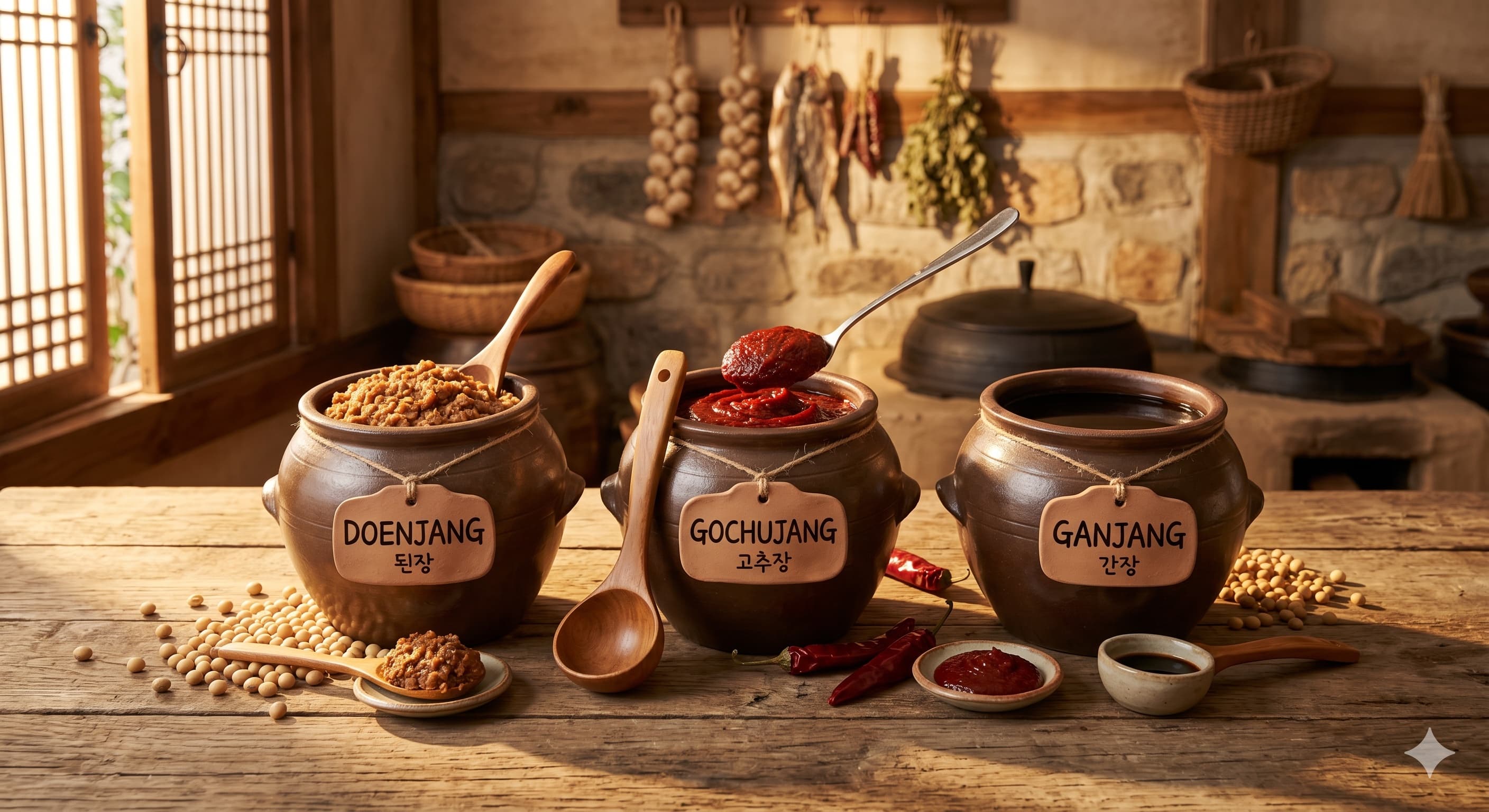
Doenjang (된장): The Great Detoxifier
The Donguibogam records doenjang as having the ability to "resolve all toxins" (해독). It describes fermented soybean paste as:
- Cooling in nature: Balances internal heat and reduces inflammation
- Beneficial for the spleen and stomach: Strengthens digestion and nutrient absorption
- Detoxifying: Helps the body process and eliminate harmful substances
- Harmonizing: Balances the properties of other foods when used in cooking
Modern research has validated many of these observations. Studies have identified anti-cancer compounds, antioxidants, and beneficial bacteria in traditionally fermented doenjang. The long fermentation period (6-12 months minimum) produces bioactive peptides and isoflavones not present in unfermented soybeans.
Gochujang (고추장): Warming the Center
While chili peppers arrived in Korea only in the 16th century, gochujang quickly became integrated into the traditional medicine framework. The Donguibogam and subsequent medical texts describe gochujang's properties as:
- Warming in nature: Stimulates circulation and disperses cold
- Appetite-stimulating: Supports weak digestion and poor appetite
- Qi-moving: Prevents stagnation of energy in the body
- Phlegm-resolving: Helps clear dampness from the system
The fermentation of glutinous rice with chili and meju creates a synergy — the capsaicin's heat is tempered by the cooling nature of fermented soybeans, producing a balanced condiment suitable for regular consumption rather than an irritant.
Ganjang (간장): The Essence of Flavor
Korean traditional soy sauce, produced as a byproduct of doenjang-making, is described in the Donguibogam as:
- Salty and cold in nature: Directs energy downward and calms excess
- Kidney-nourishing: Supports kidney function and fluid metabolism
- Harmonizing: Brings disparate flavors into balance in cooking
Traditional ganjang (조선간장) differs significantly from modern factory-produced soy sauce. Made from only soybeans, water, and salt — fermented in onggi crocks in open sunlight — it develops a complexity and depth of beneficial compounds that quick-fermented alternatives cannot replicate.
Cheonggukjang (청국장): Rapid Nourishment
This fast-fermented soybean paste (ready in 2-3 days) is described in Korean medical texts as particularly warming and strengthening, suitable for recovering from illness or cold-weather consumption. Its high concentration of Bacillus subtilis bacteria, vitamin K2, and easily digestible protein make it one of the most nutritionally dense foods in the Korean pantry.
Practical Wisdom for Modern Kitchens
The Donguibogam's approach offers guidance that remains relevant: use fermented pastes daily as both seasoning and medicine. Choose traditionally fermented products over quick-manufactured alternatives. Vary your pastes with the seasons — lighter doenjang-based soups in summer, warming gochujang stews in winter. Trust the wisdom of fermentation that Korean kitchens have refined over millennia.