A History of Buddhist Vegetarianism in Japan: From the Nara Period to Today
The Arrival of Buddhism and Early Dietary Change
Buddhism arrived in Japan from Korea and China in the sixth century, during the Asuka period (538-710 CE). With it came the principle of ahimsa, or non-harm to living beings, which had profound implications for the Japanese diet. Prior to Buddhism's arrival, the Japanese diet included meat from deer, boar, and other animals alongside fish and gathered plants. The new religion gradually introduced the idea that killing animals for food generated negative karma and hindered spiritual progress.
In 675 CE, Emperor Tenmu issued what is considered the first known imperial decree restricting meat consumption in Japan. The edict prohibited the eating of cattle, horses, dogs, monkeys, and chickens during certain months of the agricultural season. While this was partly motivated by practical agricultural concerns — these animals were valuable for labor and farming — the Buddhist influence on the decree is well documented by historians. This marked the beginning of a long cultural shift away from meat eating.
The Nara Period: Buddhism Becomes State Religion
During the Nara period (710-794 CE), Buddhism became closely tied to the imperial court and the state. Emperor Shomu, a devout Buddhist, actively promoted the construction of temples across Japan, most notably Todaiji in Nara. As the monastic population grew, so did the tradition of vegetarian cooking within temple walls. Monks followed the vinaya (monastic code), which prohibited the consumption of meat. The great temples of Nara became centers of learning, and vegetarian cooking developed alongside Buddhist scholarship and ritual.
It is important to note that Japanese Buddhist vegetarianism was not always absolute. Some schools interpreted the prohibition narrowly, allowing fish or meat that had not been specifically killed for the monk. Others maintained strict vegetarianism. This ambiguity would persist throughout Japanese Buddhist history.
The Kamakura Period: Zen and the Rise of Shojin Ryori
The most significant development in Japanese Buddhist vegetarian cooking came during the Kamakura period (1185-1333). Zen Buddhism arrived from China, brought by monks like Eisai (founder of the Rinzai school) and Dogen (founder of the Soto school). Zen placed enormous emphasis on the practice of daily life as a form of meditation, and cooking was no exception. Dogen's Tenzo Kyokun (Instructions for the Cook), written in 1237, elevated monastic cooking to a spiritual practice of the highest order.
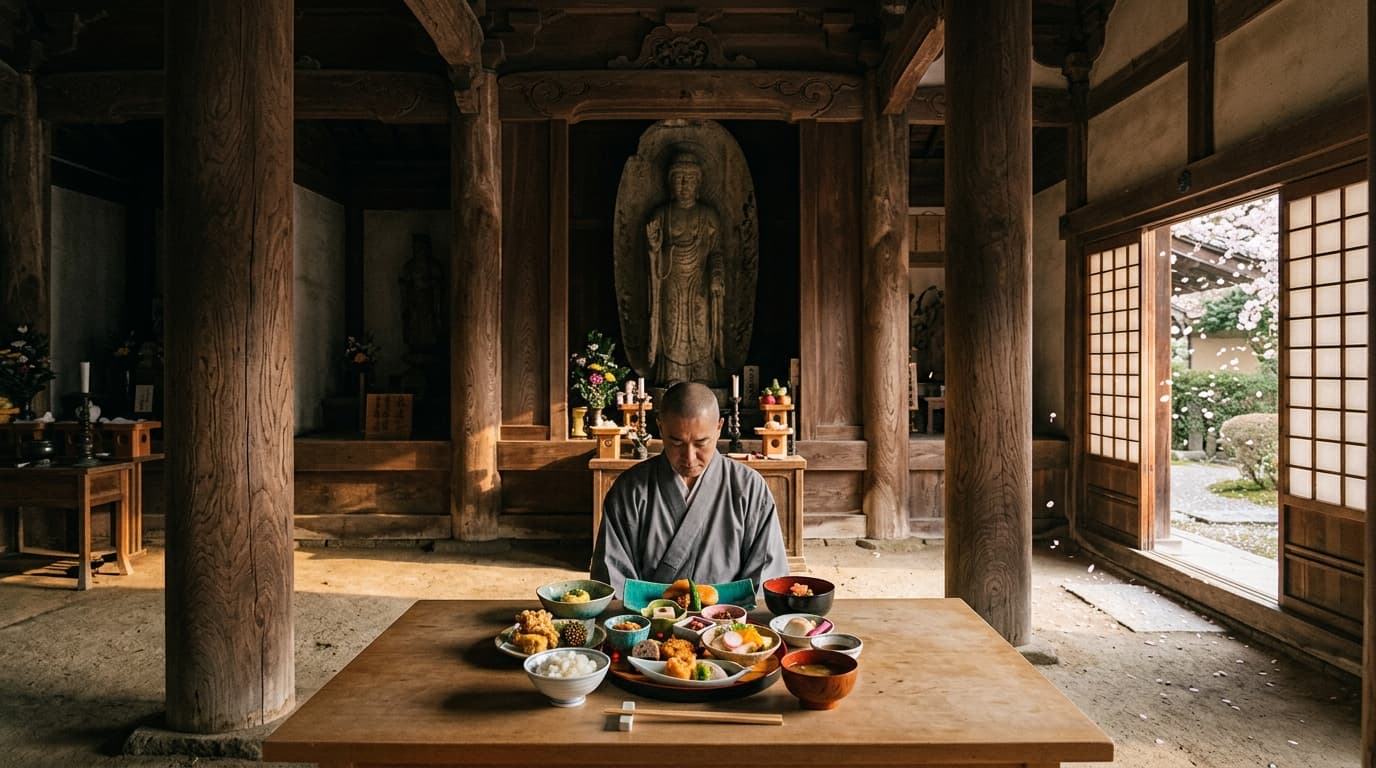
The term shojin ryori (devotion cuisine) became established during this period. The cuisine avoided meat, fish, eggs, and dairy, as well as the five pungent vegetables (garlic, onion, scallion, chives, and leek), which were believed to agitate the mind and hinder meditation. Zen monks developed sophisticated techniques for making satisfying meals from vegetables, tofu, and foraged mountain plants.
The Edo Period: Vegetarianism Beyond the Monastery
During the Edo period (1603-1868), shojin ryori moved beyond monastery walls and into broader Japanese culture. Vegetarian restaurants opened near popular temples, catering to pilgrims and travelers. Cookbooks featuring shojin recipes were published for a general audience. The cuisine became associated with refinement and health, appealing even to those without strong Buddhist convictions.
At the same time, the Edo period saw the codification of Japanese cuisine more broadly. The traditional Japanese meal structure — rice, soup, pickles, and side dishes — became standardized, and plant-based versions of this structure were widely available. Tofu culture flourished during this era, with the famous Tofu Hyakuchin (One Hundred Tofu Recipes) published in 1782, demonstrating the extraordinary versatility of this single ingredient.
The Meiji Restoration and the Return of Meat
The Meiji Restoration of 1868 brought dramatic changes to Japanese dietary culture. In an effort to modernize and compete with Western powers, the Meiji government actively promoted meat eating. Emperor Meiji himself publicly ate beef in 1872, breaking centuries of imperial tradition. The government argued that meat consumption was necessary for building a physically strong nation capable of military and industrial competition with the West.
Buddhist vegetarianism did not disappear, but it retreated from mainstream culture. Monastic communities continued the shojin ryori tradition, and certain regions — particularly Kyoto with its concentration of Zen temples and Koyasan with its Shingon Buddhist community — maintained strong vegetarian food cultures. However, meat and fish became central to the modern Japanese diet in ways they had not been for centuries.
The Modern Revival
In recent decades, Japanese Buddhist vegetarianism has experienced a significant revival, driven by several factors. Growing global interest in plant-based eating has drawn attention to Japan's long vegetarian heritage. The international popularity of Zen Buddhism and mindfulness practices has increased interest in the lifestyle practices of Zen monks, including their diet. Health consciousness and environmental concerns have also contributed to renewed interest in plant-based eating in Japan.
Today, shojin ryori restaurants are popular destinations for both Japanese and international visitors. Temple stays (shukubo) at places like Koyasan offer guests the experience of eating monastic vegetarian meals. Some modern Japanese chefs are creating contemporary interpretations of shojin cuisine, applying traditional principles to new ingredients and presentations. The tradition that began in ancient monasteries continues to evolve, offering timeless wisdom about the connection between food, mindfulness, and well-being.
Lessons from a Long History
The history of Buddhist vegetarianism in Japan demonstrates that plant-based eating is not a modern invention or a Western import. For over a thousand years, Japanese monks developed one of the world's most refined plant-based culinary traditions. Their approach — rooted in spiritual practice, respect for nature, and the creative use of simple ingredients — offers valuable lessons for anyone interested in plant-based cooking today. The principles of shojin ryori — seasonality, balance, mindfulness, and respect for ingredients — remain as relevant now as they were in Dogen's time.