Sansai: The Wild Mountain Vegetables of Japanese Foraging Tradition
What Are Sansai?
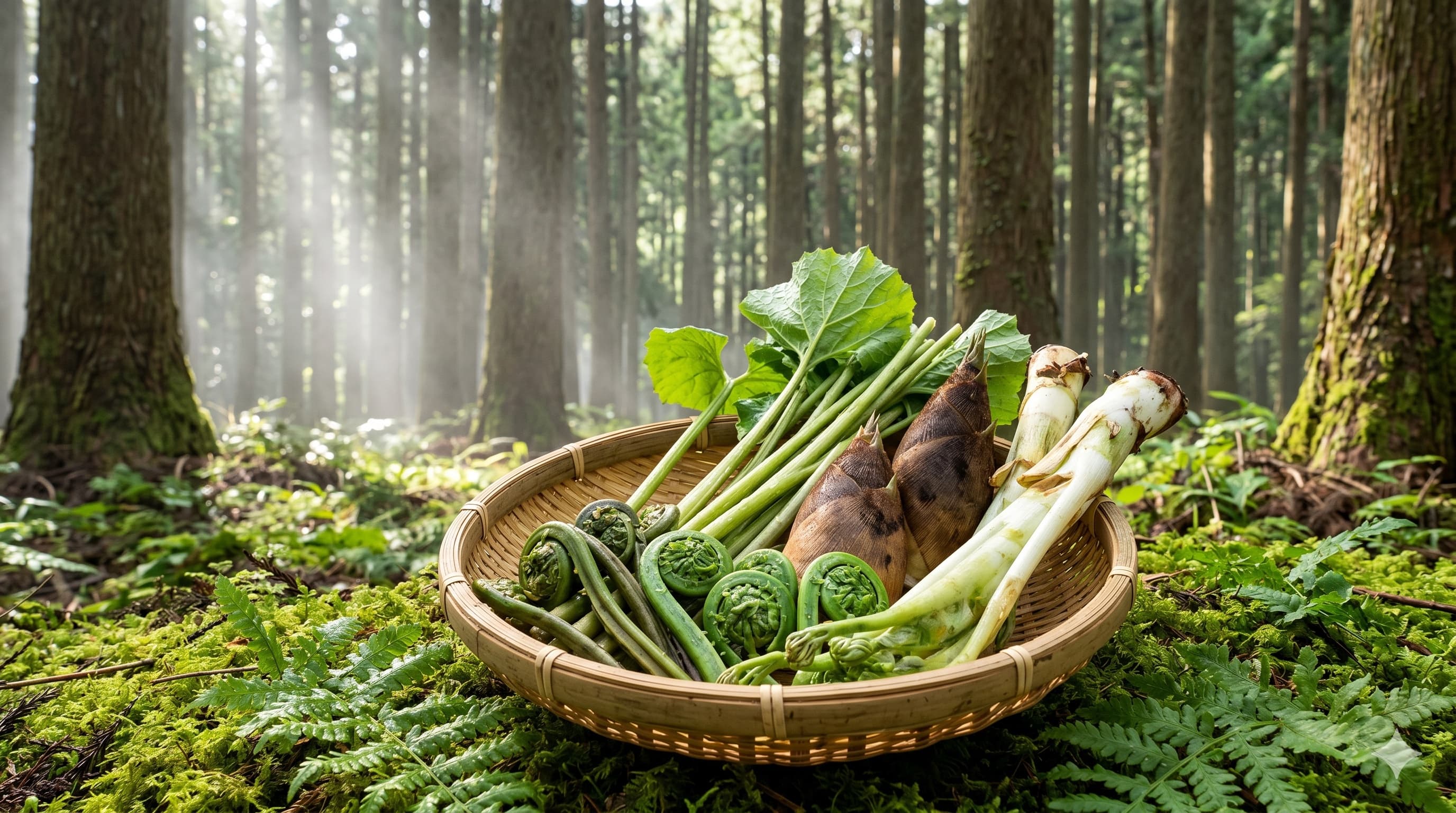
Sansai (山菜), literally "mountain vegetables," are the wild plants gathered from Japan's mountainous forests, hillsides, and riverbanks. Japan is a remarkably mountainous country — roughly 73 percent of its land area is mountainous — and its forests host an abundance of edible wild plants. For centuries, rural communities have foraged these plants as a vital food source, developing extensive knowledge of which species are edible, when to harvest them, and how to prepare them.
Sansai foraging is deeply seasonal, with most species available for only a brief window in spring. This ephemerality is part of their cultural significance — sansai embody the Japanese concept of shun (eating at the peak of the season) more intensely than any cultivated crop. They also connect Japanese cuisine to the uncultivated natural world in a way that farm-grown vegetables cannot.
Key Sansai Species
Warabi (bracken fiddleheads): The tightly coiled young fronds of bracken fern are one of the most widely gathered sansai. They require careful preparation — soaking in water with wood ash or baking soda to remove naturally occurring compounds — before eating. Prepared warabi have a slippery texture and mild, earthy flavor. They are typically dressed with soy sauce and katsuobushi (which can be omitted for vegan preparations) or simmered in dashi.
Takenoko (bamboo shoots): Perhaps the most celebrated spring sansai, fresh bamboo shoots are harvested just as they emerge from the ground. They must be boiled promptly after harvesting to remove bitterness, traditionally with rice bran (nuka) in the cooking water. Fresh takenoko has a sweet, delicate flavor and crisp texture entirely different from the canned product. It appears in takikomi gohan (mixed rice), nimono (simmered dishes), and tempura.
Kogomi (ostrich fern fiddleheads): The tightly coiled young fronds of the ostrich fern, kogomi are milder and require less preparation than warabi. They can be briefly blanched and served as ohitashi (dressed with soy sauce and dashi) or tempura-fried. Their flavor is grassy and slightly nutty.
Fuki (giant butterbur): The thick stalks of Japanese butterbur are peeled, blanched, and simmered in seasoned dashi. Fuki has a distinctive bitter edge and herbaceous aroma that is considered quintessentially spring. The flower buds of butterbur (fuki-no-to), which emerge in late winter before the stalks, are among the earliest sansai of the year and are prized as tempura.
Udo (Japanese spikenard): A tall plant with thick, white stalks that are crisp and aromatic. Udo can be eaten raw, sliced into matchsticks and dressed with vinegar and miso (a preparation called udo no sumiso-ae), or the leaves can be tempura-fried. Its flavor is fresh, slightly bitter, and uniquely fragrant.
Sansai and Buddhist Cuisine
Wild mountain vegetables have played an important role in shojin ryori, the vegetarian cuisine of Japanese Buddhist monasteries. Temples in mountainous areas had abundant access to sansai, and monks developed extensive knowledge of local wild plants. The seasonal gathering of sansai became part of monastic life — a practice that combined physical activity, knowledge of the natural world, and the provision of food. Many preparations of sansai used in shojin ryori today reflect techniques developed over centuries in temple kitchens.
Preparing Sansai: The Importance of Aku-nuki
Many wild vegetables contain bitter or astringent compounds that must be removed before eating — a process called aku-nuki (removing harshness). Methods vary by species: some plants need only brief blanching, while others require overnight soaking in water treated with wood ash, baking soda, or rice bran. This knowledge, accumulated over generations of foraging, is crucial for safe and delicious sansai preparation. The time and care required for aku-nuki is part of what makes sansai cooking a skilled practice rather than a casual one.
Sansai in Modern Japanese Life
While fewer Japanese people forage their own sansai today, the vegetables remain culturally significant. Sansai appear on restaurant menus each spring, signaling the arrival of the new season. Farmers' markets in mountainous regions sell freshly foraged specimens. Dried and preserved sansai are available year-round and are used in soba noodle dishes, rice preparations, and simmered dishes. Sansai foraging tours have become popular with urban Japanese looking to reconnect with rural traditions and natural landscapes.
The Foraging Ethic
Traditional sansai foraging follows an ethic of sustainability — never taking too much from one area, leaving enough plants to reproduce, and avoiding rare or slow-growing species. This ethic reflects the broader Japanese concept of mottainai (avoiding waste) and a deep respect for the natural world. For plant-based cooks interested in the connection between food and landscape, sansai culture offers a model of eating that is local, seasonal, and rooted in ecological awareness.