Japanese Sweet Potatoes and Root Vegetables in Vegan Cooking
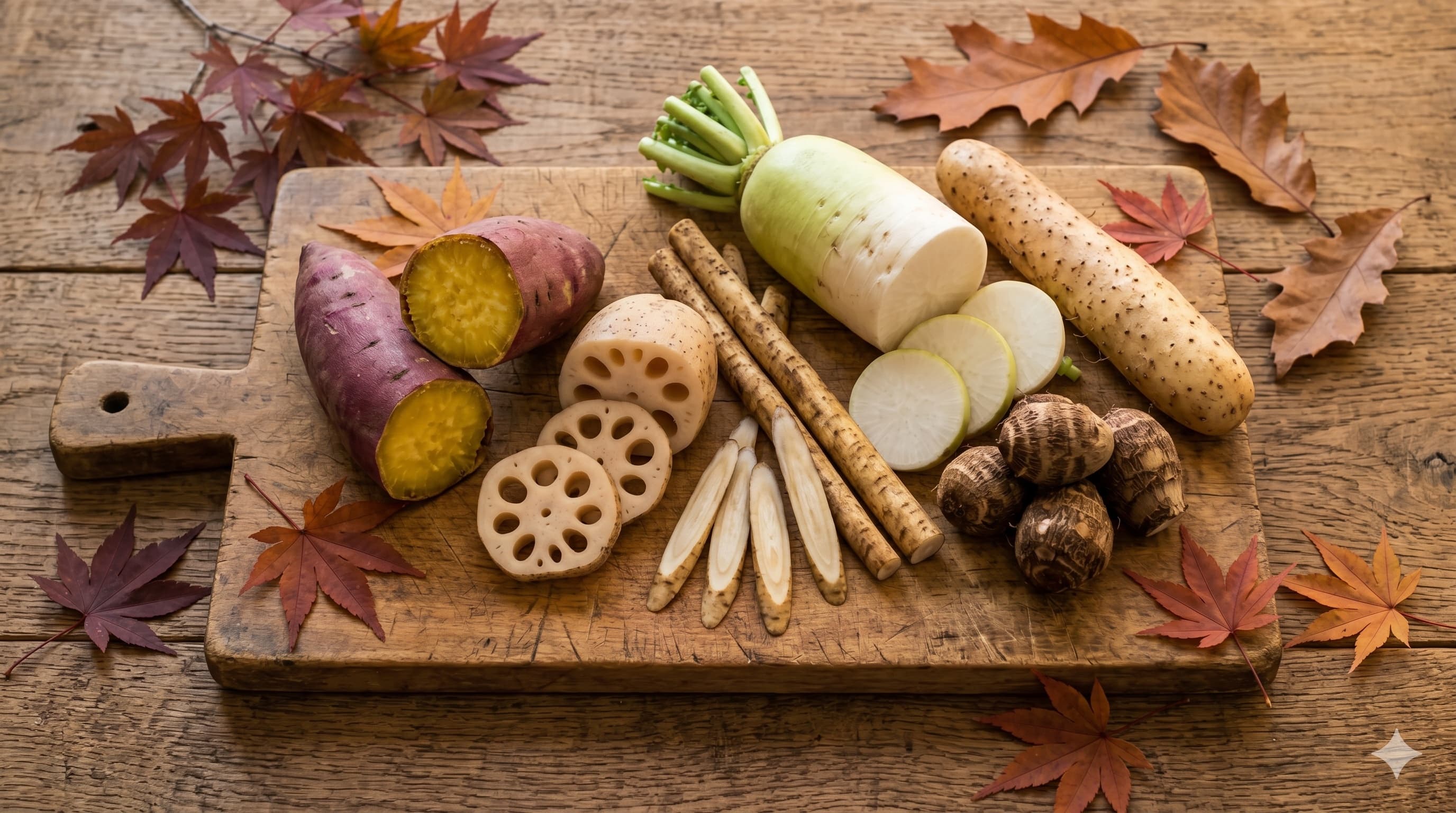
Root Vegetables in Japanese Culinary Culture
Root vegetables hold a special place in Japanese cuisine. They appear in simmered dishes, tempura, pickles, soups, and even sweets. Many Japanese root vegetables are unfamiliar to Western cooks but offer extraordinary flavors and textures that deserve wider appreciation. For plant-based cooks, these hearty, filling ingredients provide substance and satisfaction that lighter vegetables cannot match.
Satsumaimo: Japanese Sweet Potato
The satsumaimo, named after the Satsuma domain in southern Kyushu where it was first cultivated in Japan during the 1600s, is a sweet potato with purple-red skin and pale yellow flesh. When cooked, its flesh becomes dense, creamy, and intensely sweet — far sweeter and drier in texture than most Western sweet potato varieties.
In Japan, roasted sweet potatoes (yaki-imo) are a beloved autumn and winter street food, sold from small trucks that play a distinctive musical call. The slow roasting at relatively low temperatures converts the starches to sugars, producing an almost candy-like sweetness. Satsumaimo is also used in tempura, where it is sliced into rounds and fried in light batter. In Okinawan cuisine, purple-fleshed sweet potatoes called beni-imo are used in tarts and other sweets.
Gobo: Burdock Root
Burdock root (gobo) is a long, thin, brown-skinned root with a uniquely earthy, slightly sweet flavor and a satisfying crunch. While burdock grows wild across Europe and North America, it is almost exclusively cultivated and eaten in Japan and Korea. The root is rich in dietary fiber and has been valued in traditional East Asian herbalism.
The most famous gobo preparation is kinpira gobo — julienned burdock root and carrot stir-fried in sesame oil with soy sauce, mirin, and chili flakes. This dish, a standard item in Japanese home cooking and bento boxes, is naturally vegan and stores well. Gobo also appears in nabe (hot pot), mixed rice (takikomi gohan), and as a crispy deep-fried garnish.
Daikon: Japanese Radish
Daikon, the large white radish that can grow to impressive sizes, is one of the most consumed vegetables in Japan. Its name literally means "big root." When raw, daikon is crisp, juicy, and mildly peppery — grated daikon (daikon oroshi) is served as a condiment alongside tempura, grilled dishes, and noodles. When cooked, daikon transforms completely, becoming tender, translucent, and sweet, readily absorbing the flavors of whatever broth it is simmered in.
Oden, the popular Japanese winter stew, features thick rounds of daikon simmered for hours in a soy-flavored broth until they become meltingly soft. Takuan, the bright yellow pickle made from sun-dried daikon fermented in rice bran, is a classic accompaniment to rice. Daikon leaves (ha), often discarded, are also edible and nutritious, used in miso soup or stir-fried with sesame oil.
Renkon: Lotus Root
Lotus root (renkon) is immediately recognizable by the pattern of holes that runs through its interior, creating beautiful circular cross-sections when sliced. Its texture is crisp and starchy, somewhat like a water chestnut, and it retains its crunch even when cooked. Renkon is rich in vitamin C, dietary fiber, and various minerals.
In Japanese cuisine, renkon appears in many forms: sliced thin and fried as chips, simmered in sweetened soy broth (nimono), stuffed with mustard or miso and deep-fried (karashi renkon, a specialty of Kumamoto), or pickled in sweet vinegar. Its decorative cross-section makes it a popular ingredient in osechi ryori, the special dishes prepared for the New Year.
Satoimo: Taro Root
Satoimo, a small, hairy-skinned taro variety, has been cultivated in Japan since ancient times — predating the arrival of rice. Its flesh is white, slightly purple-flecked, and becomes creamy and slightly sticky when cooked. This sticky quality (neba-neba) is prized in Japanese cuisine. Satoimo is typically simmered in dashi-based broth with soy sauce and mirin (nimono), resulting in tender, flavor-soaked morsels. It is also a key ingredient in kenchinjiru, a hearty vegetable soup associated with Zen temple cooking.
Nagaimo and Yamaimo: Mountain Yams
Japanese mountain yams are unique among root vegetables for their ability to be eaten raw. When grated, nagaimo produces a remarkably viscous, slimy puree called tororo, which is poured over rice or soba noodles. This sticky texture is unusual in world cuisine but beloved in Japan. Cooked nagaimo has a completely different character — light, fluffy, and slightly starchy, it can be cut into cubes and added to soups or stir-fries.
Cooking with Japanese Root Vegetables
Japanese root vegetables reward patience. Many benefit from slow simmering that allows them to absorb surrounding flavors while becoming tender. When shopping, look for firm specimens without soft spots or sprouting. Most Japanese root vegetables store well in a cool, dark place. For plant-based cooks, these humble ingredients provide the hearty, warming, stick-to-your-ribs quality that makes a vegan meal truly satisfying, especially during the colder months.