Tsukemono: Japan's Vibrant Tradition of Vegan Pickled Vegetables
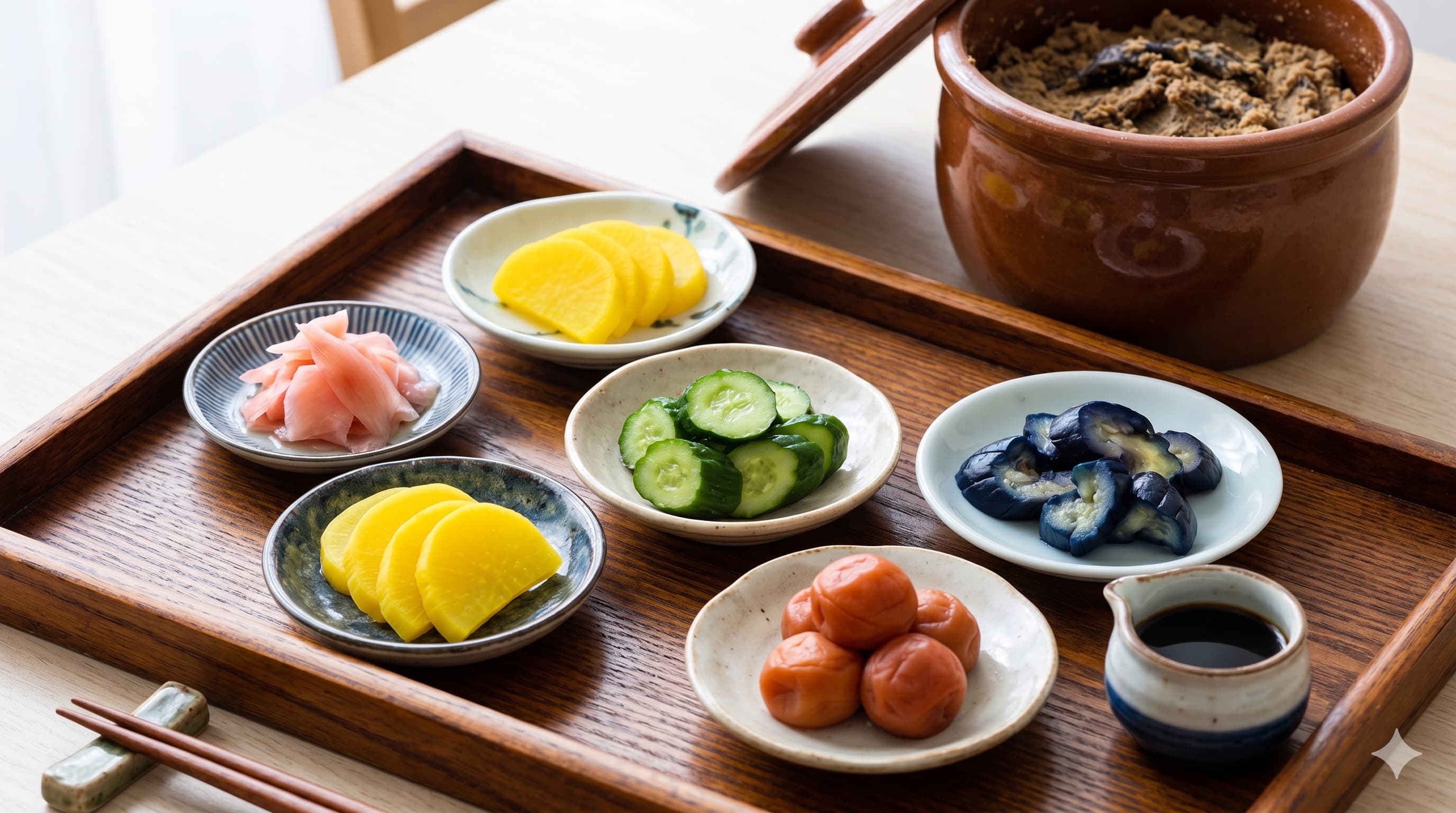
The Role of Pickles in Japanese Cuisine
In Japanese cuisine, pickles (tsukemono, literally "pickled things") are not a condiment or an afterthought — they are an essential component of virtually every meal. A traditional Japanese meal is considered incomplete without pickles, which serve to cleanse the palate between bites, aid digestion, and provide contrasting flavors and textures to rice and soup. Unlike Western pickles, which are often a single preparation (cucumbers in vinegar brine), Japanese tsukemono encompass a vast world of techniques, vegetables, and flavors.
For plant-based eaters, tsukemono are a gift. The overwhelming majority of Japanese pickles are entirely vegan — made from vegetables, salt, rice bran, or other plant-based fermentation media. They provide probiotics, vitamins, and intense umami flavor without any animal products.
Shiozuke: Salt Pickles
Salt pickling (shiozuke) is the simplest and oldest method of Japanese pickling. Vegetables are packed in salt, sometimes with additional flavoring agents like kombu, chili, or shiso leaves. The salt draws out moisture through osmosis, concentrating flavors and creating a lightly preserved product. Hakusai no shiozuke (salted napa cabbage) and kyuri no shiozuke (salted cucumber) are everyday examples. These quick pickles can be ready in as little as thirty minutes and are typically consumed within a few days.
Nukazuke: Rice Bran Pickles
Nukazuke are perhaps the most distinctive Japanese pickles. Vegetables are buried in a fermented rice bran bed called nukadoko, which is a living ecosystem of lactobacillus bacteria. The nukadoko must be stirred by hand at least once daily to maintain proper fermentation — a practice that many Japanese families have continued for generations, with some nukadoko beds reportedly maintained for decades or even over a century.
Vegetables pickled in nukadoko develop a complex, tangy, slightly funky flavor that is unlike any other pickling method. Common nukazuke vegetables include cucumber, daikon, eggplant, carrot, and turnip. The resulting pickles are rich in B vitamins produced by the fermentation process and contain beneficial probiotic bacteria.
Kasuzuke: Sake Lees Pickles
Kasuzuke uses sake kasu (the lees or sediment left over from sake brewing) as the pickling medium. Vegetables — commonly uri melon, cucumber, daikon, and ginger — are packed in sake kasu mixed with sugar and salt, then aged for weeks to months. The result is a sweet, mildly alcoholic pickle with a distinctive fragrance. Narazuke, a specialty of Nara, is a well-known type of kasuzuke that is aged for years until it turns deep brown and develops an intensely complex flavor.
Suzuke: Vinegar Pickles
Vinegar pickles (suzuke) offer bright, tangy flavors without fermentation. Gari (pickled ginger), the familiar pink accompaniment to sushi, is a vinegar pickle. Rakkyo (pickled shallots), sweet and crunchy, are another popular variety. Vinegar pickles are quick to make and provide a sharp counterpoint to rich or oily dishes. They can usually be prepared in a single day.
Misozuke: Miso Pickles
Miso itself is a fermented product, and when vegetables are packed into miso, they undergo a secondary fermentation that produces pickles of extraordinary depth. Misozuke vegetables — commonly daikon, cucumber, eggplant, and ginger — absorb the umami and salt of the miso while contributing their own moisture and flavor. The result is a richly savory pickle that pairs perfectly with plain rice. The miso used for pickling can afterward be used in cooking, having absorbed vegetable flavors that enhance soups and sauces.
Umeboshi: Pickled Plums
Umeboshi, salt-pickled Japanese plums (actually a type of apricot, Prunus mume), are among the most iconic Japanese preserved foods. Ume fruits are harvested in early summer, packed in salt, weighted, and left to release their juices. Red shiso leaves are often added to give umeboshi their characteristic crimson color. After several weeks of pickling, the plums are sun-dried for several days, then returned to their brine.
Umeboshi are intensely sour and salty, and they have been consumed in Japan for over a thousand years. They are a traditional accompaniment to rice, a flavoring for onigiri (rice balls), and a folk remedy for fatigue and digestive issues. The surrounding liquid, umezu (plum vinegar), is used as a seasoning and pickling agent in its own right.
Making Tsukemono at Home
Many tsukemono are remarkably easy to make at home. Quick salt pickles require nothing more than vegetables, salt, and a weight. Vinegar pickles need only a basic brine of rice vinegar, sugar, and salt. Starting a nukadoko bed is more involved but deeply rewarding — once established, it can produce fresh pickles daily with minimal effort. The key principles are using the freshest seasonal vegetables, maintaining clean equipment, and trusting the fermentation process. Japanese pickles connect us to one of humanity's oldest food preservation techniques, and they remain as relevant and delicious today as they were centuries ago.