Essential Japanese Vegan Pantry: 10 Ingredients for Plant-Based Japanese Cooking
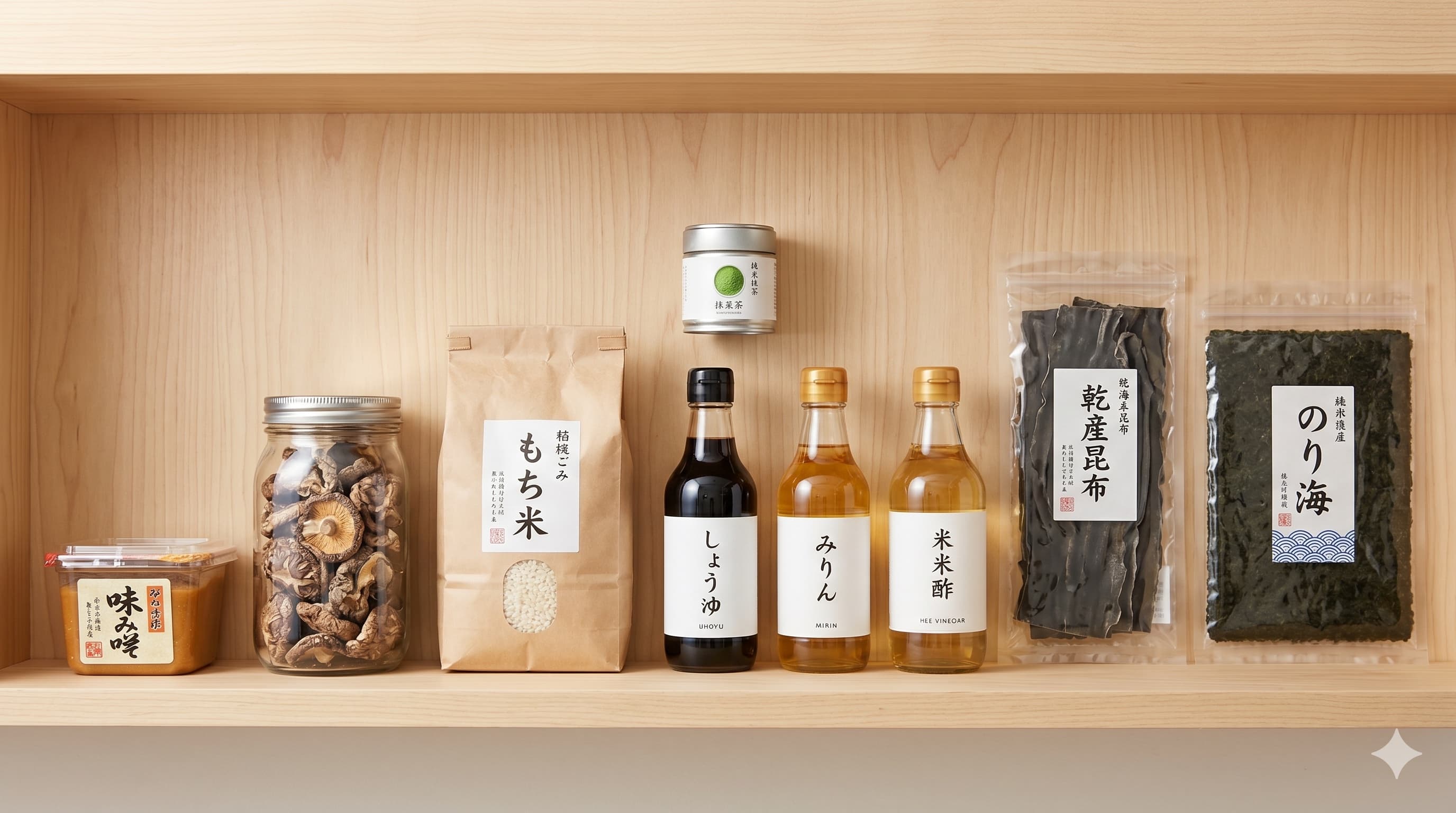
Building a Japanese Vegan Kitchen
Japanese cuisine achieves extraordinary depth from a relatively small set of foundational ingredients. The good news for plant-based cooks: most of these staples are naturally vegan. Stock these ten essentials and you can prepare authentic miso soup, simmered vegetables, stir-fries, rice bowls, noodle dishes, and more — all without any animal products. Here is your complete guide to each ingredient, including what to look for, how to use it, and vegan pitfalls to watch for.
1. Kombu (昆布) — Kelp
What it is: Dried kelp harvested primarily from the cold waters around Hokkaido. It is the foundation of vegan Japanese dashi — the broth that underpins nearly all savory cooking.
How to use: Soak in cold water for 30 minutes, then gently heat (never boil — boiling makes it bitter and slimy). Use the resulting broth for miso soup, simmered dishes, and cooking rice. Also adds umami when placed in bean-cooking water or pickle brines.
Vegan note: Always vegan. No pitfalls.
Storage: Keeps indefinitely in a cool, dry, dark place. White powder on the surface is natural glutamate — do not wash it off.
2. Dried Shiitake Mushrooms (干し椎茸)
What it is: Sun-dried or machine-dried shiitake caps that concentrate flavor dramatically. Combined with kombu, they create the essential vegan dashi.
How to use: Soak in cold water overnight for the best flavor extraction (or 30 minutes in warm water for speed). Use the soaking liquid as dashi. Slice the reconstituted mushrooms for stir-fries, simmered dishes, or sushi fillings.
Vegan note: Always vegan. Buy whole caps (donko style) for best quality — they have thicker flesh and more concentrated flavor.
Storage: Keep in an airtight container away from moisture. Lasts 1-2 years.
3. Miso (味噌) — White and Red
What it is: Fermented soybean paste made with koji (Aspergillus oryzae mold), soybeans, salt, and often rice or barley. White miso (shiro) is mild and sweet, fermented briefly. Red miso (aka) is saltier and deeper, aged longer.
How to use: Dissolve in hot (not boiling) broth for soup. Use as a glaze for grilled vegetables (dengaku). Whisk into salad dressings. Stir into marinades. Mix with mirin for a sweet-savory sauce.
Vegan pitfall: Most miso is naturally vegan, but some specialty varieties (particularly dashi-iri miso / 出汁入り味噌) contain added bonito or fish stock. Read labels carefully — avoid anything listing katsuobushi, niboshi, or dashi among ingredients.
Storage: Refrigerate after opening. Lasts 6-12 months.
4. Shoyu (醤油) — Soy Sauce
What it is: Japanese soy sauce brewed from soybeans, wheat, salt, and water. Lighter and more nuanced than Chinese soy sauce. Tamari is the wheat-free alternative for gluten-sensitive cooks.
How to use: Season everything — dipping sauce for tofu and dumplings, seasoning for stir-fries and rice, base for noodle broth (tsuyu), finishing drizzle on edamame.
Vegan pitfall: Standard shoyu is vegan. However, some flavored or "special" soy sauces (particularly tsuyu and mentsuyu — noodle dipping sauces) contain bonito extract. Always check ingredients on pre-made sauce blends.
Storage: Refrigerate after opening to preserve flavor. Lasts 6+ months.
5. Mirin (みりん) — Sweet Rice Wine
What it is: A sweet rice wine used exclusively for cooking. Authentic hon-mirin is made from glutinous rice, koji, and shochu (distilled spirit). It adds gentle sweetness, sheen, and depth to sauces and glazes.
How to use: Combined with soy sauce as the base of teriyaki sauce and nimono (simmering) liquid. Adds gloss to stir-fries. Balances saltiness. Use in place of sugar for more complex sweetness.
Vegan note: Always vegan. Avoid "mirin-fu chomiryo" (mirin-like seasoning) which is lower quality and sometimes contains additives.
Storage: Room temperature, away from heat and light. Lasts 3+ months after opening.
6. Rice Vinegar (米酢)
What it is: A mild, slightly sweet vinegar made from fermented rice. Less harsh than Western vinegars, it adds brightness without overpowering delicate Japanese flavors.
How to use: Essential for sushi rice seasoning. Use in sunomono (vinegared vegetable dishes), pickles, dressings, and dipping sauces. Splash into stir-fries for brightness.
Vegan pitfall: Plain rice vinegar is always vegan. However, pre-made "sushi vinegar" (sushi-su) sometimes contains dashi. Make your own by mixing rice vinegar with sugar and salt.
Storage: Room temperature. Lasts indefinitely.
7. Tofu (豆腐) — Silken, Firm, and Koya-dofu
What it is: Soybean curd in various textures. Silken (kinugoshi) is custard-soft for soups and desserts. Firm (momen) holds shape for grilling and stir-frying. Koya-dofu (freeze-dried) has a spongy, meaty texture that absorbs sauces beautifully.
How to use: Silken: float in miso soup, serve chilled with toppings (hiyayakko), blend into smoothies. Firm: pan-fry, grill, braise, crumble into scrambles. Koya-dofu: reconstitute in hot water, squeeze dry, simmer in seasoned broth.
Vegan note: Always vegan. Koya-dofu is a particularly valuable pantry staple — lightweight, shelf-stable, and extraordinarily versatile.
Storage: Fresh tofu: refrigerate, use within a week. Koya-dofu: room temperature, lasts months.
8. Nori (海苔) — Seaweed Sheets
What it is: Paper-thin sheets of dried laver seaweed. Provides umami, minerals (iodine, iron), and satisfying crispness. Essential for sushi rolls, rice balls (onigiri), and as a garnish.
How to use: Wrap around sushi rice and fillings. Tear into strips over noodle soups. Crumble as garnish on rice bowls. Cut into rectangles for wrapping onigiri. Toast briefly over flame for extra crispness.
Vegan note: Plain nori is always vegan. Seasoned nori (ajitsuke nori) sometimes contains bonito flavoring — check labels.
Storage: Keep sealed with desiccant packet. Moisture ruins crispness immediately.
9. Sesame — Oil (ごま油) and Seeds (ごま)
What it is: Toasted sesame oil provides intense nutty aroma as a finishing oil. Sesame seeds (white and black) add crunch, visual contrast, and nutrition.
How to use: Oil: drizzle on finished dishes, mix into dressings, add to stir-fries at the end. Seeds: grind into paste (for goma-ae dressing), sprinkle whole on rice and vegetables, coat onigiri.
Vegan note: Always vegan. For goma-ae (sesame-dressed vegetables), make the sauce with ground sesame, soy sauce, sugar, and mirin — no animal products needed.
Storage: Oil: refrigerate after opening to prevent rancidity. Seeds: cool, dark place in sealed container.
10. Shiso (紫蘇) — Perilla Leaves
What it is: An aromatic herb in the mint family with a unique flavor — part basil, part anise, part citrus. Green shiso (ooba) is used fresh; red shiso (akajiso) is used for pickling umeboshi and coloring.
How to use: Tuck into sushi rolls, chiffonade over cold noodles, wrap around tempura, mix into rice, garnish tofu. The fresh leaves add a distinctly Japanese brightness that no other herb replicates.
Vegan note: Always vegan. If you find fresh shiso hard to source, Korean perilla leaves (kkaennip) are a close relative with a somewhat different but complementary flavor.
Storage: Wrap stems in damp paper towel, store in a jar of water in the refrigerator. Lasts about 1 week fresh.
Putting It All Together
With these ten ingredients, you can make: kombu-shiitake dashi (the base of everything), miso soup with tofu and seaweed, teriyaki-glazed vegetables (shoyu + mirin), sesame-dressed greens (goma-ae), sushi rolls, onigiri, simmered root vegetables (nimono), and countless other authentic Japanese dishes — all completely plant-based. Start by making a batch of dashi, then explore outward. Japanese vegan cooking rewards simplicity, precision, and respect for each ingredient's natural character.