Japanese Vegan Ramen: Building Rich Broth Without Animal Products
The Challenge of Vegan Ramen
Ramen is arguably Japan's most popular comfort food, but it presents a significant challenge for plant-based eaters. Traditional ramen broth is built on long-simmered animal bones — pork (tonkotsu), chicken (tori), or combinations thereof — sometimes supplemented with dried fish. The rich, collagen-laden mouthfeel of these broths seems impossible to replicate without animal products.
Yet Japanese cooks have been solving this problem with increasing creativity. Vegan ramen shops have proliferated across Japan in recent years, and some have earned devoted followings that rival any traditional ramen-ya. The key is understanding what makes ramen broth satisfying — umami depth, body and viscosity, aromatic complexity, and a lingering richness — and finding plant-based ways to achieve each quality.
Building Umami: The Foundation
The umami foundation of vegan ramen starts with kombu and dried shiitake mushrooms. These two ingredients, simmered together, produce a dashi that is rich in glutamic acid (from the kombu) and guanylic acid (from the shiitake). When these two types of umami compounds combine, they create a synergistic effect that amplifies perceived savoriness far beyond what either provides alone — a phenomenon Japanese cooks have understood intuitively for centuries.
To this base, add dried tomatoes or tomato paste (rich in glutamate), roasted onions (which develop sweetness and umami through caramelization), and soy sauce or miso (fermented umami powerhouses). Some vegan ramen shops also use nutritional yeast or fermented bean pastes for additional depth.
Creating Body: Replacing Collagen
The viscous, lip-coating quality of tonkotsu broth comes from dissolved collagen. Plant-based alternatives to achieve similar body include:
- Soy milk: Adding unsweetened soy milk to broth creates a creamy, opaque tonkotsu-style appearance and rich mouthfeel. This technique is used in many Japanese vegan ramen shops.
- Blended cashews or sesame paste: Soaked cashews blended into the broth, or tahini and Japanese neri-goma (sesame paste), add creaminess and fat.
- Potato or other starches: Simmering potato in the broth and then blending it adds body without changing the flavor profile significantly.
- Long-simmered vegetables: Cooking onions, carrots, and cabbage for hours until they break down creates natural thickness.
The Four Tare: Seasoning Bases
In professional ramen making, the broth and the seasoning base (tare) are prepared separately and combined at serving time. The four main tare styles each offer different possibilities for vegan ramen:
- Shoyu (soy sauce) tare: The most straightforward vegan option. A concentrated blend of soy sauce, mirin, sake, and sometimes kombu and mushroom extracts. Produces a clear, brown, deeply savory broth.
- Shio (salt) tare: A delicate, clear broth seasoned primarily with salt, often enhanced with kombu and dried scallop alternatives. The most subtle style, requiring an exceptionally well-made base broth.
- Miso tare: A robust, hearty style using miso paste as the primary seasoning. Naturally rich in fermented umami, miso tare is perhaps the easiest to make satisfying in a vegan context. Different miso types (white, red, blended) create different flavor profiles.
- Tantanmen style: Inspired by Chinese dan dan noodles, this style uses sesame paste and chili oil for a spicy, creamy broth that is naturally suited to plant-based preparation.
Aromatic Oils and Finishing
A thin layer of flavored oil floating on top of the broth is crucial to ramen's aroma and richness. Vegan options include mayu (burnt garlic oil, made by slowly blackening garlic in sesame oil), chili oil (rayu), scallion oil, or shiso-infused oil. These aromatic oils hit your nose before the first sip, creating an immediate impression of richness and complexity.
Toppings: Beyond Chashu
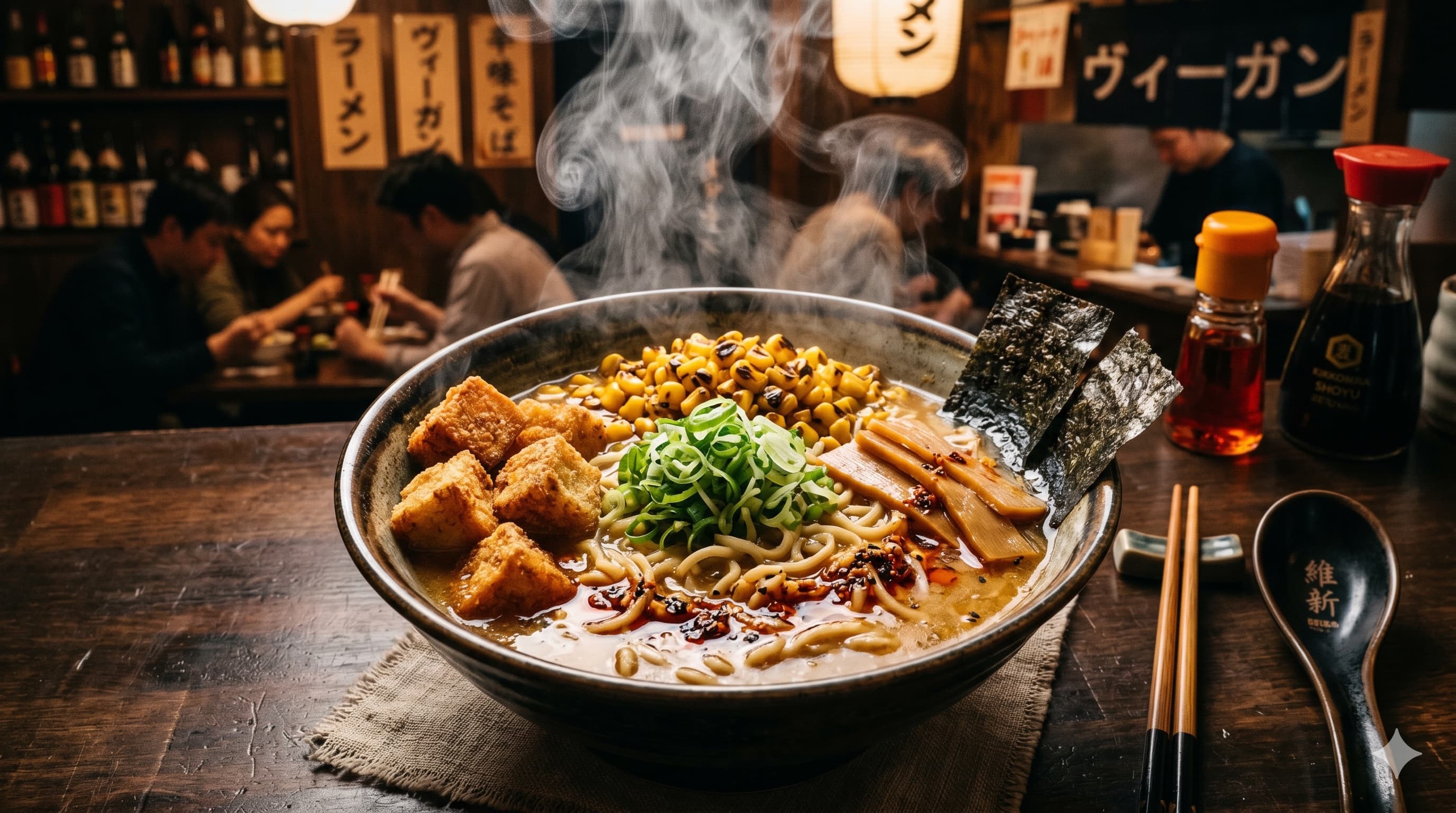
Traditional ramen toppings include chashu (braised pork belly) and ajitama (marinated soft-boiled egg). Vegan alternatives that have become popular in Japan include:
- Soy-braised shiitake or king oyster mushrooms: Sliced thick and braised in soy sauce and mirin, these provide a meaty, umami-rich topping.
- Menma (fermented bamboo shoots): Already vegan, menma is a traditional ramen topping with a satisfying crunch.
- Seasoned corn: Particularly popular in Hokkaido-style miso ramen, sweet corn provides color and sweetness.
- Nori (dried seaweed): A standard topping that is always vegan.
- Moyashi (bean sprouts): Blanched or stir-fried, bean sprouts add freshness and crunch.
- Sliced scallions and sesame seeds: Classic garnishes that complete the bowl.
The Noodles
Ramen noodles are typically made from wheat flour, water, salt, and kansui (an alkaline mineral water that gives ramen noodles their characteristic yellow color and springy texture). Most ramen noodles are naturally vegan, though some contain eggs. Check the ingredients if buying packaged noodles, and ask at restaurants. Fresh ramen noodle shops (seimen-jo) can usually confirm whether their noodles contain egg.
Putting It All Together
A great bowl of vegan ramen requires attention to each component: a umami-rich base broth, a well-balanced tare, an aromatic finishing oil, properly cooked noodles, and thoughtfully prepared toppings. The beauty of the ramen format is that each element can be prepared separately and assembled at serving time, allowing for infinite customization. With the right techniques, vegan ramen can be every bit as soul-warming, complex, and satisfying as its traditional counterpart.