Japanese Vegan Sushi: Creative Plant-Based Rolls Beyond Fish
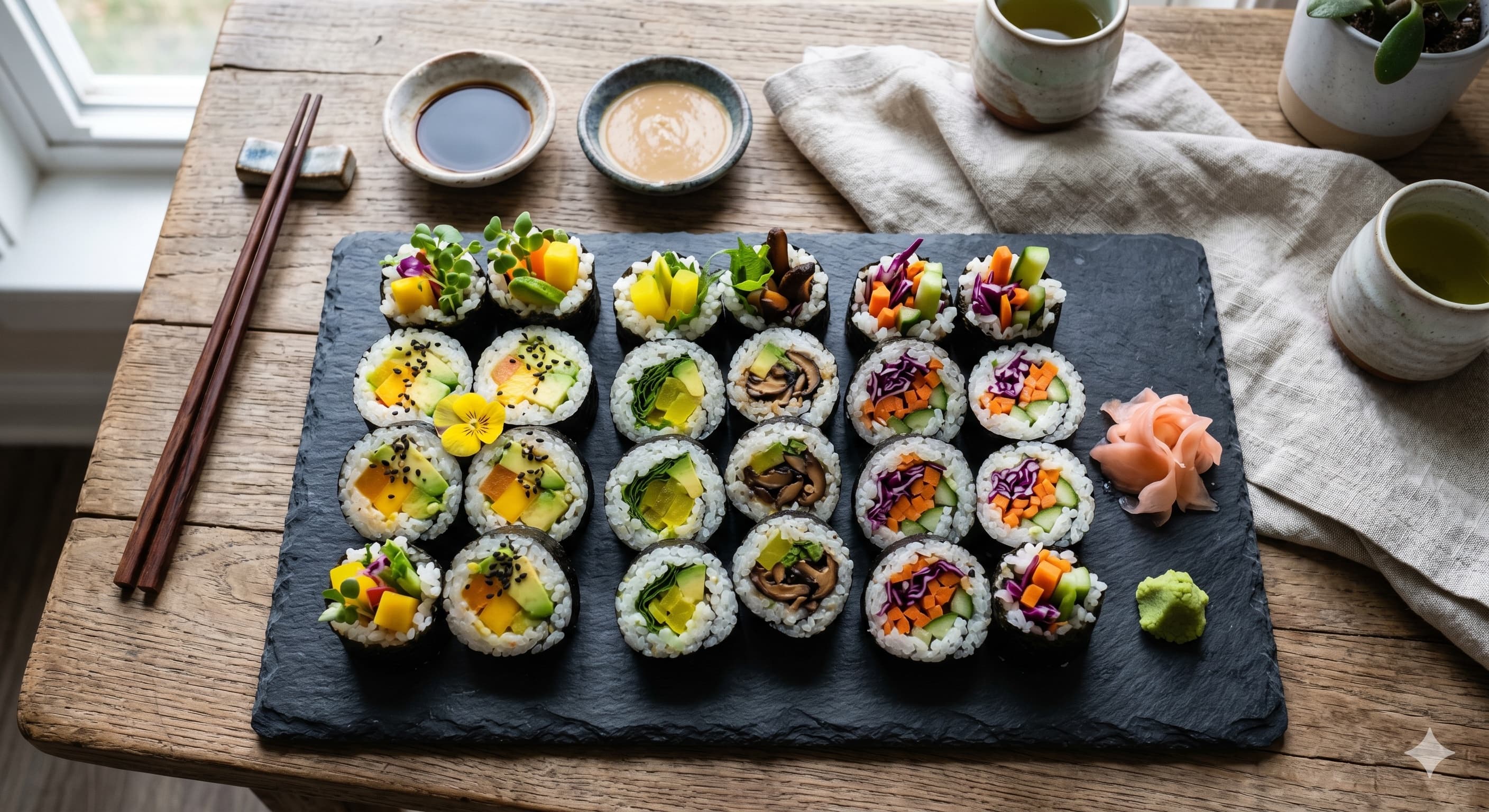
Sushi Is Not Synonymous with Fish
In the West, sushi is often equated with raw fish, but this is a misunderstanding of the term. The word "sushi" actually refers to the vinegared rice (shari or sumeshi) that is the foundation of every sushi preparation. Historically, sushi began as a method of preserving fish in fermented rice — the rice was originally discarded and only the preserved fish eaten. Over centuries, the rice itself became the focus, and the toppings and fillings diversified far beyond fish. Many traditional sushi preparations are already plant-based, and modern creativity has expanded the possibilities even further.
Traditional Plant-Based Sushi
Several classic sushi preparations have always been vegan:
- Kappa maki (cucumber roll): Named after the kappa, a water creature in Japanese folklore said to love cucumbers. This simple thin roll of cucumber in vinegared rice wrapped in nori is refreshing and universally available.
- Kanpyo maki (gourd roll): Dried calabash gourd strips, reconstituted and simmered in a sweet soy sauce mixture, rolled in rice and nori. Kanpyo maki is a traditional sushi type with a chewy, sweet-savory character.
- Shinko maki (pickled daikon roll): Bright yellow takuan pickled daikon radish provides crunch and tang in this simple roll.
- Inari-zushi: Sweet, soy-simmered pouches of abura-age (fried tofu) stuffed with seasoned sushi rice. Inari-zushi is a staple of bento boxes and casual sushi meals. The name comes from Inari, the deity associated with foxes and rice in Japanese folk religion, and foxes are said to be fond of fried tofu.
- Natto maki: Fermented soybeans in a nori-wrapped roll. An acquired taste but a classic.
Vegetable Nigiri and Gunkan
Nigiri sushi — a slice of topping pressed onto a mound of rice — works beautifully with plant-based ingredients. Ripe avocado, sliced and pressed onto shari, has become a modern standard. Lightly torched or raw sliced shiitake mushrooms brushed with soy sauce make excellent nigiri. Blanched asparagus, seared eggplant with miso glaze, and sweet tamagoyaki-style preparations made with mashed silken tofu and turmeric are all possibilities.
Gunkan maki — boat-shaped sushi with a nori collar — is traditionally used for loose toppings like fish roe. Vegan versions use corn kernels, finely diced vegetables, or marinated mushrooms held in place by the nori wrapper.
Creative Modern Rolls
Modern sushi chefs have embraced plant-based creativity with enthusiasm. Some popular vegan sushi innovations include:
- Avocado rolls: Now ubiquitous worldwide, avocado's creamy texture and mild flavor make it the most popular plant-based sushi ingredient.
- Sweet potato tempura rolls: Crispy fried sweet potato provides crunch and sweetness.
- Mushroom rolls: Combinations of shiitake, enoki, and shimeji mushrooms, sometimes lightly sauteed, offer umami depth.
- Pickled vegetable rolls: Various tsukemono — pickled burdock, ginger, plum — create bright, tangy rolls.
- Tofu skin rolls: Yuba or inari-age as a wrapper or filling adds richness and protein.
Sushi Rice: The Heart of the Matter
Whatever the topping, great sushi depends on properly prepared rice. Japanese short-grain rice is washed repeatedly until the water runs clear, cooked with a precise water ratio, then dressed with a mixture of rice vinegar, sugar, and salt while still hot. The rice should be glossy, slightly sticky, and served at body temperature — never refrigerator-cold. Sushi rice seasoning (sushi-zu) is always vegan: rice vinegar, sugar, and salt, sometimes with a piece of kombu added during cooking for extra umami.
Condiments and Accompaniments
Most sushi condiments are naturally plant-based. Soy sauce (shoyu) for dipping, wasabi (Japanese horseradish, though be aware that many restaurants use a cheaper imitation made from regular horseradish with green coloring), and gari (pickled ginger) for palate cleansing between pieces are all vegan. However, be cautious about premixed soy sauce preparations at some restaurants, which may contain dashi or mirin with added fish-derived ingredients.
Temaki: Hand Rolls
Temaki (hand rolls) are cone-shaped rolls of nori filled with rice and toppings, eaten immediately by hand. They are the easiest form of sushi to make at home, requiring no bamboo rolling mat or special technique. Simply hold a sheet of nori, add rice and your choice of fillings — julienned cucumber, avocado, pickled daikon, shiso leaf, seasoned mushrooms — roll into a cone, and eat. Temaki parties, where guests assemble their own rolls from a spread of prepared ingredients, are a fun and interactive way to enjoy vegan sushi at home.
The Future of Plant-Based Sushi
As plant-based eating grows globally, sushi — with its emphasis on rice, vegetables, and seaweed — is naturally positioned to lead the way. The tradition already includes numerous vegan preparations, and the sushi format is inherently adaptable. From traditional kappa maki to innovative modern creations, plant-based sushi demonstrates that this beloved cuisine needs no fish to be authentic, delicious, and deeply satisfying.