Korean Mountain Vegetables: A Guide to Sanyae Namul
The Korean Tradition of Wild Greens
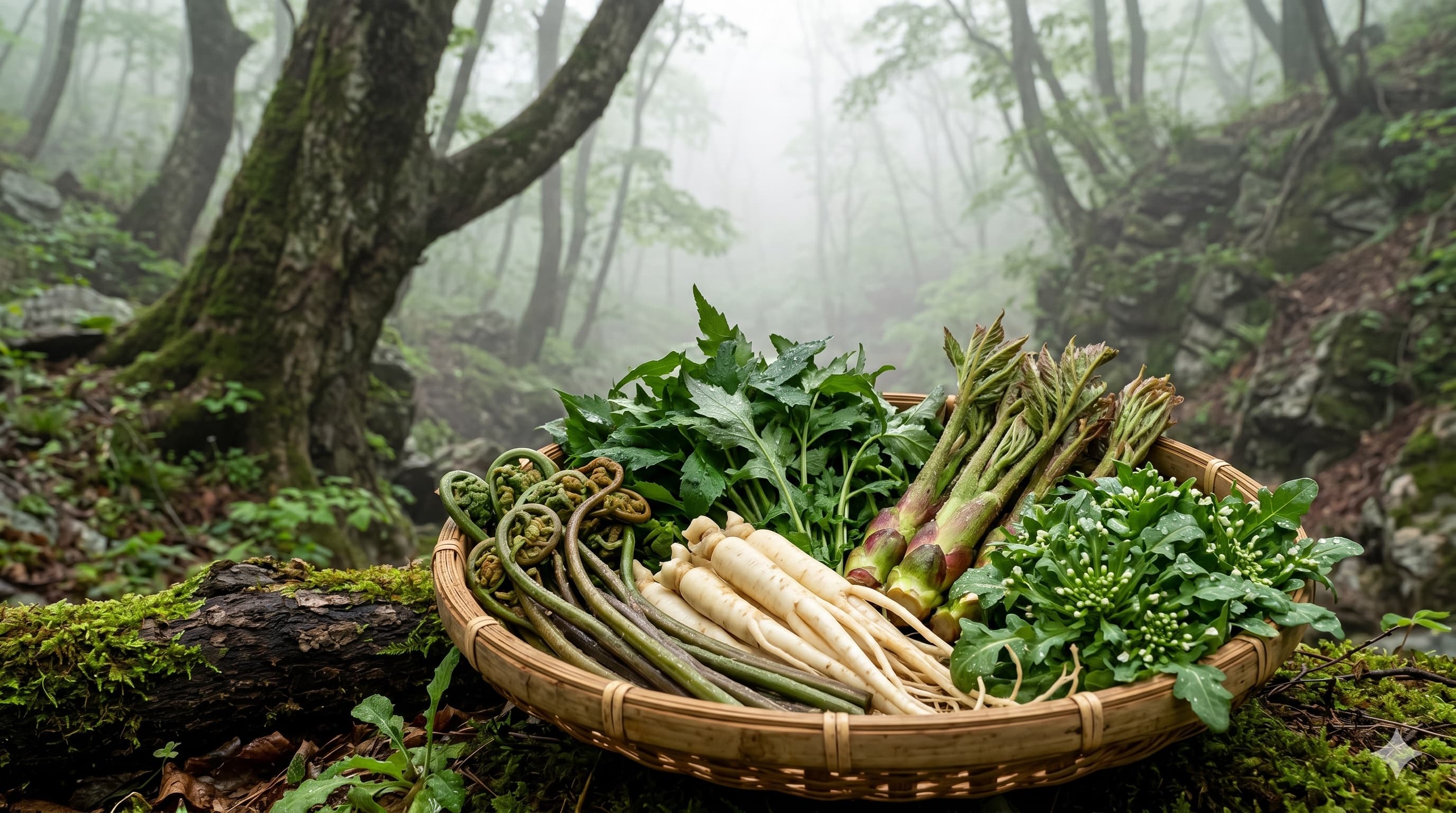
Korea's mountainous terrain — roughly seventy percent of the country is covered in mountains and hills — has fostered one of the world's richest traditions of wild plant foraging. Sanyae namul (산야 나물) literally means "mountain and field greens," and this category encompasses dozens of wild and semi-wild plants that have been gathered, dried, and prepared for millennia. Unlike cultivated vegetables that are available year-round, mountain greens appear in specific seasons, connecting the Korean table to the rhythms of the natural world.
This foraging tradition is not a quaint relic of the past. Even today, spring in Korea brings an almost festive atmosphere to the mountains as experienced foragers — many of them elderly women who learned from their mothers and grandmothers — gather the season's first shoots. Markets overflow with bundles of fresh and dried wild greens, and restaurants feature special seasonal menus built around them. For the vegan cook, sanyae namul represents an extraordinary treasury of flavors, textures, and nutrients that cultivated vegetables simply cannot replicate.
Gosari (고사리) — Fernbrake / Bracken Fiddleheads
Perhaps the most iconic of all Korean mountain vegetables, gosari is the young, curled frond of the bracken fern. It has a uniquely slippery-chewy texture and an earthy, slightly nutty flavor that is essential to bibimbap (mixed rice) and many temple dishes. Gosari must be properly prepared — fresh fiddleheads are boiled, then soaked in water for several hours to remove tannins and reduce any naturally occurring compounds. Dried gosari (the most common form sold commercially) is soaked overnight, then simmered until tender before being seasoned with soy sauce, sesame oil, and perilla seed powder.
The Donguibogam notes that bracken fern clears heat from the body and benefits the intestines. In Korean folk medicine, it is considered especially appropriate for spring consumption, when the body needs to shed the heaviness of winter.
Doraji (도라지) — Balloon Flower Root
Doraji, the root of the balloon flower (Platycodon grandiflorus), is one of the most valued plants in Korean cuisine and medicine. The fresh roots have a distinctive bitterness that softens with proper preparation — splitting, salting, and squeezing repeatedly to extract the bitter sap. Once prepared, doraji has a crisp, almost crunchy texture and a clean, mildly bitter flavor that pairs beautifully with gochugaru and sesame.
In the Donguibogam, doraji is classified as a lung-benefiting herb, recommended for coughs, sore throats, and respiratory congestion. It is often prepared as a tea or syrup during cold season. As a namul dish, seasoned doraji is a classic banchan that provides a flavor unlike anything in Western cuisine.
Minari (미나리) — Water Parsley / Water Dropwort
Brought to wider international attention by the award-winning film of the same name, minari is a semi-aquatic plant that grows along streams and in marshy areas. It has a clean, peppery, celery-like flavor with a distinctive herbal freshness. Minari is eaten raw in salads and as a wrap for grilled items, blanched as a namul, or added to soups and stews.
According to the Donguibogam, minari has cooling properties and helps purify the blood. It is traditionally consumed in spring and summer when its cleansing properties are most valued. Rich in vitamins A and C, as well as iron and calcium, minari is a powerhouse green that deserves far more recognition in international plant-based cooking.
Naengi (냉이) — Shepherd's Purse
One of the earliest spring greens to emerge, naengi announces the end of winter in Korean culinary tradition. This small, unassuming plant — considered a common weed in many Western countries — is treasured in Korea for its delicate, slightly nutty flavor with hints of mustard and radish. Naengi is classically prepared as a doenjang guk (soybean paste soup), where its earthy flavor harmonizes perfectly with the fermented paste. It can also be blanched and served as a namul.
The Donguibogam describes naengi as beneficial for the eyes and liver, with properties that help clear stagnation after the long winter months. Modern analysis confirms that shepherd's purse is remarkably nutritious, rich in vitamin K, vitamin C, and various minerals.
Chwinamul (취나물) — Aster Greens
Chwinamul refers to several species of wild aster whose leaves are gathered in spring and early summer. They have a distinctive, slightly bitter and aromatic flavor that is utterly unique — sometimes described as a cross between spinach and chrysanthemum. Chwinamul is most commonly dried for year-round use, then reconstituted and stir-fried with soy sauce, garlic (or ginger in temple cooking), and sesame oil. The dried version has a concentrated, almost smoky flavor that fresh cannot match.
These greens are a staple of temple cuisine and rural Korean cooking alike. They represent the Korean culinary principle that truly flavorful food comes from working with nature's offerings rather than against them. Foraging for chwinamul in the mountains remains a cherished spring activity throughout Korea.
Bringing Mountain Greens to Your Kitchen
While foraging for Korean mountain vegetables outside Korea requires significant botanical knowledge and caution, many of these greens are available dried in Korean grocery stores. Dried gosari, chwinamul, and doraji are widely stocked and have an almost indefinite shelf life. To prepare them, soak in cold water overnight, then simmer until tender, drain, and season. The concentrated flavors of dried mountain greens are deeply satisfying and provide a direct connection to Korea's ancient plant-based food traditions. Start with dried gosari for bibimbap and dried chwinamul stir-fried with sesame oil — these two dishes alone will reveal a world of flavor you may never have known existed.