Korean Perilla (Deulkkae): The Forgotten Superfood
What Is Perilla?
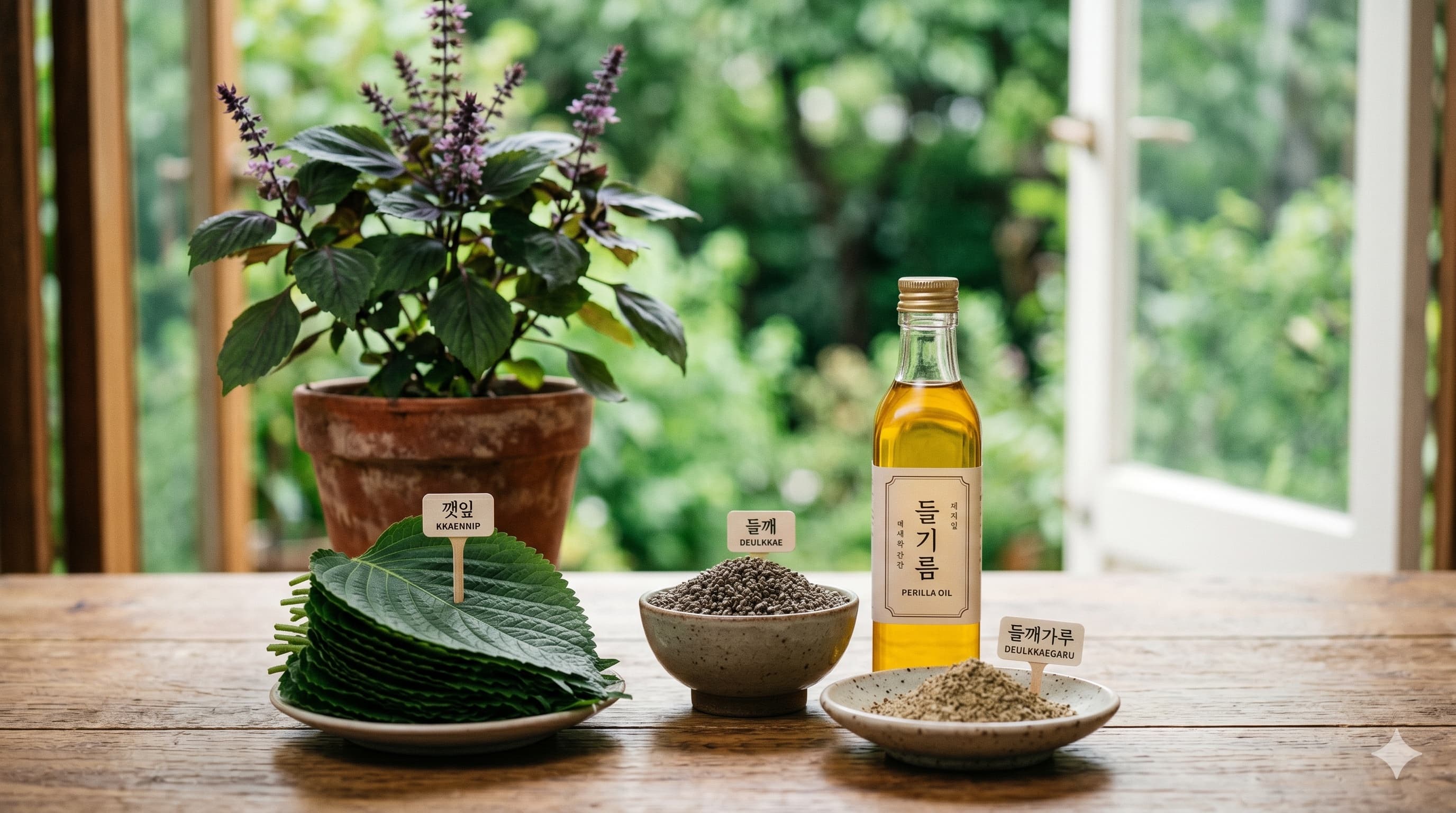
Deulkkae (들깨) is the Korean name for perilla (Perilla frutescens), a plant in the mint family that is used extensively in Korean cuisine in two forms: the seeds and the leaves. While perilla leaves (kkaennip, 깻잎) are sometimes available in Asian markets labeled as "sesame leaves" (a misleading translation — they are unrelated to sesame), perilla seeds and perilla seed oil remain largely unknown outside Korean and Japanese food cultures. This is a remarkable oversight, because perilla is one of the most nutritionally impressive plant foods in the world.
In Korea, perilla is everywhere. The roasted, ground seeds are sprinkled on namul dishes, stirred into soups, and used to coat rice cakes. Perilla oil is used for cooking and seasoning. Perilla leaves are eaten fresh as wraps, pickled as jangajji, and used to enfold rice and other fillings. The plant grows easily in Korean home gardens and has been cultivated on the peninsula for thousands of years.
Nutritional Powerhouse
Perilla seeds are one of the richest plant sources of alpha-linolenic acid (ALA), an omega-3 fatty acid. By weight, perilla seeds contain more ALA than flax seeds — roughly 50 to 60 percent of their oil content is omega-3. For vegans and vegetarians who may struggle to get adequate omega-3 fatty acids without fish oil, perilla is a game-changing ingredient. The Donguibogam, while not using the modern terminology of fatty acids, describes perilla seeds as beneficial for moistening the lungs, relieving coughs, and nourishing the skin — observations that align well with what we now know about omega-3's anti-inflammatory properties.
Beyond omega-3, perilla seeds provide significant amounts of protein, dietary fiber, iron, calcium, and vitamin E. Perilla leaves are rich in beta-carotene, vitamin C, and a range of polyphenolic compounds with antioxidant activity. The leaves also contain rosmarinic acid, which has been studied for anti-inflammatory and anti-allergenic properties.
Deulkkae in Korean Cooking
The most common culinary use of perilla seeds in Korean cooking is as deulkkae garu (들깨가루), a powder made from roasted, ground perilla seeds. This powder has a rich, nutty, slightly earthy flavor that is entirely distinct from sesame. It is stirred into soups and stews to create a creamy, slightly grainy texture without any dairy. Deulkkae kalguksu (perilla seed noodle soup) is one of Korea's great comfort foods — handmade wheat noodles in a broth thickened with perilla seed powder, creating a silky, nutty, warming bowl.
Perilla seed powder is also the key ingredient in many temple-style namul preparations, where it replaces garlic as a source of aromatic depth. Blanched vegetables tossed with perilla seed powder, soy sauce, and a touch of sesame oil take on a completely different character from garlic-based namul — more subtle, nuttier, and with a distinctive roundness of flavor that is hard to describe until you taste it.
Kkaennip: The Versatile Perilla Leaf
Korean perilla leaves (kkaennip) are large, heart-shaped, and have a flavor unlike any Western herb — somewhere between mint, basil, and anise, with a slightly grassy, almost cinnamon-like undertone. They are one of the most versatile leaves in Korean cuisine:
- As wraps: Fresh kkaennip leaves are used to wrap rice, ssamjang, and grilled items. They add an aromatic, refreshing counterpoint to rich or spicy flavors.
- Pickled (kkaennip jangajji): Stacked and preserved in a soy sauce-based brine, pickled perilla leaves become a beloved banchan with a concentrated herbal-savory flavor. They keep for months.
- In jeon: Whole leaves are stuffed with a tofu or vegetable filling, dipped in batter, and pan-fried into elegant, aromatic fritters.
- As garnish: Chiffonaded perilla leaves are scattered over noodle dishes, bibimbap, and cold soups for a burst of fresh flavor and green color.
Growing and Sourcing Perilla
Perilla is remarkably easy to grow in temperate climates. It thrives in the same conditions as basil — full sun, regular water, and warm summer temperatures. Seeds are available from Asian specialty seed suppliers. The plant grows quickly, reaching two to three feet in height, and produces abundant leaves throughout the summer. In areas with Korean or Japanese grocery stores, fresh kkaennip and dried perilla seeds are usually available year-round. Perilla seed powder and perilla oil can be found in Korean markets or ordered online.
Why Perilla Deserves Global Recognition
In an era when "superfoods" like chia seeds and hemp hearts command premium prices, it is puzzling that perilla remains obscure outside East Asia. It offers superior omega-3 content, a delicious and versatile flavor profile, and centuries of documented culinary and medicinal use. For anyone following a plant-based diet, and especially for those exploring Korean vegan cuisine, perilla — both the seeds and the leaves — is an ingredient that deserves to move from the margins to the center of your kitchen.