Korean Royal Court Cuisine Adapted for Vegans
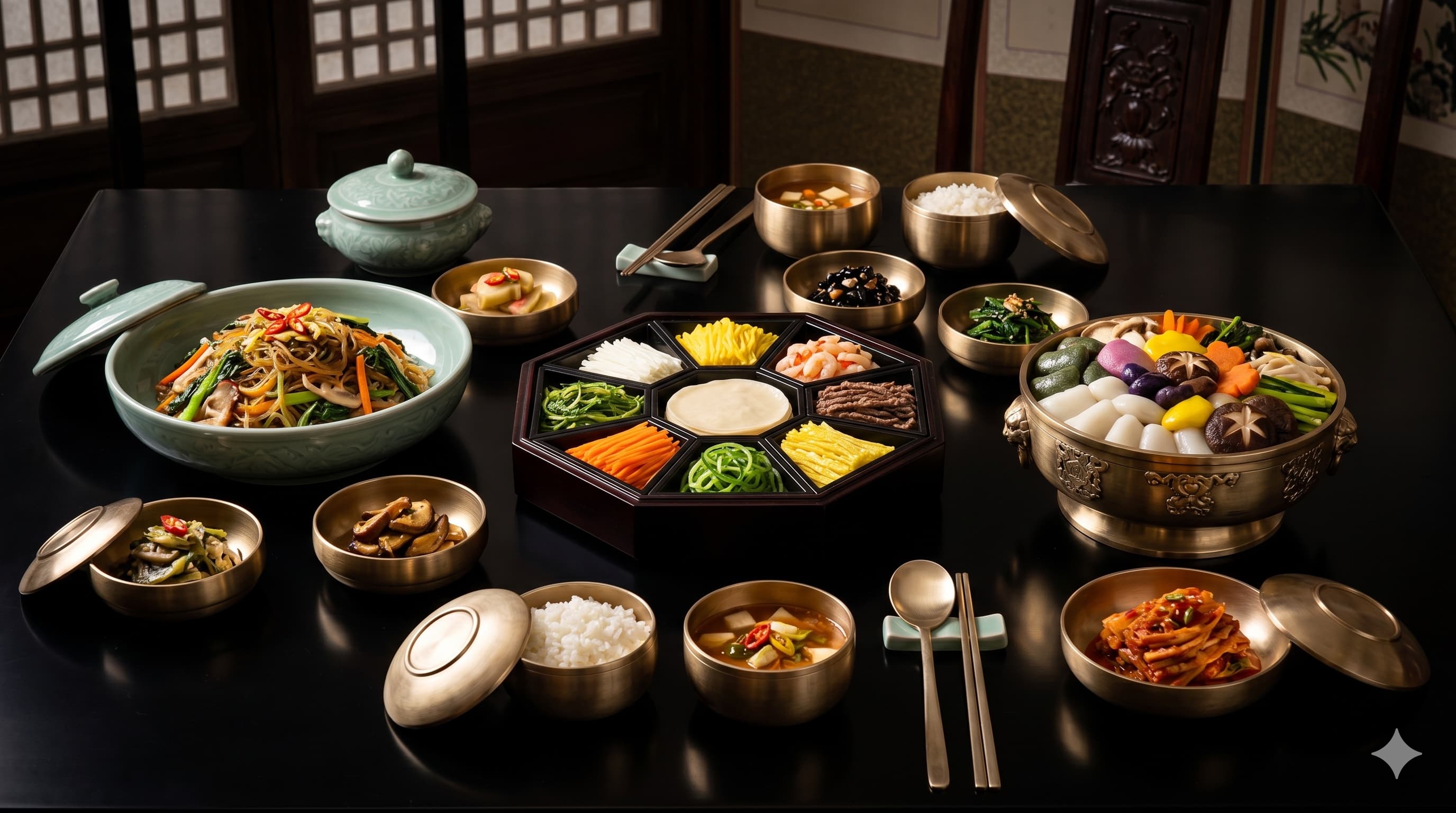
The Grandeur of Joseon Royal Cuisine
Korean royal court cuisine, known as gungjung eumsik (궁중음식), represents the pinnacle of Korean culinary artistry. Developed over five centuries during the Joseon dynasty (1392-1897), these dishes were prepared by highly trained court cooks for the king, queen, and royal household. Every meal was a carefully orchestrated performance of flavor, color, nutrition, and presentation, governed by strict protocols and philosophical principles.
The royal kitchen, called suragan (수라간), employed dozens of specialists. Meals were served on ornate brassware and followed a structure called surasang (수라상), which in its fullest form included twelve side dishes alongside rice, soup, stew, kimchi, and various condiments. The table setting itself encoded Korean cosmological principles: foods were arranged according to the five colors and five directions, and the balance of flavors was considered essential for the king's health and, by extension, the health of the nation.
Key Characteristics of Royal Court Food
What distinguishes royal court cuisine from everyday Korean cooking is its refinement and attention to detail. Ingredients were sourced from every region of the kingdom — the finest seafood from the coasts, mountain greens from the highlands, rice from the most productive paddies. Each ingredient was meticulously prepared: vegetables were cut into uniform, elegant shapes; garnishes were arranged with precision; and flavors were layered carefully rather than applied with a heavy hand.
Several characteristics make royal court cuisine surprisingly adaptable to plant-based cooking:
- Emphasis on vegetables: Even in its original form, the majority of banchan on the royal table were vegetable-based. Namul, kimchi, jangajji, and vegetable jeon were standard.
- Ingredient purity: Court cooks prized the natural flavor of each ingredient. Seasoning was restrained and balanced, never overpowering. This philosophy aligns perfectly with plant-based cooking that lets vegetables shine.
- Visual artistry: The royal table was a visual masterpiece. This aesthetic sensibility translates beautifully to vegan presentations, where colorful vegetables and elegant arrangements create dishes that rival any fine dining experience.
- Medicinal intention: Royal meals were designed in consultation with court physicians who prescribed specific ingredients for the king's health. Every dish served a nutritional or therapeutic purpose.
Veganizing Iconic Royal Dishes
Gujeolpan (구절판) — Nine-Section Plate: This iconic appetizer features eight different fillings arranged around a central stack of delicate wheat crepes. Diners place fillings on a crepe, roll it up, and eat it in one bite. The original includes meat and egg strips alongside vegetables, but a vegan gujeolpan is spectacular: julienned shiitake mushrooms, seasoned spinach, carrot, cucumber, radish, bellflower root, fernbrake, and mung bean jelly (nokdu muk). The crepes themselves are naturally vegan when made without egg.
Sinseollo (신선로) — Royal Hot Pot: Named after the "vessel of the immortals," this elaborate hot pot features a ring-shaped brass pot with a chimney in the center for burning charcoal. The broth-filled ring holds an artful arrangement of ingredients. The vegan version uses a rich mushroom and kelp broth, filled with tofu, various mushrooms, ginkgo nuts, pine nuts, jujubes, egg-free vegetable jeon, and seasonal vegetables. The presentation alone makes this a showstopping centerpiece.
Tteok Galbi (떡갈비) — Shaped Patties: While the original is a minced meat preparation, plant-based versions using a mixture of finely chopped mushrooms, firm tofu, sweet potato starch, and traditional seasonings can replicate the tender, slightly sweet character of this royal dish. Shaped into small oval patties and pan-fried to a glossy finish, they make elegant plant-based appetizers.
The Royal Table Setting for Plant-Based Dining
You can bring the spirit of the royal table to a vegan dinner party by following the structure of the surasang. Start with two types of rice (white and mixed grain), served in covered brass or ceramic bowls. Include two soups: a clear broth (mushroom and kelp based) and a heartier stew (doenjang jjigae or kimchi jjigae). Arrange seven to twelve banchan covering the five colors: white (radish namul, tofu), black (seaweed, black sesame items), green (spinach, cucumber), red (kimchi, gochugaru-seasoned dishes), and yellow (pumpkin, soybean items). Add a jeon platter, a braised dish, and at least two types of kimchi.
The beauty of this approach is that while each individual dish may be simple, the cumulative effect of twelve or more dishes on the table creates an experience of abundance and artistry that rivals any haute cuisine tradition in the world. It is proof that plant-based dining can be not just adequate but magnificent.
Preserving a Living Tradition
Today, Korean royal court cuisine is preserved as an Intangible Cultural Heritage, with designated master practitioners who have learned the techniques through direct lineage. Restaurants in Seoul, such as the famous Jihwaja, offer royal court dining experiences. For the vegan home cook, studying royal court cuisine offers invaluable lessons in presentation, balance, and the art of making vegetables the star of the table. It is a reminder that Korean cuisine at its highest expression has always celebrated the plant kingdom with extraordinary sophistication.