Korean Soup and Stew Bases Without Animal Stock
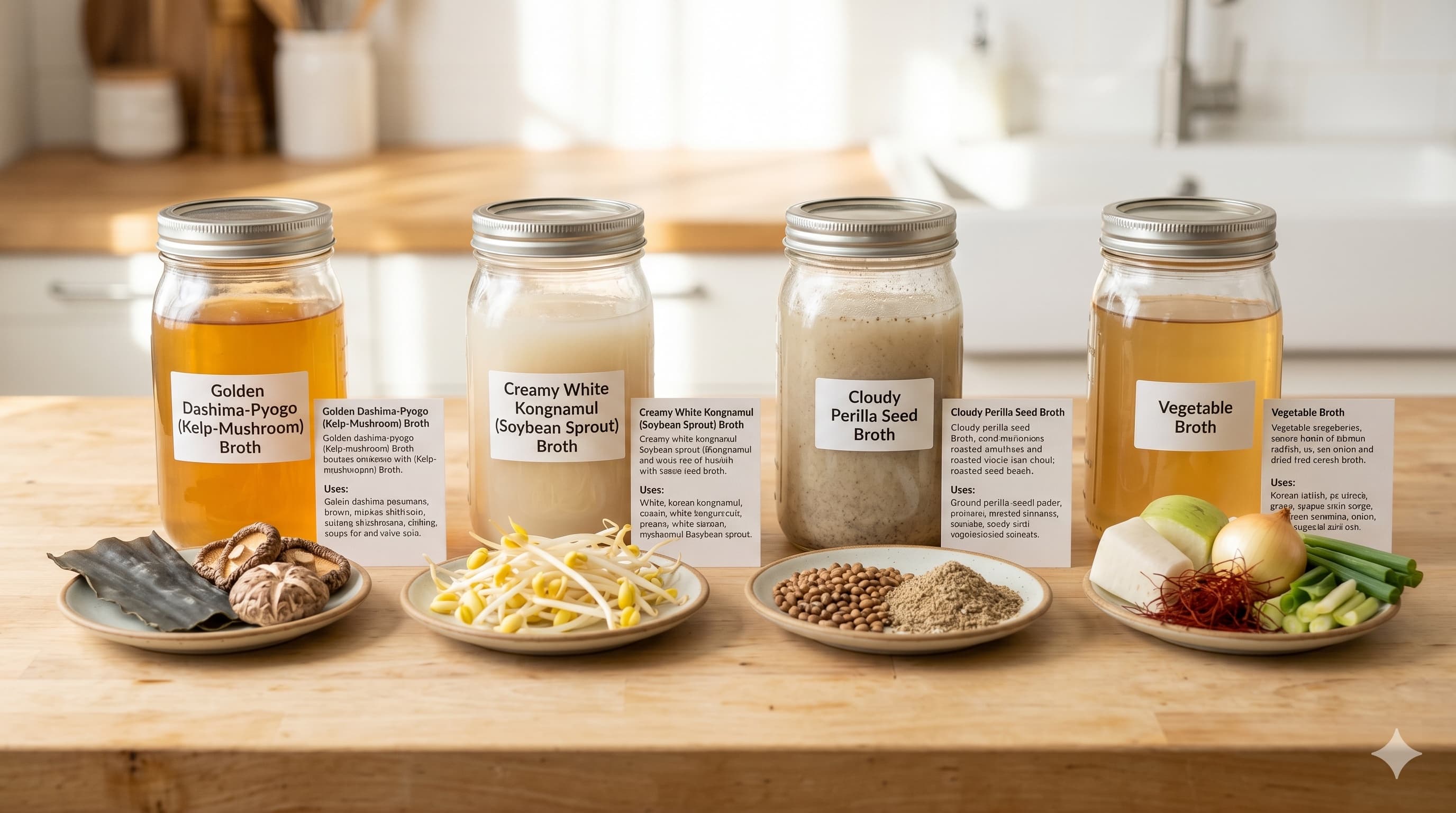
Broth: The Invisible Foundation
In Korean cooking, broth is rarely served on its own as a sipping liquid. Instead, it works behind the scenes as the foundation that supports and amplifies every other flavor in a soup or stew. A well-made broth transforms a collection of vegetables and seasonings into a unified, harmonious dish. A poor broth — or worse, plain water — leaves the same ingredients tasting flat and disconnected. This is why Korean cooks, whether in home kitchens or professional restaurants, invest time in preparing their broth bases, and why mastering plant-based Korean broth-making is the single most important skill for the vegan Korean cook.
The good news is that Korean plant-based broths are not complicated. They require few ingredients, minimal hands-on time, and produce results that are deeply flavorful — arguably more nuanced than the meat-based stocks they replace. The key ingredients have been used in Korean temple kitchens for over a thousand years, and they are available in any Korean or Asian grocery store.
Dashima-Pyogo Broth (Kelp and Shiitake)
This is the master broth of Korean vegan cooking — the equivalent of chicken stock in Western cuisine or dashi in Japanese cooking. It combines two of nature's most powerful umami sources: dried kelp (dashima) and dried shiitake mushrooms (pyogo beoseot). The glutamic acid from the kelp and the guanylate from the shiitake create a synergistic umami effect — together, they produce a savory intensity far greater than either ingredient alone.
Basic recipe: Place a six-inch piece of dried dashima and four to five dried shiitake mushrooms in a pot with eight cups of cold water. Let it soak for at least thirty minutes (or up to overnight in the refrigerator for maximum extraction). Bring to a gentle simmer over medium heat — do not boil rapidly, as this makes the kelp slimy and bitter. Remove the kelp just before the water reaches a full boil. Continue simmering the shiitake for another fifteen to twenty minutes, then strain. The resulting broth is clean, golden, and profoundly savory.
This broth serves as the base for doenjang jjigae, kimchi jjigae, tteokguk, various namul preparations, and nearly any Korean soup or stew. Make a large batch and freeze it in portions — you will use it almost daily.
Vegetable Broth (Chaeso Yuksu)
A more robust broth for heartier stews combines dried dashima and shiitake with Korean radish (mu), onion, dried anchovies replacement (more mushrooms or soybeans), and sometimes dried jujubes. The radish provides a clean sweetness, while the onion adds depth. This broth has more body and complexity than the simple dashima-pyogo version and is excellent for richer stews.
Basic recipe: Combine a six-inch piece of dashima, four dried shiitake, one-quarter of a Korean radish (cut into chunks), one onion (halved), and optionally two dried jujubes and a handful of dried soybeans in ten cups of water. Bring to a simmer and cook for thirty to forty minutes. Strain and use as needed.
Soybean Sprout Broth (Kongnamul Broth)
One of Korea's great unsung broths is made simply by simmering soybean sprouts (kongnamul) in water. The sprouts release a subtle, sweet, clean-tasting broth that is the traditional base for kongnamul guk (soybean sprout soup) and a popular hangover remedy. The key technique is to bring the sprouts and water to a boil with the lid on, then keep the lid on throughout cooking — removing the lid while soybean sprouts cook releases enzymes that create an unpleasant "beany" smell.
Soybean sprout broth is especially good for light, refreshing soups where you do not want the assertive flavor of mushroom or kelp to dominate. It works beautifully in summer soups and as a cooking liquid for delicate noodles.
Perilla Seed Broth
A distinctive broth used extensively in temple cuisine, perilla seed broth is made by blending roasted perilla seeds (deulkkae) with water and straining the mixture, or simply stirring perilla seed powder into a dashima broth. The result is a creamy, nutty broth with a pale, milky appearance that feels almost like a plant milk. This broth is the foundation for deulkkae kalguksu (perilla noodle soup) and various temple-style stews. It provides richness and body without any added oil, and its omega-3-rich fat content adds nutritional value.
Doenjang-Based Broth
Sometimes the simplest approach is the best: dissolving doenjang directly into hot water or a simple dashima broth creates an instant, richly flavored base for soups. The fermented soybean paste provides umami, salt, and a complex fermented depth all in one ingredient. For a quick weeknight doenjang guk, bring dashima broth to a simmer, stir in two tablespoons of doenjang (pressing it through a fine strainer or dissolving it in a ladle), add cubed tofu and sliced vegetables, and cook for ten minutes. This is the fastest path to a deeply satisfying Korean soup.
Building Layers of Flavor
The secret to exceptional Korean vegan soups and stews is layering umami sources. Start with a good broth base, then add fermented pastes (doenjang, gochujang), soy sauce, and ingredients that contribute their own savory depth (mushrooms, seaweed, fermented kimchi). Each layer adds a different dimension of umami, and the cumulative effect is a depth of flavor that rivals or surpasses any meat-based preparation.
Korean temple cooks have perfected this approach over centuries, building extraordinary complexity from entirely plant-based ingredients. When you taste a well-made temple-style doenjang jjigae and realize that its rich, warming, deeply savory character comes from nothing more than soybeans, vegetables, and sea kelp, you understand that "vegan" and "flavorful" are not contradictory terms — in Korean cooking, they have always been synonymous.