Korean Temple Food vs Japanese Shojin Ryori: Comparing East Asian Buddhist Cuisines
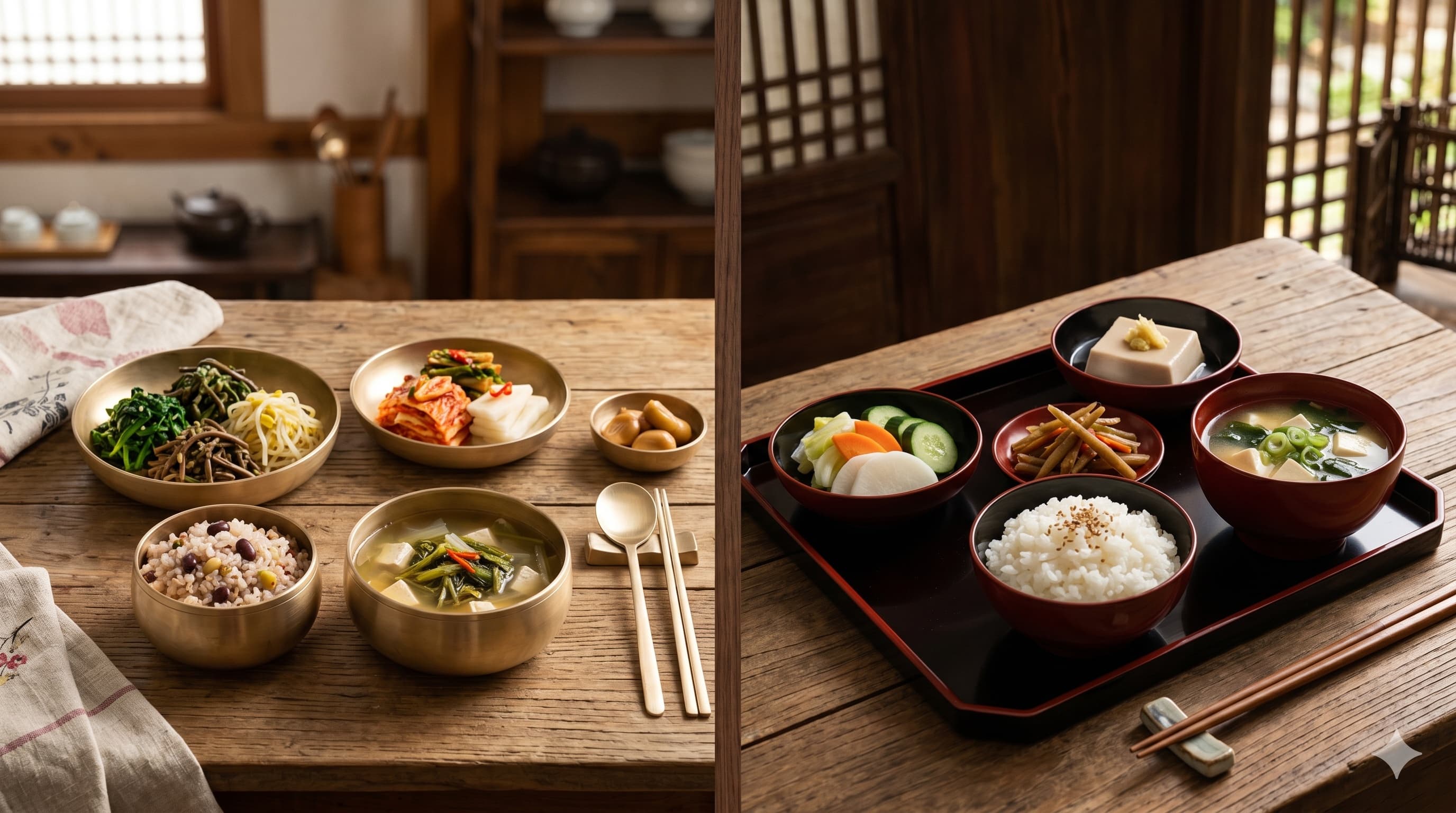
Two Branches of the Same Tree
Korean temple food (sachal eumsik, 사찰음식) and Japanese shojin ryori (精進料理) both emerged from the same source: Mahayana Buddhist practice that prohibits the taking of life. Buddhism traveled from India through China to Korea and then to Japan, carrying vegetarian culinary principles along with it. Yet over centuries, each tradition developed its own distinct character shaped by local ingredients, climate, and culture.
Shared Foundations
Both cuisines share core principles that immediately distinguish them from secular cooking:
- No animal products: Neither uses meat, fish, eggs, or dairy
- No five pungent vegetables: Both avoid garlic, onions, leeks, chives, and scallions (known as osinchae in Korean, gokun in Japanese)
- Mindful preparation: Cooking is itself a meditative practice, performed with gratitude and full attention
- Minimal waste: Every part of an ingredient is used with respect
- Seasonal rhythm: Both cuisines follow nature's calendar strictly
Key Differences in Approach
Fermentation vs. Subtlety
Korean temple food leans heavily on bold, fermented flavors. Doenjang, ganjang, gochujang, and various fermented vegetable preparations (jangajji) provide deep, complex umami. Japanese shojin ryori, by contrast, tends toward understated elegance — relying on kombu dashi, light soy, and the natural flavors of pristine seasonal ingredients with minimal intervention.
Spice and Heat
Korean temple cuisine embraces chili (gochugaru and gochujang), using it generously in many preparations. Japanese shojin ryori rarely uses heat, preferring wasabi or sansho pepper in small, precise applications. This reflects broader differences in each country's culinary identity.
Presentation Philosophy
Shojin ryori follows highly codified aesthetic principles — specific numbers of dishes, precise plate arrangements, and the Japanese concept of moritsuke (plating art). Korean temple food, while beautiful, is presented more rustically and abundantly, with many banchan (side dishes) shared communally.
Ingredient Palette
Korean temple food features a wider variety of wild mountain greens (snamul), root vegetables, and bold preparations like braised tofu and hearty stews. Shojin ryori highlights tofu preparations (yudofu, agedashi), wheat gluten (fu), and delicate simmered dishes (nimono). Both use sesame extensively, but Korean cuisine adds perilla as a signature flavor that has no equivalent in Japanese cooking.
Role of Rice
In shojin ryori, plain white rice is served separately as a sacred staple. Korean temple food more freely incorporates mixed-grain rice, porridges, and rice cooked with seasonal vegetables or beans.
What We Can Learn from Both
Together, these traditions offer a complete education in plant-based cooking. From Korean temple food, we learn the power of fermentation, bold seasoning, and vegetable variety. From shojin ryori, we learn restraint, precision, and the beauty of letting a single ingredient speak. A modern vegan cook drawing from both traditions has an extraordinarily rich repertoire.
Cultural Context
Both cuisines have gained global recognition in recent years. Korea's Venerable Jeong Kwan and Japan's long-established temple restaurants in Kyoto have introduced millions to these traditions. As plant-based eating grows worldwide, these ancient cuisines offer time-tested wisdom that goes far beyond simply removing meat from a plate.