What You'll Eat at a Korean Temple Stay: A Food Lover's Guide
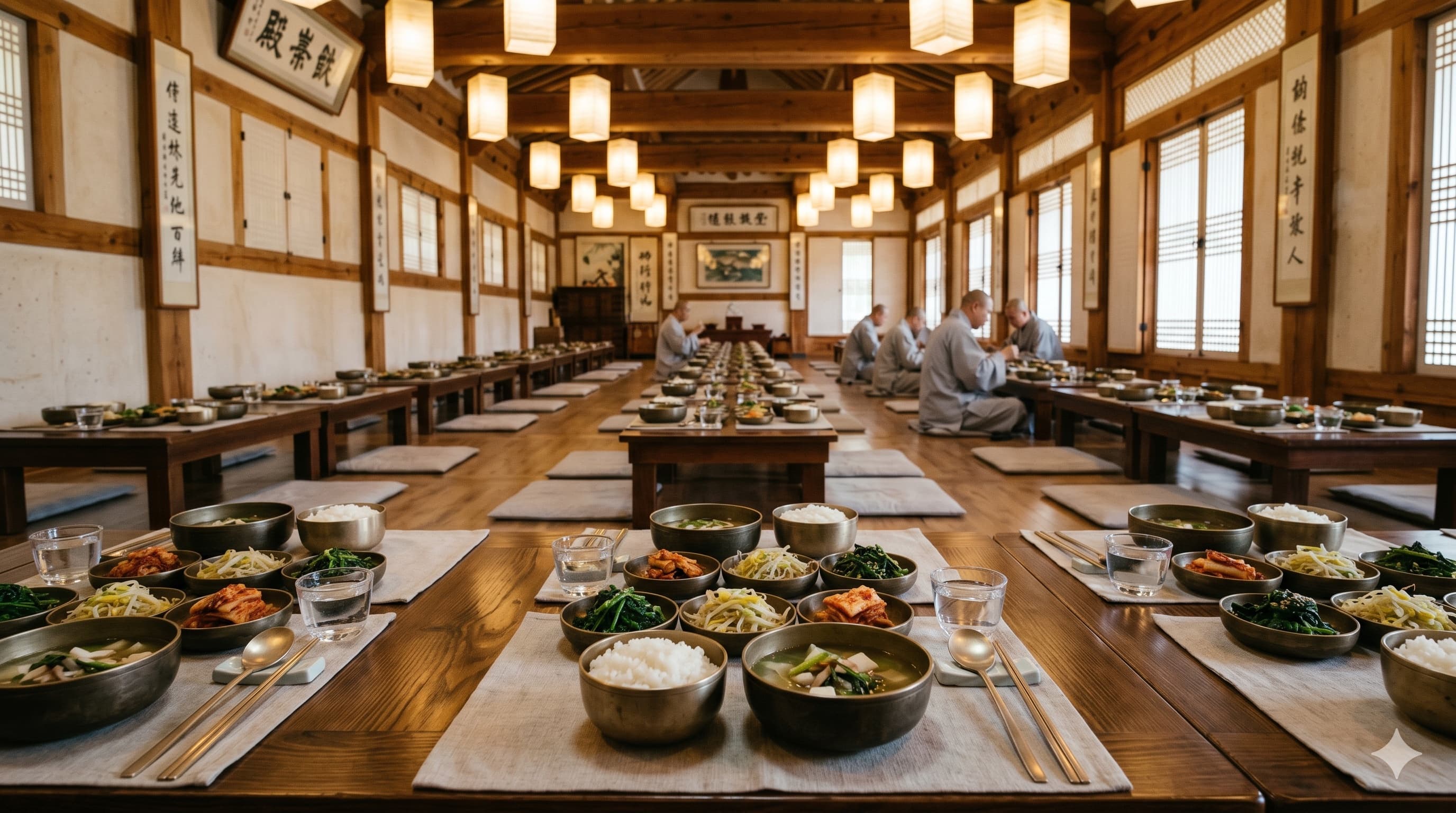
Temple Stay: More Than Tourism
A Korean temple stay (템플스테이) is an immersive program offered by Buddhist monasteries across South Korea, inviting visitors to experience monastic life for one to several days. While meditation, chanting, and tea ceremonies are central activities, for many visitors the food becomes the most transformative element of the experience. Eating in a temple is not merely dining — it is a practice that can permanently change your relationship with food.
The Daily Meal Schedule
Korean monasteries follow a structured eating schedule aligned with monastic routine:
- Morning meal (아침공양, 6:00-6:30 AM): Simple and warming. Typically rice porridge (juk) or plain rice with 2-3 light banchan and a mild soup. Designed to gently wake the digestive system after early morning meditation (3:00-5:00 AM chanting)
- Midday meal (점심공양, 11:30 AM-12:00 PM): The main meal of the day, when the most variety appears. Rice, soup, and 5-7 banchan including namul, braised dishes (jorim), fermented vegetables, and tofu preparations
- Evening meal (저녁공양, 5:30-6:00 PM): Light and early, often simpler than lunch. Sometimes just rice with doenjang-guk and a few banchan. The early timing supports good sleep and morning practice
Barugongyang: The Formal Monastic Meal
The most profound food experience at a temple stay is barugongyang (발우공양) — the formal communal meal eaten from a set of four nested bowls (baru). This ancient practice, preserved in Korean monasteries since the Silla Dynasty, is unlike any other dining experience:
- Unwrapping the bowls: Each monk keeps personal baru wrapped in cloth. The unwrapping itself is ritualized, performed in specific order with both hands
- Receiving food: Servers pass along the rows with pots of rice, soup, water, and banchan. You take only what you can eat completely — wasting food is a serious breach of practice
- Eating in silence: No talking, no phone, no reading. Full attention on chewing, tasting, and the act of nourishment
- Cleaning the bowls: After eating, hot water is poured into the largest bowl. You use a piece of pickled radish (danmuji) to scrub each bowl clean. The cleaning water is then drunk — nothing leaves the bowls except what enters your body
- Reflection verse: Chanting before and after acknowledges the labor and sacrifice (of plants, sun, rain, farmers) that made the meal possible
Many visitors describe barugongyang as emotionally powerful — the silence, the precision, and the commitment to zero waste create a quality of attention that transforms simple food into something sacred.
What You'll Find on Your Plate
Temple food varies by season, region, and the specific monastery's traditions, but common elements include:
- Mountain namul: Wild greens foraged from the surrounding hillsides — often species you have never tasted before
- House-made fermented pastes: Doenjang and gochujang made on-site, often aged for years with uniquely complex flavors
- Temple kimchi: Made without garlic, onion, or fish sauce — lighter and more nuanced than common kimchi
- Tofu preparations: Often made fresh that morning from locally grown soybeans
- Seasonal preserved vegetables: Jangajji (fermented pickles), dried vegetables reconstituted in interesting ways
- Simple grain preparations: Mixed-grain rice, porridges, or hand-made noodles
Popular Temple Stay Locations for Food Lovers
- Jinkwansa (진관사), Seoul: Famous for its temple food cooking classes; Venerable Gye-ho is renowned for her culinary expertise
- Baekyangsa (백양사), Jangseong: Mountain temple known for exceptional wild greens and scenic forest setting
- Haeinsa (해인사), Hapcheon: Home of the Tripitaka Koreana; offers traditional barugongyang experience
- Geumsansa (금산사), Gimje: Large temple with well-organized programs for international visitors
- Woljeongsa (월정사), Pyeongchang: Mountain temple in the Odaesan forest with exceptional seasonal cuisine
How to Prepare
- Book in advance: Register through templestay.com (the official Korean Jogye Order website)
- Communicate dietary needs: While all food is vegan, let them know of allergies (soy, sesame, gluten)
- Arrive hungry for experience: Come with openness rather than expectations. The food may be simpler than restaurant temple food, but eaten in context, it will taste extraordinary
- Respect the rules: No alcohol, no outside food, no eating between meals. These boundaries are part of the practice
- Bring comfortable clothing: You will sit on the floor for meals in cross-legged position
Bringing Temple Food Home
After a temple stay, many visitors want to recreate the experience at home. Start with the principles rather than specific recipes: eat seasonally, prepare simply, sit down without distractions, take only what you need, and bring gratitude to every meal. The transformation is not in the ingredients — it is in the attention.