Korean Traditional Teas for Wellness: What Donguibogam Recommends
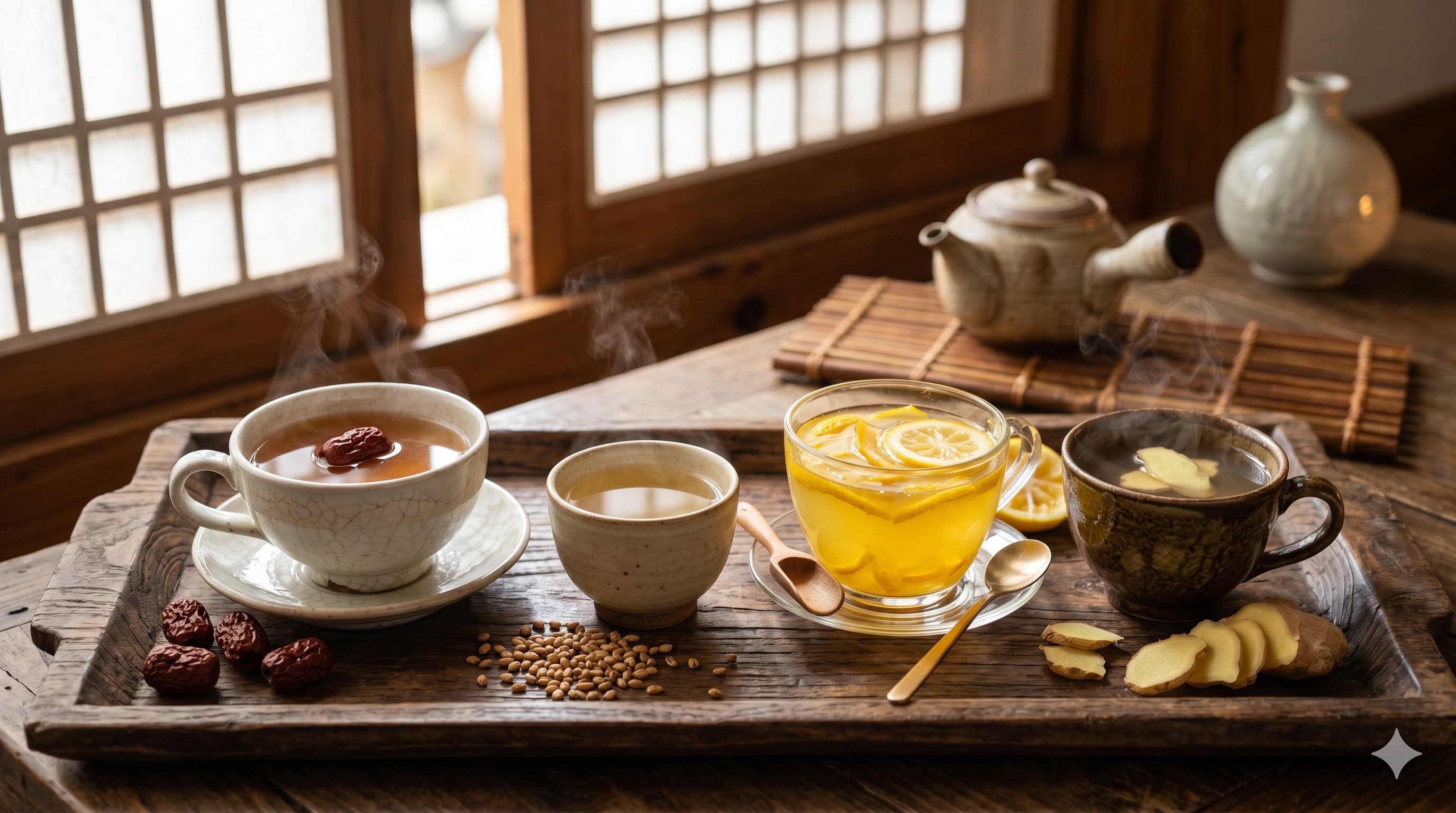
Tea as Medicine in Korean Tradition
In Korea, the word "tea" (차, cha) encompasses far more than Camellia sinensis leaves. Korean traditional teas include infusions of fruits, grains, roots, flowers, and seeds — each selected not merely for flavor but for specific therapeutic properties documented in centuries of medical texts. The Donguibogam (동의보감), compiled in 1613, dedicates extensive passages to the medicinal properties of beverages, establishing guidelines for which teas suit which constitutions, seasons, and ailments.
Daechu-cha (대추차) — Jujube Tea
Donguibogam classification: Sweet and warm in nature. Nourishes the spleen and stomach, calms the spirit, generates blood.
Jujube (Korean red dates) tea is one of Korea's most beloved wellness beverages. The Donguibogam records that jujube "supplements the center, nourishes qi, strengthens the spleen, and harmonizes the effects of other medicines." This amber-colored tea has a naturally sweet, honey-like flavor without any added sugar.
Preparation: Simmer 8-10 dried jujubes (sliced open) in 4 cups of water for 30-40 minutes until the liquid turns deep amber. Strain, pressing the softened fruit to extract all flavor. Some add pine nuts or a cinnamon stick.
When to drink: Evening, for restful sleep. Also during recovery from illness or fatigue.
Saenggang-cha (생강차) — Ginger Tea
Donguibogam classification: Pungent and warm. Disperses cold, warms the center, stops nausea, resolves phlegm.
Ginger tea is Korea's primary warming beverage, prescribed by traditional medicine for cold constitutions, winter months, and digestive complaints. The Donguibogam notes that ginger "opens the spirit brightness, unblocks the nine orifices," and treats "cold damage with headache and nasal congestion."
Preparation: Slice fresh ginger thinly (about a 5cm piece) and simmer in 3 cups of water for 15-20 minutes. Sweeten with honey or rice syrup. Adjust ginger amount to taste — more for stronger therapeutic effect.
When to drink: Winter mornings, during colds, after eating cold foods, or when feeling chilled.
Gyeolmyeongja-cha (결명자차) — Cassia Seed Tea
Donguibogam classification: Salty and cool in nature. Clears the liver, brightens the eyes, moistens the intestines.
Roasted cassia seeds produce a dark, coffee-like tea with a mild, nutty flavor. The Donguibogam specifically recommends it for eye health — "it clears liver heat and brightens the vision" — and for gentle relief of constipation through moistening the intestines. It is caffeine-free and often drunk throughout the day.
Preparation: Dry-roast cassia seeds in a pan until fragrant and slightly darkened. Steep 1-2 tablespoons in hot water for 5 minutes, or simmer briefly. Can be re-steeped multiple times.
When to drink: Throughout the day, especially for those who read or use screens extensively. Popular as an office tea.
Bori-cha (보리차) — Barley Tea
Donguibogam classification: Sweet and cool in nature. Clears summer heat, aids digestion, promotes urination.
Barley tea is Korea's everyday beverage — served cold in summer and warm in winter, it replaces plain water on most Korean tables. The Donguibogam recognizes roasted barley for its ability to clear heat and support digestion. It is the quintessential Korean hydration drink.
Preparation: Simmer 2-3 tablespoons of roasted barley in 2 liters of water for 15-20 minutes. Strain or leave the grains in. Refrigerate for cold serving or drink warm.
When to drink: All day, year-round. Especially in summer for cooling, and after heavy meals for digestion.
Yuja-cha (유자차) — Citron Tea
Donguibogam classification: Sour and warm. Resolves phlegm, harmonizes the stomach, disperses stagnation.
Yuja (Korean citron) tea is made from whole yuja fruit preserved in sugar or honey — peel, flesh, and juice together. The resulting marmalade-like preserve is dissolved in hot water to create a fragrant, citrusy tea. The Donguibogam values yuja for "moving qi and dispersing food stagnation" and resolving phlegm conditions.
Preparation: Spoon 1-2 tablespoons of yuja-cheong (preserved yuja) into a cup and fill with hot water. Stir until dissolved. The peel pieces can be eaten.
When to drink: During colds and coughs, after heavy meals, or whenever you need a vitamin C boost. Popular in late autumn and winter.
Ssanghwa-cha (쌍화차) — Double Harmony Tea
Donguibogam classification: Warm and tonifying. Supplements qi and blood, strengthens the body after illness or overwork.
Ssanghwa-cha is a complex medicinal decoction — a true traditional medicine tea combining multiple herbs including peony root, rehmannia, astragalus, angelica, cinnamon, and jujube. Its name means "double harmony" referring to its ability to simultaneously tonify qi and blood. Traditionally prescribed after illness, childbirth, or periods of exhaustion.
Preparation: Purchase pre-made ssanghwa-cha concentrate or herbal packets from Korean markets. Simmer the herbal packet in 2 cups of water for 30 minutes. Traditionally served with a raw egg yolk and pine nuts floating on top (omit the egg for vegan version, keep the pine nuts).
When to drink: During recovery, extreme fatigue, cold winter days, or seasonal transitions. Not for daily use — it is a tonic for specific needs.
Omija-cha (오미자차) — Five Flavor Berry Tea
Donguibogam classification: Sour and warm. Astringes the lungs, generates fluids, calms the spirit, tonifies the kidneys.
Omija (Schisandra berry) is called "five flavor berry" because it contains all five tastes: sweet, sour, salty, bitter, and pungent. This extraordinary property makes it unique in traditional medicine. The Donguibogam records it as beneficial for "supplementing deficiency, calming the heart, and brightening the eyes."
Preparation: Soak dried omija berries in cold water overnight (hot water makes it overly sour). Strain and sweeten with honey or sugar to taste. Serve cold in summer as a stunning magenta refreshment, or warm in cooler months.
When to drink: Summer for refreshment, autumn for lung support, anytime for general vitality.
Integrating Korean Teas into Daily Life
The Donguibogam's approach to tea is fundamentally about alignment — matching the tea to your constitution, the season, and your current state of health. Rather than drinking the same tea mechanically, Korean traditional practice encourages awareness: Am I cold or warm? Sluggish or agitated? Is it winter or summer? The answer guides your choice. This mindful approach to beverage selection is itself a wellness practice — a small daily act of self-awareness that compounds over time.