Korean Vegan Desserts: Tteok, Yakgwa, and Beyond
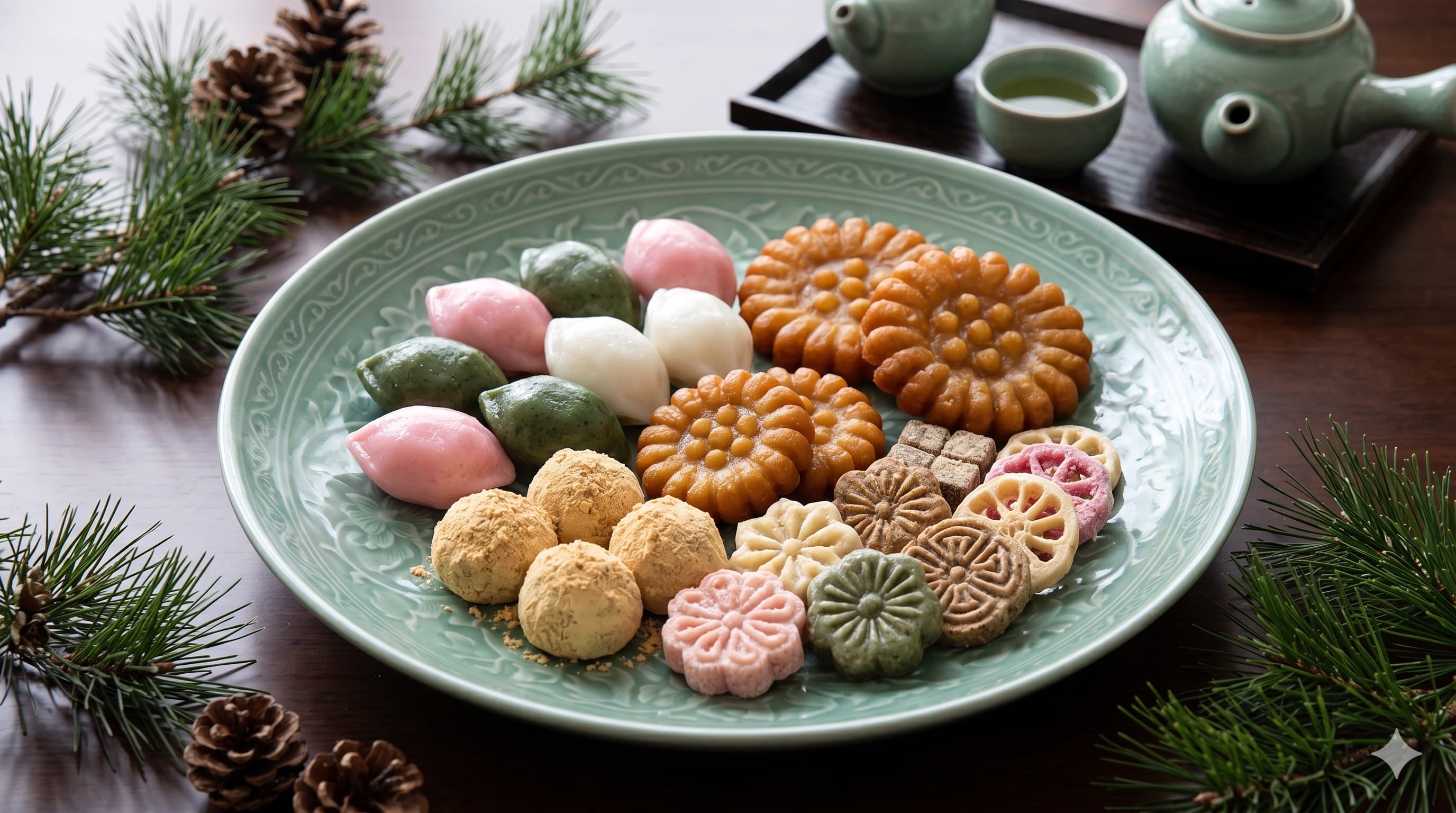
A Dessert Tradition Unlike Any Other
Korean traditional desserts occupy a unique place in the global sweets landscape. Unlike the butter-and-cream-laden pastries of European tradition or the egg-custard desserts of East Asian neighbors, Korean sweets are built on a foundation of rice flour, grain syrups, nuts, seeds, and fruit. The vast majority of traditional Korean confections — known collectively as hangwa (한과) and tteok (떡) — are naturally free of dairy and eggs. For the vegan with a sweet tooth, Korean dessert culture is a revelation: an entire tradition of elegant, delicious sweets that requires no adaptation or substitution.
Korean sweets are traditionally less aggressively sweet than their Western counterparts. They emphasize texture, subtle flavors, and visual beauty alongside sweetness. Grain syrups (rice syrup, malt syrup) and honey are the traditional sweeteners, creating a gentler, more complex sweetness than refined sugar. Nuts, seeds, and dried fruits add depth and nutrition. The result is a dessert tradition that satisfies without overwhelming.
Tteok (떡) — Rice Cakes
Rice cakes are the cornerstone of Korean dessert culture, served at holidays, celebrations, and as everyday snacks. The variety of tteok is staggering — there are hundreds of regional variations — but all are based on rice flour (regular or glutinous) that is steamed, pounded, or shaped into forms ranging from bite-sized morsels to elaborate layered cakes.
Songpyeon (송편): The iconic Chuseok (harvest festival) rice cake, shaped like half-moons and filled with sweet sesame, red bean paste, or chestnut paste. They are steamed on a bed of pine needles, which impart a subtle resinous fragrance. Every family has their own filling recipe, and making songpyeon together is a cherished holiday tradition.
Injeolmi (인절미): Pounded glutinous rice coated in roasted soybean powder (konggomul). The contrast between the chewy, stretchy rice and the fine, nutty powder is addictive. Injeolmi is often served at weddings and new year celebrations.
Baekseolgi (백설기): "White snow cake," a simple steamed rice cake that is pure white and subtly sweet. It is traditionally made for a baby's first birthday. The plain, pristine surface can be studded with jujubes, chestnuts, or dried fruit for festive occasions.
Ssuk tteok (쑥떡): Mugwort rice cakes, made by incorporating fresh or dried mugwort into glutinous rice dough. The mugwort gives the tteok a beautiful green color and a distinctive herbal flavor. Often filled with sweet red bean paste.
Yakgwa (약과) — Honey Pastries
Yakgwa are perhaps the most elegant of Korean traditional sweets. The name means "medicinal confection," reflecting the traditional belief that these treats nourish as well as delight. Yakgwa are made from a dough of wheat flour, sesame oil, and rice wine (or grain syrup), shaped into flower-like forms, deep-fried at low temperature until golden, and then soaked in a honey-ginger syrup until saturated.
The result is extraordinary: a pastry that is crispy on the outside, soft and syrup-soaked on the inside, with layers of flavor from the sesame oil, honey, ginger, and a subtle boozy note from the rice wine. Yakgwa keep well for weeks and were historically prepared for funerals, ancestral rites, and royal banquets. Today they are enjoying a renaissance in Korean food culture, with specialty shops and cafes offering artisanal versions. For vegans, yakgwa made with rice syrup or agave instead of honey are entirely plant-based.
Hangwa (한과) — Traditional Confections
Beyond tteok and yakgwa, the hangwa category includes several other distinctive sweets:
- Dasik (다식): Pressed tea confections made from finely ground ingredients — sesame, pine pollen, black sesame, green tea, or grain flours — mixed with honey and pressed into carved wooden molds. Each mold creates an intricate design: flowers, Chinese characters, or geometric patterns. Dasik are tiny, elegant, and designed to be served with tea.
- Gangjeong (강정): Puffed rice or grain bars bound with grain syrup and coated with sesame seeds, pine nuts, puffed rice, or dried fruit. They are crunchy, satisfying, and naturally vegan. Different coatings create visual variety — white sesame, black sesame, pine nut, and colored puffed rice versions are arranged together for a colorful presentation.
- Jeonggwa (정과): Fruits or root vegetables (lotus root, ginger, ginseng, citron) slowly simmered in honey or grain syrup until candied and translucent. The process preserves the shape and character of each ingredient while concentrating its flavor and sweetness. Jeonggwa are as beautiful as stained glass and last for months.
- Yaksik (약식): Sweet glutinous rice studded with jujubes, chestnuts, pine nuts, and seasoned with soy sauce, sesame oil, and cinnamon. Despite the soy sauce, it is a sweet dish — the soy adds a savory undertone that makes the sweetness more interesting. Yaksik is traditionally served at the first full moon of the new year.
Modern Korean Vegan Desserts
Contemporary Korean dessert culture has embraced modern influences while maintaining plant-based roots. Bingsu (빙수), shaved ice desserts topped with sweet red beans, fruit, and grain powder, are naturally vegan when made without condensed milk (use coconut cream or soy milk instead). Hotteok (호떡), sweet filled pancakes, are vegan when made with the traditional brown sugar, cinnamon, and nut filling. Even Korean street food desserts like bungeoppang (fish-shaped pastries) are being reimagined with vegan batters and red bean or custard fillings.
Making Korean Sweets at Home
Many Korean desserts require only a few ingredients and no special equipment beyond a steamer. Start with injeolmi — glutinous rice flour steamed and pounded (a stand mixer with a dough hook works), then coated in soybean powder. Or try simple songpyeon using glutinous rice flour dough wrapped around a spoonful of sweetened sesame filling and steamed. These ancient sweets connect you to centuries of Korean celebration and offer proof that the world's most satisfying desserts have always been plant-based.