Eating Vegan at Korean Restaurants: A Complete Survival Guide
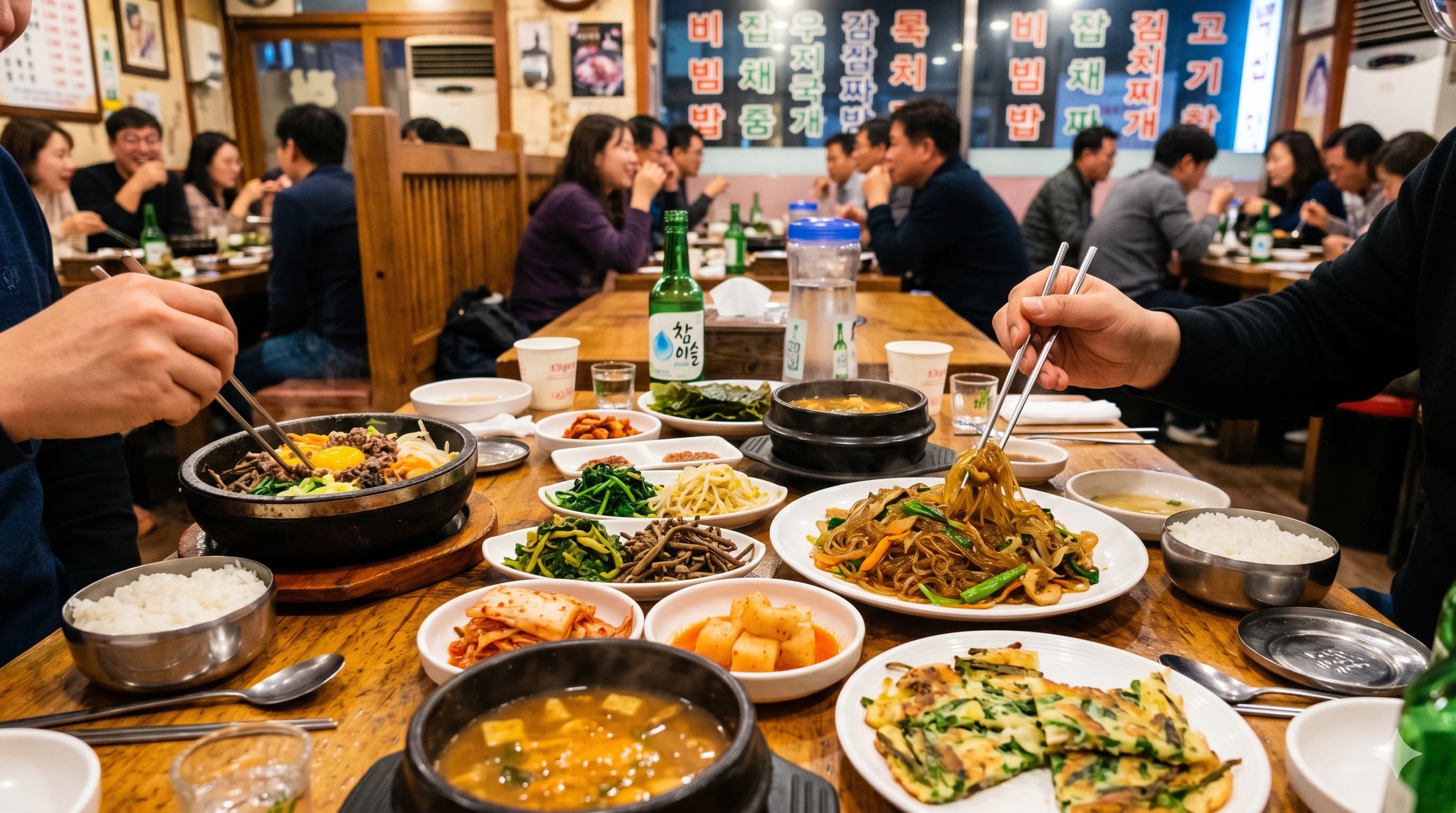
Dining Vegan at Korean Restaurants
Korean restaurants can be a paradise or a minefield for vegans. On one hand, Korean cuisine is inherently vegetable-heavy — banchan tables overflow with seasoned greens, tofu appears everywhere, and rice is the universal staple. On the other hand, animal products hide in unexpected places: anchovy broth in seemingly vegetarian soups, fish sauce in kimchi, egg wash on pancakes, and shrimp paste in sauces. With the right knowledge, you can navigate Korean menus with confidence and eat extraordinarily well.
Safe Orders: What to Look For
- Bibimbap (비빔밥) without egg: Ask for "gyeran bbae-juseyo" (계란 빼주세요). The rice, vegetables, and gochujang sauce are all plant-based. Dolsot bibimbap (stone pot version) is especially satisfying
- Vegetable kimbap (야채김밥): Many shops offer versions with pickled radish, spinach, carrots, and cucumber. Confirm no egg or ham
- Tteokbokki (떡볶이): Rice cakes in spicy sauce — often vegan if made without fish cake (eomuk). Ask to omit it. Verify the broth base is not anchovy
- Japchae (잡채): Glass noodle stir-fry is often available without meat at buffets or as a banchan. Request no egg garnish
- Tofu dishes: Sundubu-jjigae (순두부찌개) can sometimes be ordered with vegetable broth — ask specifically. Dubu-kimchi (tofu with kimchi) is common but check that the kimchi is vegan
- Jeon (전): Vegetable pancakes like hobak-jeon (zucchini) or yachae-jeon (mixed vegetable) — but confirm no egg in the batter
Hidden Animal Ingredients to Watch For
- Anchovy broth (멸치육수): The base of most Korean soups and stews in restaurants. Always ask: "Yuksu-e meolchi deureo-gayo?" (육수에 멸치 들어가요?)
- Fish sauce (액젓) in kimchi: Most restaurant kimchi contains fish sauce or fermented shrimp. Temple-style restaurants are the exception
- Egg wash: Many jeon (pancakes) use egg as a binder. Some kongnamul-guk (bean sprout soup) is finished with beaten egg
- Shrimp paste (새우젓): Used in some kimchi varieties and occasionally in dipping sauces
- Beef or anchovy dashida: Commercial soup base powder that some restaurants use liberally
Useful Korean Phrases
These phrases will help you communicate your needs clearly:
- "저는 비건이에요" (Jeoneun bigeonieyo) — "I am vegan"
- "고기/생선/달걀/유제품 빼주세요" (Gogi/saengseon/dalgyal/yujepum bbae-juseyo) — "Please remove meat/fish/eggs/dairy"
- "멸치나 새우 들어가요?" (Myeolchi-na saeu deureo-gayo?) — "Does it contain anchovy or shrimp?"
- "채식으로 가능한 메뉴 있어요?" (Chaesigeuro ganeunghan menyu isseoyo?) — "Do you have any vegetarian-possible menu items?"
- "동물성 재료 없이 해주실 수 있어요?" (Dongmulseong jaeryo eopsi haejusil su isseoyo?) — "Can you make it without animal ingredients?"
Restaurant Types: Where to Eat
Temple Food Restaurants (사찰음식점)
Your safest option. These restaurants serve entirely plant-based cuisine without even the five pungent vegetables. Seoul has several excellent options including Balwoo Gongyang (Michelin-starred), Sanchon in Insadong, and Osetgae near Jogyesa temple. Expect refined, multi-course meals that showcase the artistry of Buddhist cuisine.
Vegetarian-Friendly Chains and Cafes
Korea's vegan scene has exploded in recent years. Chains like Loving Hut offer fully vegan menus. Neighborhoods like Itaewon, Yeonnam-dong, and Seongsu-dong in Seoul have multiple dedicated vegan restaurants. Many modern Korean cafes offer plant milk options and vegan pastries.
Regular Korean Restaurants
Even at standard restaurants, you can usually find options. Bibimbap restaurants, tteokbokki joints, and kimbap chains (like Gimbap Cheonguk) all have adaptable items. Be prepared to ask questions and make specific requests — Korean restaurant staff are generally accommodating once they understand your needs.
Apps and Resources for Finding Vegan Food in Korea
- HappyCow: The global standard for finding vegan restaurants, well-maintained in Korean cities
- MangoPlate (망고플레이트): Korean restaurant review app — search "비건" or "채식" for options
- Naver Map: Search "비건 식당" (vegan restaurant) for local results with reviews
- Korean Vegan Society (한국채식연합): Maintains updated lists of certified vegan-friendly restaurants
Final Tips
Do not be afraid to ask questions — Korean hospitality culture means restaurant owners generally want to help you eat well. Learning even a few Korean food terms dramatically improves your experience. And remember: with thousands of naturally plant-based banchan, Korea is one of the most rewarding countries in the world for vegan travelers. Approach it with curiosity rather than anxiety, and you will eat magnificently.