Korean Vegan Meal Prep: A Week of Temple-Inspired Lunches
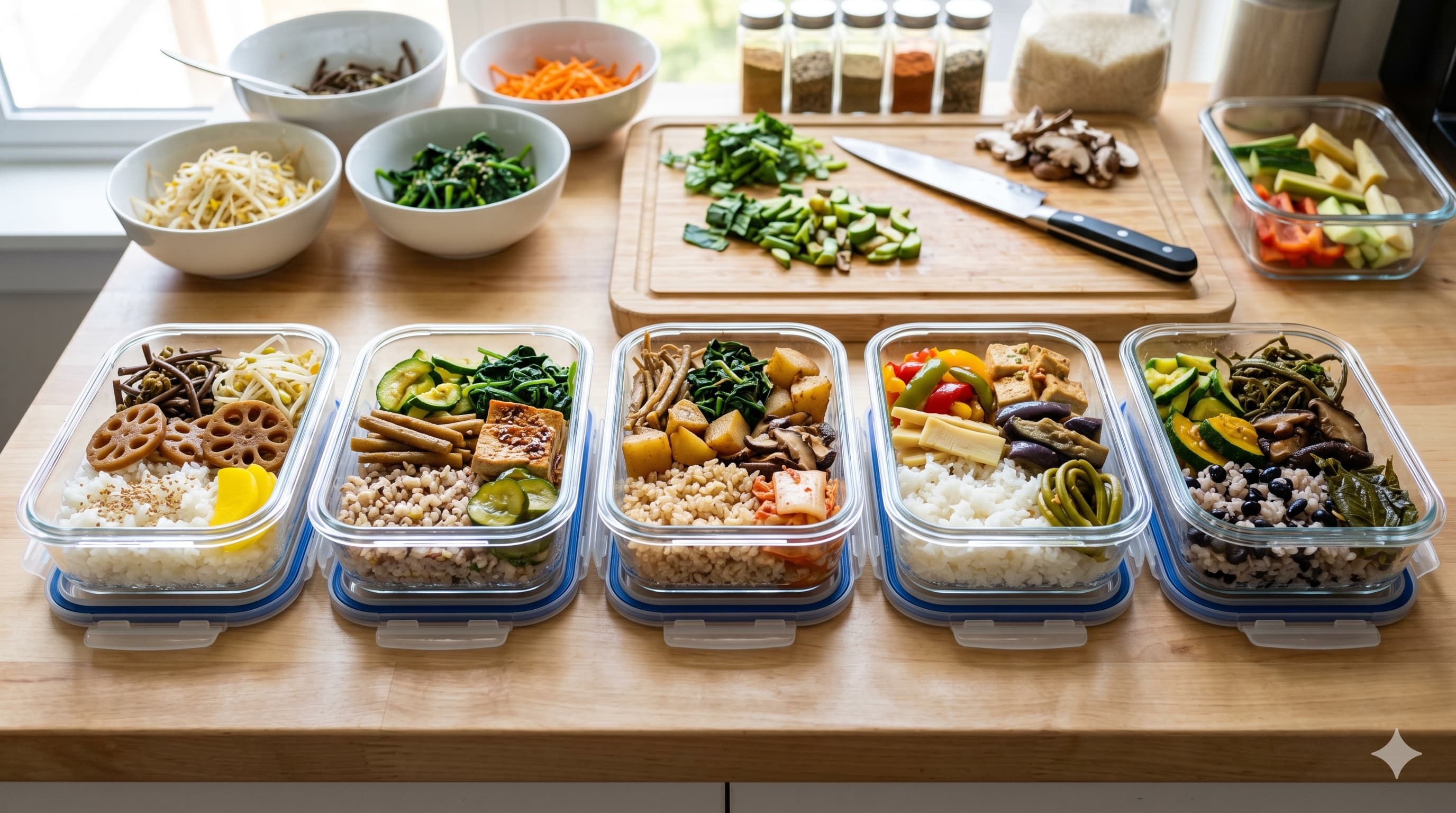
Why Korean Temple Meals Are Perfect for Meal Prep
Korean Buddhist temple cuisine is, by its very nature, ideally suited to meal prep. Temple cooks have always prepared food in batches — feeding entire communities of monks and visitors from a single kitchen. The food is designed to keep well, to be served at room temperature or gently reheated, and to maintain its flavor and nutritional value over several days. The banchan-based meal structure means you prepare several components once and then mix and match them throughout the week, creating variety without starting from scratch each day.
A temple-style meal follows a simple template: a bowl of well-cooked rice (often mixed grain), a soup or stew, and three to five banchan. This template provides complete nutrition — complex carbohydrates from grains, protein from tofu and legumes, fiber and micronutrients from vegetables, and probiotics from fermented foods. It is naturally balanced, naturally delicious, and naturally vegan.
Sunday Prep Session: The Master Plan
Set aside two to three hours on Sunday to prepare your week's lunches. Here is a structured approach:
Step 1 — Cook the grains (30 minutes active, rest is passive): Make a large batch of mixed grain rice (japgokbap). Cook four to five cups of dry rice with a mix of brown rice, black rice, barley, and millet. This will yield enough for five generous lunch portions. Portion the rice into individual containers while it is still warm and slightly sticky.
Step 2 — Prepare the banchan (60-90 minutes): Choose four to five banchan that keep well and represent different colors, flavors, and textures. Here is a reliable lineup:
- Sigumchi namul (시금치 나물): Blanched spinach seasoned with soy sauce, sesame oil, and toasted sesame seeds. Takes ten minutes and keeps for four days.
- Kongnamul (콩나물): Soybean sprouts briefly boiled, then tossed with sesame oil, salt, and a pinch of gochugaru. Five minutes of active time, keeps for five days.
- Gamja jorim (감자조림): Small potatoes simmered in soy sauce, rice syrup, and sesame oil until glazed and tender. Twenty minutes, keeps for five days.
- Doraji namul (도라지 나물): Balloon flower root, salted and squeezed to remove bitterness, then stir-fried with sesame oil and gochugaru. Fifteen minutes, keeps for four days.
- Kimchi: Already made and waiting in your refrigerator. Simply portion it out.
Step 3 — Make a Soup Base (30 minutes)
Prepare a large pot of soup that you can portion and reheat throughout the week. Two excellent options:
Doenjang guk (된장국): A simple soybean paste soup with tofu, zucchini, and mushrooms. Make a kelp and dried shiitake broth, dissolve two to three tablespoons of doenjang, add cubed tofu and sliced vegetables, and simmer for fifteen minutes. This soup actually improves over a day or two as the flavors meld.
Miyeok guk (미역국): Seaweed soup, traditionally eaten on birthdays but wonderful any day. Soak dried miyeok (wakame), sautee it briefly with sesame oil, add mushroom broth and soy sauce, and simmer until the seaweed is silky and tender. Rich in iodine, calcium, and iron.
Assembly and Storage
Use compartmentalized containers (bento-style or Korean dosirak boxes) if you have them — they keep the banchan separate and prevent flavor transfer. Place rice in the largest compartment, arrange three to four banchan in smaller sections, and pack soup in a separate sealed container for reheating.
Most banchan keep perfectly for four to five days in the refrigerator. Rice can be reheated in the microwave with a sprinkle of water to restore moisture. Soup is best reheated on the stove or in the microwave until gently simmering. If you find that your banchan are running low by Thursday, simply prepare one fresh item mid-week — a quick cucumber salad or seasoned tofu takes ten minutes and refreshes the lineup.
Variations for the Adventurous
Once you are comfortable with the basic template, experiment with different banchan each week. Some favorites for meal prep include: braised burdock root (ueong jorim), stir-fried dried chwinamul, pickled radish (danmuji), seasoned dried seaweed (gim gui), and mung bean jelly salad (nokdu muk muchim). Rotating your banchan selection ensures nutritional variety and prevents boredom.
You can also vary the grain base: try pure brown rice one week, black rice another, or a sixteen-grain mix for maximum nutrition. Some weeks, substitute rice with noodles — cold buckwheat noodles (naengmyeon style) with banchan make an excellent summer lunch.
The Temple Mindset
Beyond the practical benefits, approaching meal prep with a temple mindset transforms it from a chore into a practice. In Korean Buddhist cooking, the act of preparing food is itself a form of meditation — chopping vegetables with attention, stirring soup with awareness, arranging banchan with care. When you sit down to eat your temple-inspired lunch on a busy Tuesday, take a moment before eating to appreciate the colors, the aromas, and the effort that went into the meal. This brief pause is the essence of mindful eating, and it makes the food taste better, aids digestion, and brings a moment of calm to even the most hectic day.