Korean Winter Comfort Foods Made Vegan
Korean Winter Food Philosophy
Korean cuisine's approach to winter eating is deeply rooted in the principles of traditional medicine outlined in the Donguibogam. Winter is the season of the kidneys and the water element. The body's energy draws inward, seeking warmth and conservation. The foods that Korean people have traditionally turned to during the coldest months reflect this understanding: warming broths, hearty stews, slow-simmered dishes, and ingredients that generate internal heat. For the plant-based eater, Korean winter cuisine offers a treasury of deeply satisfying dishes that prove you need no animal products to feel warm, nourished, and comforted.
The Donguibogam recommends that winter foods should be warming in nature, black or dark in color (to nourish the kidneys), rich in umami and salt (the flavor associated with the water element), and slow-cooked to concentrate their energy. Korean winter cooking follows all of these principles, creating some of the most deeply flavorful food in the entire Korean repertoire.
Kimchi Jjigae (김치찌개) — Kimchi Stew
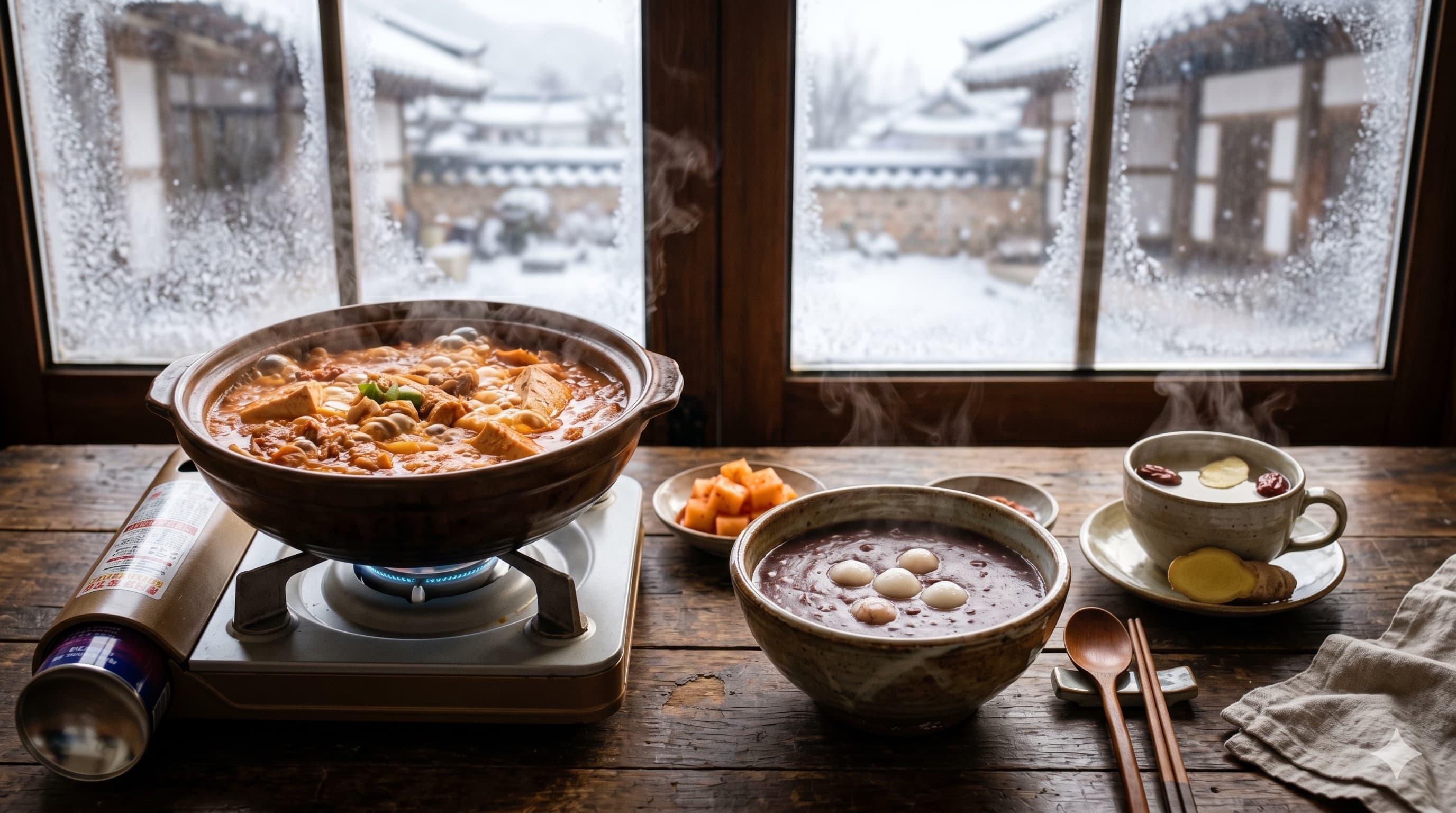
If there is one dish that embodies Korean winter comfort, it is kimchi jjigae. This bubbling, fiery stew is made with well-fermented kimchi (the older and more sour, the better), tofu, and whatever vegetables are on hand, all simmered in a richly flavored broth. The vegan version replaces the traditional pork or anchovy stock with a mushroom and kelp base, and honestly, many Koreans will tell you that the best kimchi jjigae is the simplest — made with nothing more than excellent aged kimchi, tofu, and its own fermented juices.
The key is using kimchi that is fully fermented — at least two to three weeks old, and ideally older. Young, fresh kimchi makes a mediocre jjigae because it lacks the deep, tangy sourness and complex fermented flavors that develop over time. Sautee the kimchi in sesame oil until it caramelizes slightly, add water or mushroom broth, bring to a boil, add cubed tofu, and simmer for twenty minutes. The result is a stew with extraordinary depth — sour, spicy, savory, and warming to the core.
Doenjang Jjigae (된장찌개) — Soybean Paste Stew
While kimchi jjigae provides fiery warmth, doenjang jjigae offers a gentler, more nuanced comfort. This stew features Korea's fermented soybean paste dissolved in a vegetable broth, along with tofu, zucchini, mushrooms, potatoes, and chili peppers. The doenjang provides deep umami and a complex fermented flavor that is warming and grounding. In temple cuisine, doenjang jjigae is seasoned with perilla seed powder instead of garlic, which gives it a distinctive nutty richness.
Doenjang jjigae is the kind of dish that tastes even better the next day, as the flavors continue to meld. Making a large pot on a cold weekend and reheating portions throughout the week is a time-honored Korean practice. The stew pairs perfectly with freshly cooked rice and a few banchan — the quintessential Korean meal that has sustained families through countless winters.
Patjuk (팥죽) — Red Bean Porridge
Patjuk is a thick porridge made from red beans (azuki beans) and rice, traditionally eaten on the winter solstice (dongji, 동지). The red color of the beans was believed to ward off evil spirits, and families would place bowls of patjuk throughout the house for protection. Beyond its cultural significance, patjuk is deeply warming and nourishing — the red beans provide protein, iron, and B vitamins, while the slow-cooked porridge is gentle on the digestive system.
Making patjuk requires patience: red beans are simmered for over an hour until completely soft, then partially mashed to create a thick, creamy base. Small balls of glutinous rice flour dough (saealsim, 새알심) are added to the porridge, providing chewy, satisfying bites. A pinch of salt is the only seasoning. The result is a subtly sweet, earthy, comforting bowl that feels like a warm blanket from the inside.
Tteokguk (떡국) — Rice Cake Soup
While traditionally associated with New Year's Day, tteokguk is enjoyed throughout the Korean winter. Thin oval slices of rice cake are simmered in a clear broth until soft and chewy. The vegan version uses a rich broth made from dried shiitake mushrooms, kelp, dried radish, and soy sauce. Toppings include sliced scallions, toasted seaweed strips (gim), and crumbled tofu scramble as a replacement for the traditional egg garnish.
The rice cakes themselves are made from pounded glutinous or non-glutinous rice, and they have a wonderfully chewy, satisfying texture that is unlike pasta or any Western starch. Eating tteokguk symbolically adds a year to your age, so Koreans sometimes joke about eating multiple bowls — or avoiding it altogether to stay young.
Hobakjuk (호박죽) — Pumpkin Porridge
Hobakjuk is made from Korean pumpkin or kabocha squash, cooked until soft and blended into a smooth, vibrant orange porridge. Like patjuk, it often includes small glutinous rice flour balls for texture. Sweetened lightly with sugar or left savory with a pinch of salt, hobakjuk is one of Korea's most soothing winter foods. The Donguibogam describes pumpkin as warming and beneficial for the spleen and stomach — exactly what the body needs during cold months.
The beauty of hobakjuk lies in its simplicity: pumpkin, water, rice flour, and salt. Nothing more is needed. The natural sweetness of winter squash provides all the comfort, and the bright orange color brings a visual warmth to the table that is especially welcome during the grey days of winter.
Hot Teas and Infusions
Korean winter eating extends beyond solid food to an array of warming teas and drinks. Ssanghwa-cha (쌍화차), a medicinal herbal tea made from a blend of traditional herbs, is drunk to prevent colds and boost energy. Saenggang-cha (생강차), ginger tea with honey or jujubes, is the go-to remedy for chills. Sujeonggwa (수정과), a cold cinnamon-persimmon punch, is served at the end of winter meals as a digestive aid. And yuja-cha (유자차), made from preserved citron in honey or sugar, provides a bright, citrusy warmth rich in vitamin C. Together, these teas complete the Korean winter table and remind us that nourishment comes in many forms.