Matcha and Japanese Tea Culture: Health Benefits and the Way of Tea
The Origins of Japanese Tea Culture
Tea was introduced to Japan from China, most likely during the Nara period (710-794 CE) by Japanese monks and envoys studying in Chinese monasteries. However, it was Eisai, the monk who founded the Rinzai school of Zen Buddhism in Japan, who is most closely associated with promoting tea drinking in the country. Eisai brought tea seeds back from China around 1191 and wrote Kissa Yojoki (Drinking Tea for Health), a text extolling the health benefits of tea. He presented tea as a medicine for the heart and a means of extending life.
Tea drinking initially remained within monastic circles, where it was valued for its ability to promote wakefulness during long meditation sessions. The caffeine in tea, combined with the amino acid L-theanine, produces a state of calm alertness that is ideal for meditation — alert enough to maintain focus, yet relaxed enough to avoid agitation. This practical benefit established the enduring connection between tea and Zen practice.
What Is Matcha?
Matcha is a specific type of green tea in which the entire leaf is ground into a fine powder rather than being steeped and discarded. This means that when you drink matcha, you consume the whole leaf, including the fiber and the full complement of nutrients and bioactive compounds.
The production of matcha involves several specialized steps. Tea plants destined for matcha are shaded from direct sunlight for approximately three to four weeks before harvest, using traditional reed screens or modern shade cloth. This shading forces the plants to produce more chlorophyll (giving the leaves a deeper green color) and increases the production of L-theanine, the amino acid responsible for matcha's characteristic sweet, savory flavor. After harvest, the leaves are steamed to halt oxidation, dried, and then stone-ground into a fine powder.
The Tea Ceremony: Chanoyu
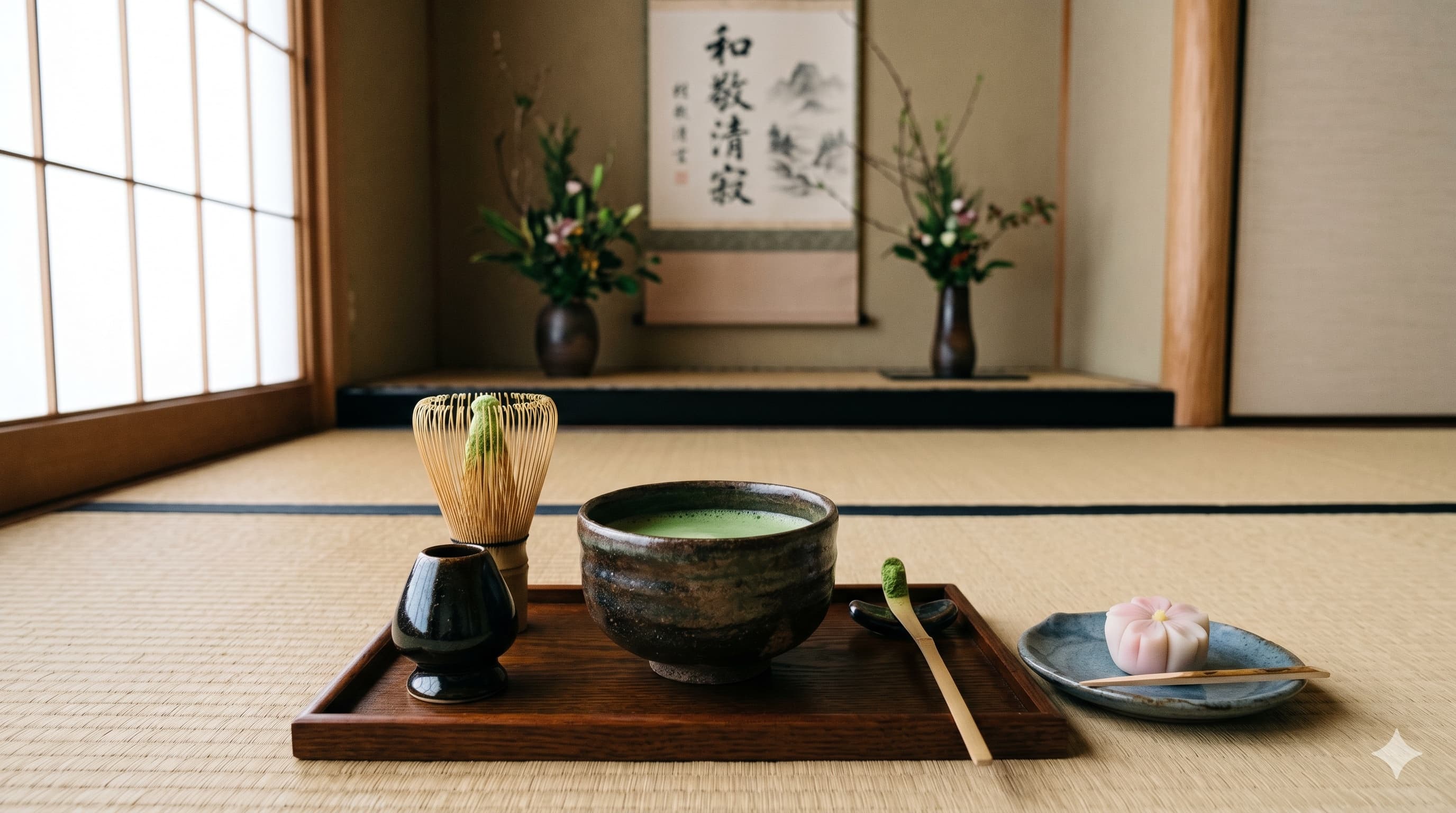
The Japanese tea ceremony, known as chanoyu (literally "hot water for tea") or chado/sado ("the way of tea"), is a ritualized practice of preparing, serving, and drinking matcha. The tea ceremony was codified in the sixteenth century by Sen no Rikyu, a tea master whose aesthetic philosophy profoundly influenced Japanese culture. Rikyu championed the principles of wabi-sabi — the beauty of imperfection and transience — and established the four fundamental values of the tea ceremony: wa (harmony), kei (respect), sei (purity), and jaku (tranquility).
A tea ceremony is not merely about drinking tea. It is a carefully choreographed experience that encompasses architecture (the tea room), garden design (the roji, or tea garden path), pottery (the tea bowl), flower arrangement, calligraphy, and cuisine (kaiseki, the meal that precedes a formal tea gathering). Every element is chosen to create a unified aesthetic experience that embodies the principle of ichi-go ichi-e — "one time, one meeting" — the awareness that each gathering is unique and unrepeatable.
Types of Japanese Tea
While matcha is the most ceremonially significant, Japan produces several other types of tea, all from the same plant (Camellia sinensis):
- Sencha: The most commonly consumed tea in Japan, made from whole leaves that are steamed, rolled, and dried. Sencha is brewed by steeping leaves in hot (but not boiling) water and has a fresh, grassy flavor.
- Gyokuro: A premium shade-grown tea (like matcha, but the leaves are rolled rather than ground). Gyokuro has an intensely sweet, umami-rich flavor and is considered the highest grade of Japanese leaf tea.
- Hojicha: Roasted green tea with a toasty, nutty flavor and low caffeine content. The roasting gives it a brown color and a comforting, approachable taste.
- Genmaicha: Green tea blended with roasted brown rice (genmai), producing a nutty, slightly popcorn-like flavor. It is an everyday tea with a warm, homey character.
- Bancha: A lower-grade green tea made from larger, older leaves harvested later in the season. It has a mild, slightly astringent flavor and is commonly served with meals.
Health Properties of Japanese Tea
Japanese green tea, particularly matcha, is rich in catechins, a class of antioxidant compounds. The most abundant catechin in green tea is epigallocatechin gallate (EGCG), which has been extensively studied for its antioxidant properties. Because matcha involves consuming the entire leaf, it delivers higher concentrations of these compounds compared to steeped teas where the leaves are discarded.
L-theanine, the amino acid found in high concentrations in shade-grown teas like matcha and gyokuro, has been studied for its calming effects. Research suggests it may promote relaxation without drowsiness, which may help explain why tea drinkers often report a different quality of alertness compared to coffee.
Preparing Matcha at Home
To prepare matcha traditionally, sift one to two teaspoons of matcha powder into a tea bowl (chawan) to remove clumps. Add about 70 milliliters of hot water (around 80 degrees Celsius — not boiling, which would make the tea bitter). Whisk vigorously with a bamboo whisk (chasen) in a W or M motion until the tea is uniformly frothy with fine bubbles on the surface. Drink directly from the bowl.
Tea Culture and Mindfulness
At its deepest level, Japanese tea culture is a practice of mindfulness and presence. The simple act of preparing and drinking tea with full attention — noticing the color of the tea, the warmth of the bowl, the taste of each sip — is a meditation practice accessible to anyone. You do not need a formal tea room or expensive equipment to benefit from this tradition. A bowl of matcha, prepared with care and drunk with attention, connects you to centuries of contemplative practice and to the simple truth that a plant, water, and attention can produce something extraordinary.