Medicinal Mushrooms in Korean Traditional Cuisine
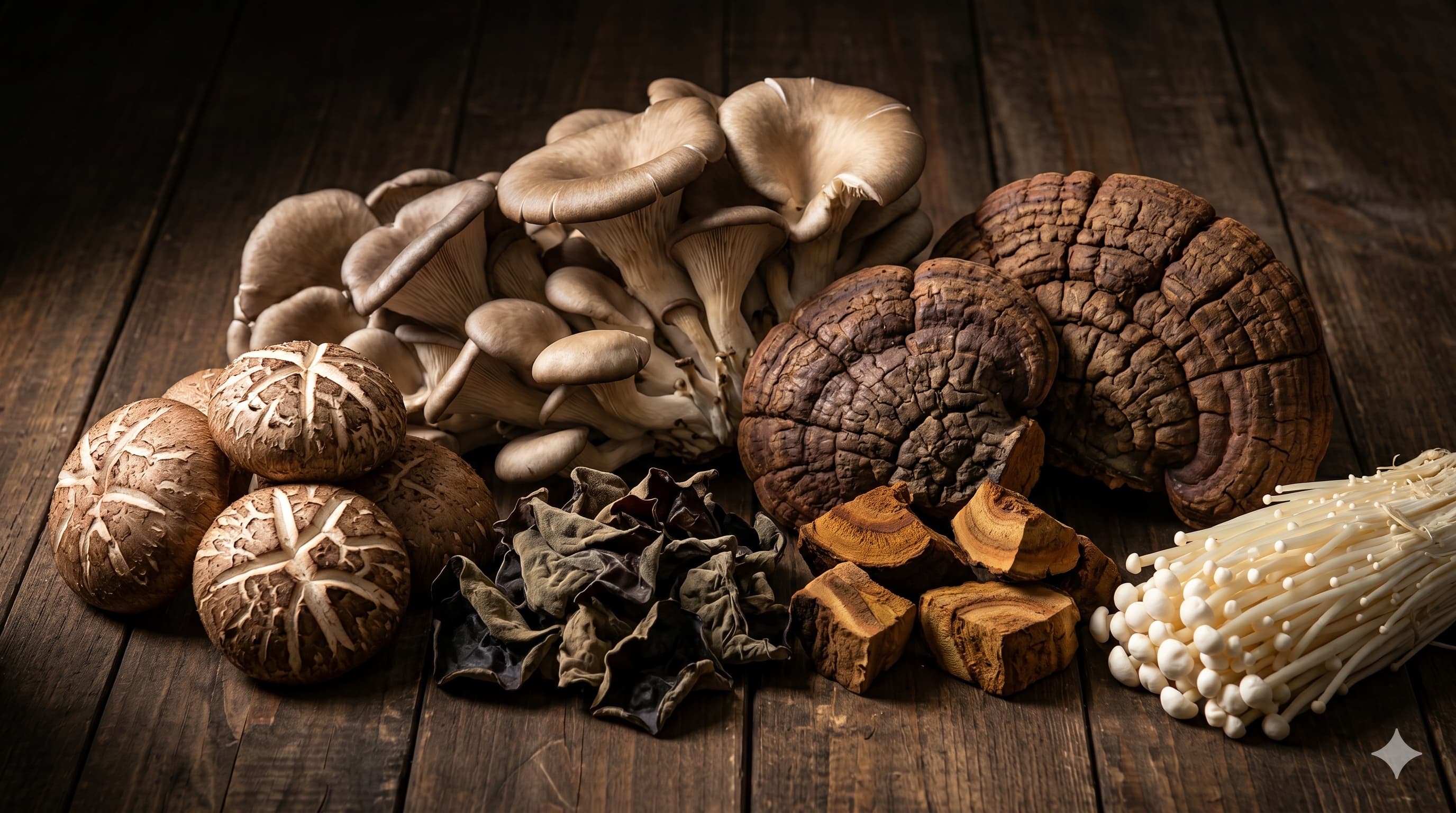
Mushrooms in Korean Food Culture
Korea's forested mountains provide ideal growing conditions for an extraordinary diversity of mushrooms, and Korean cuisine takes full advantage. Mushrooms occupy a unique position in Korean food culture: they are simultaneously everyday cooking ingredients, prized delicacies, and powerful medicines. The Donguibogam devotes extensive passages to mushrooms, classifying them by their therapeutic properties and recommending specific varieties for particular health conditions. For the vegan cook, mushrooms are invaluable — they provide umami depth, meaty texture, significant protein, and a range of bioactive compounds found nowhere else in the plant kingdom.
Korean mushroom culture goes far beyond the generic button mushroom of Western supermarkets. Korean markets routinely stock a dozen or more varieties, each with its own culinary personality and traditional medicinal associations. Learning to cook with this diversity opens up an entirely new dimension of plant-based cuisine.
Pyogo (표고) — Shiitake
The workhorse of Korean mushroom cookery, pyogo beoseot (shiitake) appears in everything from everyday soups to festive dishes. Fresh shiitake have a robust, woodsy flavor and satisfying chewy texture. Dried shiitake, which are even more commonly used, have a concentrated umami intensity that makes them essential for building rich, savory broths. When combined with dried kelp (dashima), dried shiitake creates a vegan stock that rivals any meat-based broth in depth and complexity.
The Donguibogam describes shiitake as beneficial for the stomach and the immune system, noting that they strengthen gi (vital energy) and improve overall vitality. Modern research has confirmed the presence of lentinan and other beta-glucan polysaccharides in shiitake that support immune function. In temple cuisine, dried shiitake are often sliced thin and simmered with soy sauce and sesame oil to create a banchan that tastes remarkably like the finest beef jerky — completely plant-based.
Neungi (능이) — Sarcodon Aspratus
Neungi is one of the most prized wild mushrooms in Korean cuisine, sometimes called the "king of mushrooms" for its extraordinary aroma. It grows wild in oak forests and cannot be commercially cultivated, making it rare and expensive. The fragrance of neungi is immediately recognizable — deeply earthy, almost truffle-like, with a peppery undertone that perfumes any broth it touches. It is most famously used in neungi baeksuk, traditionally a chicken soup, but equally magnificent as a vegan version made with tofu, root vegetables, and a neungi-infused broth.
According to the Donguibogam, neungi aids digestion and is warming in nature. It is considered particularly beneficial when consumed in autumn, when its harvest coincides with the body's need for warming, strengthening foods as the weather cools.
Sanghwang (상황) — Phellinus Linteus
Sanghwang beoseot, known in English as meshima or black hoof mushroom, is perhaps the most revered medicinal mushroom in Korean tradition. It grows on mulberry trees and has been used in Korean medicine for centuries. Unlike culinary mushrooms, sanghwang is typically consumed as a tea or decoction — the hard, woody fruiting body is simmered for hours to extract its bioactive compounds. The resulting tea has a mild, woody flavor and a deep amber color.
The Donguibogam recommends sanghwang for strengthening the body's resistance to illness and for supporting those with chronic conditions. Modern research has focused on its polysaccharide content and potential immune-modulating properties. While sanghwang is not a cooking ingredient per se, its use as a daily tea represents the Korean tradition of using mushrooms as ongoing health maintenance.
Songi (송이) — Pine Mushroom / Matsutake
Songi beoseot (matsutake) is Korea's most celebrated luxury mushroom, prized for its intense cinnamon-pine aroma and firm, almost crunchy texture. Wild songi grow in association with red pine tree roots and resist all attempts at cultivation, making them extraordinarily expensive during their brief autumn season. The finest specimens can command hundreds of dollars per kilogram.
In Korean cuisine, songi is treated with great respect — prepared simply to showcase its remarkable flavor. It is grilled over charcoal, sliced raw and dipped in salt and sesame oil, or added to rice (songi bap) where it perfumes the entire pot. While fresh songi may be difficult to source outside Korea, the experience of tasting this mushroom is unforgettable and serves as a reminder of the extraordinary flavors the natural world produces entirely without human intervention.
Everyday Mushroom Varieties
Beyond the prized wild varieties, Korean cooking makes daily use of several cultivated mushrooms: paengi (팽이, enoki), whose delicate clusters add elegance to soups and hot pots; saesong-i (새송이, king oyster), whose thick stems can be sliced and grilled to create a remarkably steak-like texture; neutari (느타리, oyster mushrooms), which are stir-fried, added to stews, or battered and fried as jeon; and mogi (목이, wood ear), whose crunchy, gelatinous texture adds contrast to stir-fries and salads. Each of these is affordable, widely available, and brings something unique to the vegan kitchen.
Cooking with Mushrooms: Korean Techniques
Korean cooks use several techniques to maximize mushroom flavor. Drying concentrates flavor compounds dramatically — dried mushrooms are soaked, and the soaking liquid is always saved and used as a broth base. Grilling over open flame caramelizes the sugars in mushroom cell walls, producing deep savory-sweet flavors. Tearing mushrooms by hand rather than cutting them with a knife creates irregular surfaces that absorb more sauce and seasoning. And combining multiple mushroom varieties in a single dish creates layers of umami that no single variety can achieve alone. These techniques are simple but transformative, and they make mushrooms the vegan cook's most powerful ally.