Miso Varieties Explained: White, Red, Barley, and Hatcho Miso
What Is Miso?
Miso is a fermented paste made from soybeans, salt, and koji (a mold culture, Aspergillus oryzae, grown on a substrate such as rice or barley). The mixture is packed into containers and fermented for periods ranging from a few weeks to several years, during which enzymes from the koji break down proteins and starches into amino acids and sugars, creating complex flavors and abundant umami. Miso has been produced in Japan for well over a thousand years and remains one of the most important ingredients in Japanese cuisine.
For plant-based cooks, miso is invaluable. It provides deep savory flavor, protein, and probiotics (in unpasteurized versions) from an entirely plant-based source. Understanding the different types of miso allows you to use each one to its best advantage.
Shiro Miso (White Miso)
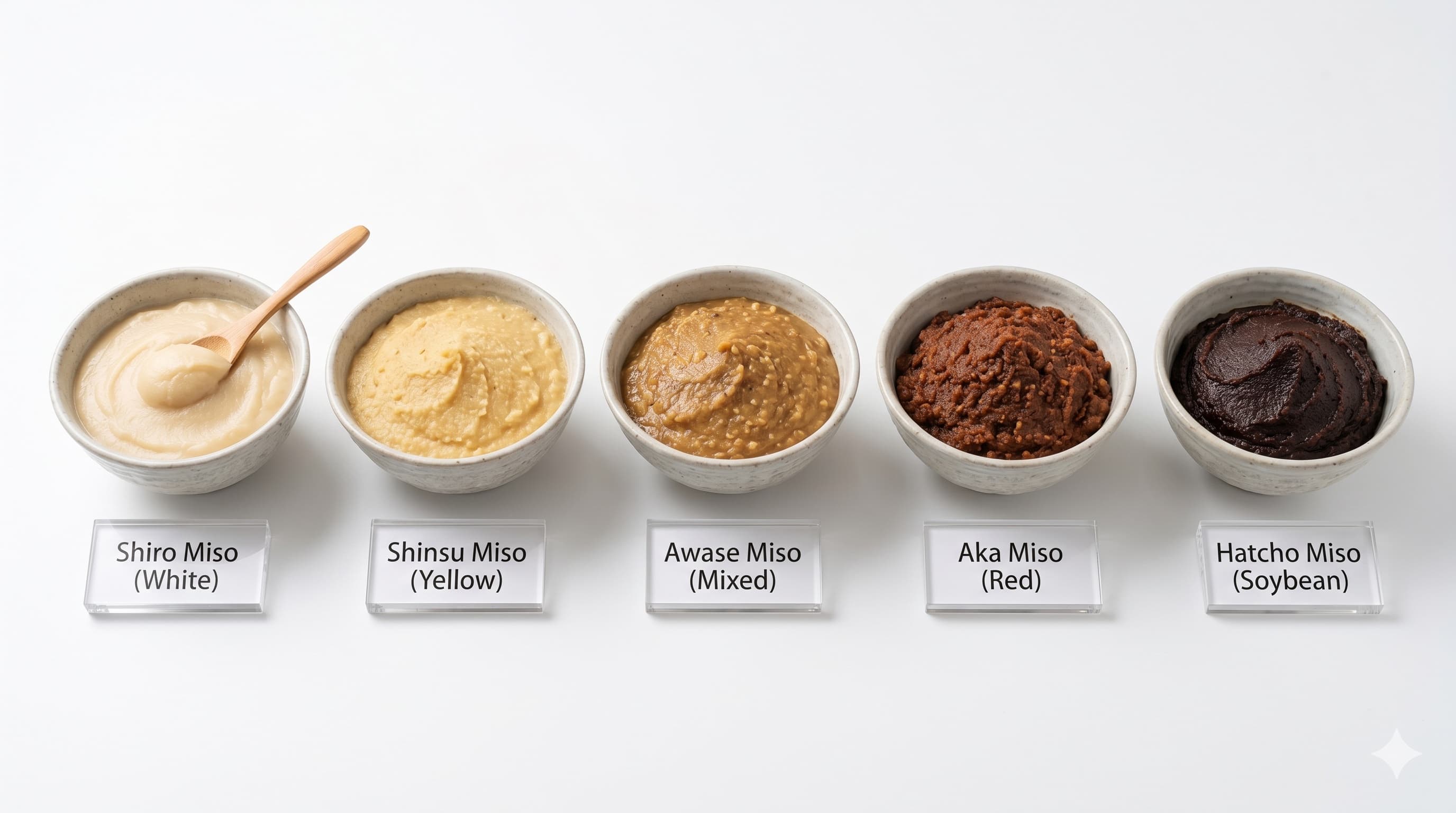
Shiro miso is made with a high proportion of rice koji relative to soybeans, and it is fermented for a relatively short period — typically a few weeks to a few months. The result is a pale, golden paste that is sweet, mild, and only lightly salty. Shiro miso is particularly associated with Kyoto and the Kansai region of western Japan.
Its gentle sweetness makes shiro miso versatile in ways that stronger misos are not. Use it in salad dressings, light soups, dips, marinades for delicate vegetables, and even desserts. Shiro miso dissolved in warm water with a splash of rice vinegar makes a quick, simple dressing for steamed vegetables. In Kyoto, a special variety of very sweet white miso called saikyo miso is used to marinate vegetables and tofu.
Aka Miso (Red Miso)
Aka miso, or red miso, is fermented longer than white miso — typically six months to a year or more — with a higher proportion of soybeans to koji. The extended fermentation deepens the color (through Maillard reactions) and intensifies the flavor, producing a paste that is saltier, more pungent, and more assertively savory than white miso. Red miso is broadly associated with the Chubu and Kanto regions, including the area around Nagoya and Tokyo.
Red miso excels in hearty, robust preparations. Use it in winter miso soups, stews, braised dishes, and rich sauces. It pairs well with root vegetables, mushrooms, and strong-flavored greens. A tablespoon of red miso stirred into a stir-fry sauce adds depth that no other single ingredient can match.
Awase Miso (Blended Miso)
Awase miso is a blend of white and red miso, combining the sweetness and mildness of white with the depth and complexity of red. Many Japanese home cooks keep awase miso as their all-purpose miso, suitable for everyday miso soup and general cooking. If you can only buy one miso, a good awase miso is the most versatile choice.
Mugi Miso (Barley Miso)
Mugi miso is made with barley koji instead of rice koji, giving it a distinctive grainy texture and a slightly sweeter, more rustic flavor compared to rice-based misos. Barley miso is particularly associated with Kyushu and parts of Shikoku in southern Japan, where barley was historically more available than rice.
Mugi miso works well in country-style soups, vegetable stews, and dipping sauces. Its slightly chunky texture and mellow flavor make it approachable and homey. It is an excellent choice for spreading on grilled vegetables or mixing into grain bowls.
Hatcho Miso (Pure Soybean Miso)
Hatcho miso is made entirely from soybeans (with soybean koji rather than rice or barley koji), and it is aged for at least two years, sometimes three. The name comes from the town of Hatcho in Okazaki, Aichi Prefecture, where this miso has been produced since at least the Edo period. Two historic producers in Okazaki, Maruya and Kakukyu, have been making hatcho miso in large cedar vats weighted with river stones for centuries.
Hatcho miso is dark brown, almost black, with an intensely concentrated soybean flavor that is deeply savory, slightly bitter, and remarkably complex. It is drier and less sweet than other misos due to its pure soybean composition and long aging. In Nagoya cuisine, hatcho miso is the base of miso nikomi udon (miso-stewed noodles), miso katsu (miso sauce on fried cutlets, easily veganized with plant-based cutlets), and dengaku (miso-glazed grilled foods). A small amount of hatcho miso added to soups, stews, or sauces provides extraordinary depth.
Regional Variations and Specialties
Beyond these main categories, Japan produces numerous regional miso specialties. Shinshu miso from Nagano Prefecture is a popular light yellow rice miso. Sendai miso from Miyagi is a salty red rice miso aged for extended periods. Each region's miso reflects local ingredients, climate, and tradition — warmer climates tend to produce misos fermented for shorter periods, while cooler regions age their miso longer.
Cooking with Miso: Essential Tips
When using miso in soup, dissolve it into the broth at the end of cooking and avoid bringing the soup to a rolling boil after adding miso — boiling can diminish the aroma and destroy the beneficial bacteria in unpasteurized miso. For glazes and marinades, miso can be applied before grilling or broiling, where the high heat creates a caramelized, slightly charred surface. Store miso in the refrigerator, where it will keep for months. And remember that miso is salty — taste as you go and adjust other seasonings accordingly.