Namul 101: Korean Seasoned Vegetable Side Dishes
What is Namul?
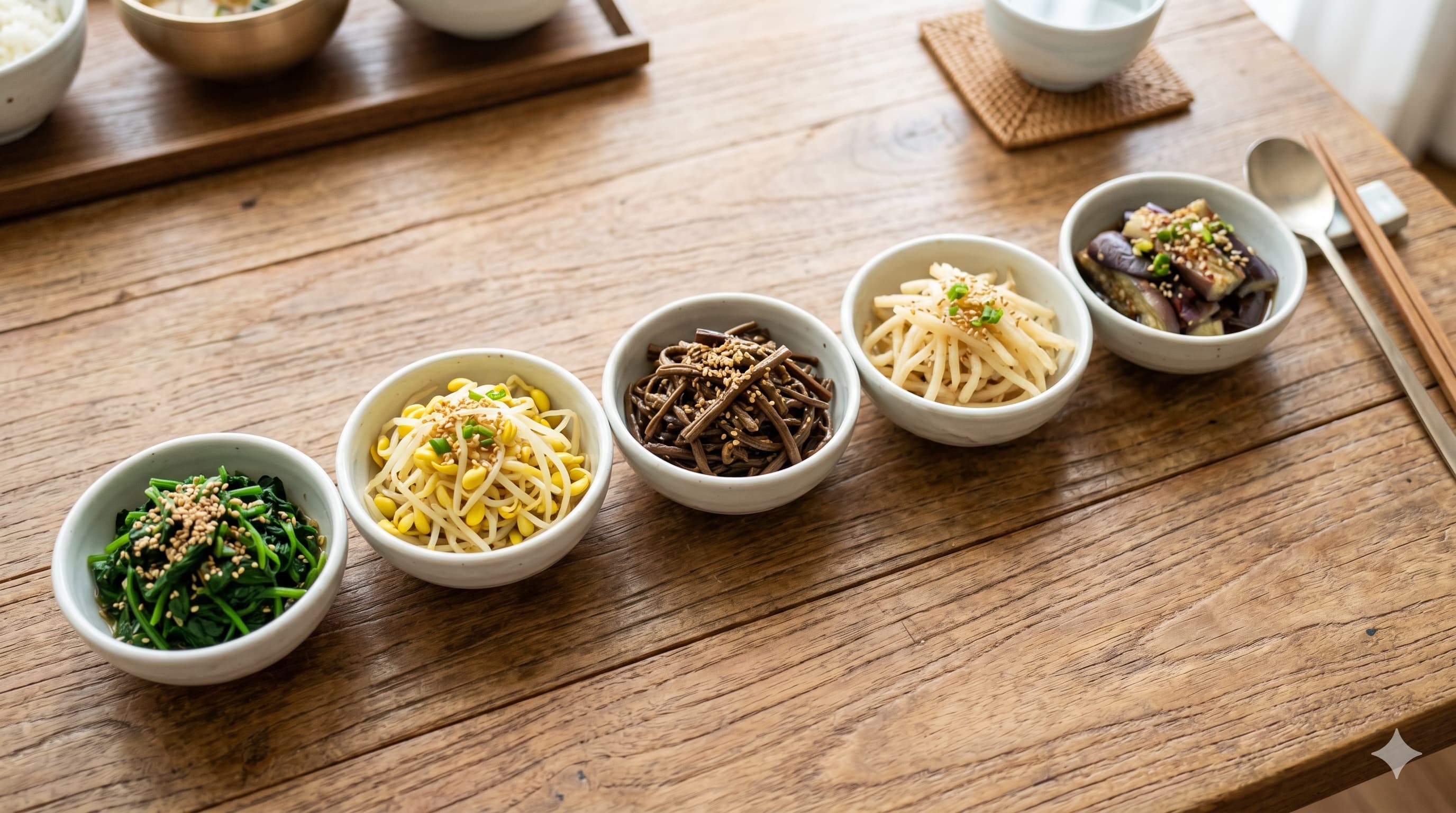
Namul (나물) refers to any edible plant — vegetable, herb, or wild green — that has been seasoned for eating. In practice, the term describes the category of banchan (side dishes) made from blanched, sauteed, or raw vegetables dressed with sesame oil, soy sauce, garlic, and other seasonings. Every Korean meal includes several types of namul, making vegetables the true centerpiece of the cuisine.
Three Types of Namul
- Saengchae (생채): Raw vegetable namul. Fresh vegetables are julienned or sliced and dressed without cooking. Examples include raw bean sprout salad and fresh cucumber namul.
- Sukchae (숙채): Blanched or cooked namul. Vegetables are briefly blanched in boiling water, squeezed dry, and seasoned. Spinach namul (sigeumchi-namul) is the most famous example.
- Bokkeum namul (볶음나물): Stir-fried namul. Heartier vegetables like fernbrake (gosari) or bellflower root (doraji) are sauteed with seasonings.
Essential Namul Seasoning Techniques
While each namul has its own character, most share a core seasoning formula:
- Base: Soy sauce (guk-ganjang for lighter dishes) or salt
- Fat: Toasted sesame oil or perilla oil
- Aromatics: Minced garlic (omit for temple-style), ginger
- Finish: Toasted sesame seeds, sometimes gochugaru for spicy varieties
The key technique is to season lightly and let the vegetable's natural flavor shine. Over-seasoning is the most common mistake beginners make.
Seasonal Namul Guide
Spring: Wild greens are at their peak — shepherd's purse (naengi), mugwort (ssuk), water parsley (minari), and bracken fern shoots (gosari). Spring namul tend to be delicate and slightly bitter.
Summer: Cucumbers, perilla leaves, crown daisy (ssukgat), and watercress. Light, refreshing preparations work best in the heat.
Autumn: Mushrooms, dried radish leaves (siraegi), sweet potato stems, and fresh chrysanthemum greens. Richer seasonings suit the cooler weather.
Winter: Dried and preserved vegetables return — dried fernbrake, dried radish strips (mumallaengi), and root vegetables like burdock (ueong) and lotus root (yeongeun).
Tips for Perfect Namul
- Blanch vegetables quickly in well-salted boiling water, then shock in cold water to preserve color and texture
- Squeeze blanched greens thoroughly — excess water dilutes seasoning and makes namul watery
- Season while vegetables are still slightly warm for better absorption
- Make namul in small batches; it's best fresh but keeps 2-3 days refrigerated
- Mix seasonings by hand (wearing gloves) for the most even distribution
Start Simple
Begin with spinach namul or bean sprout namul — both are forgiving and take under 10 minutes. Once you master the basic seasoning ratio, you can apply the same principles to any vegetable. Soon you'll have a rotating collection of colorful, nutritious banchan on your table every day.