Osinchae Explained: The Five Pungent Vegetables in Buddhism
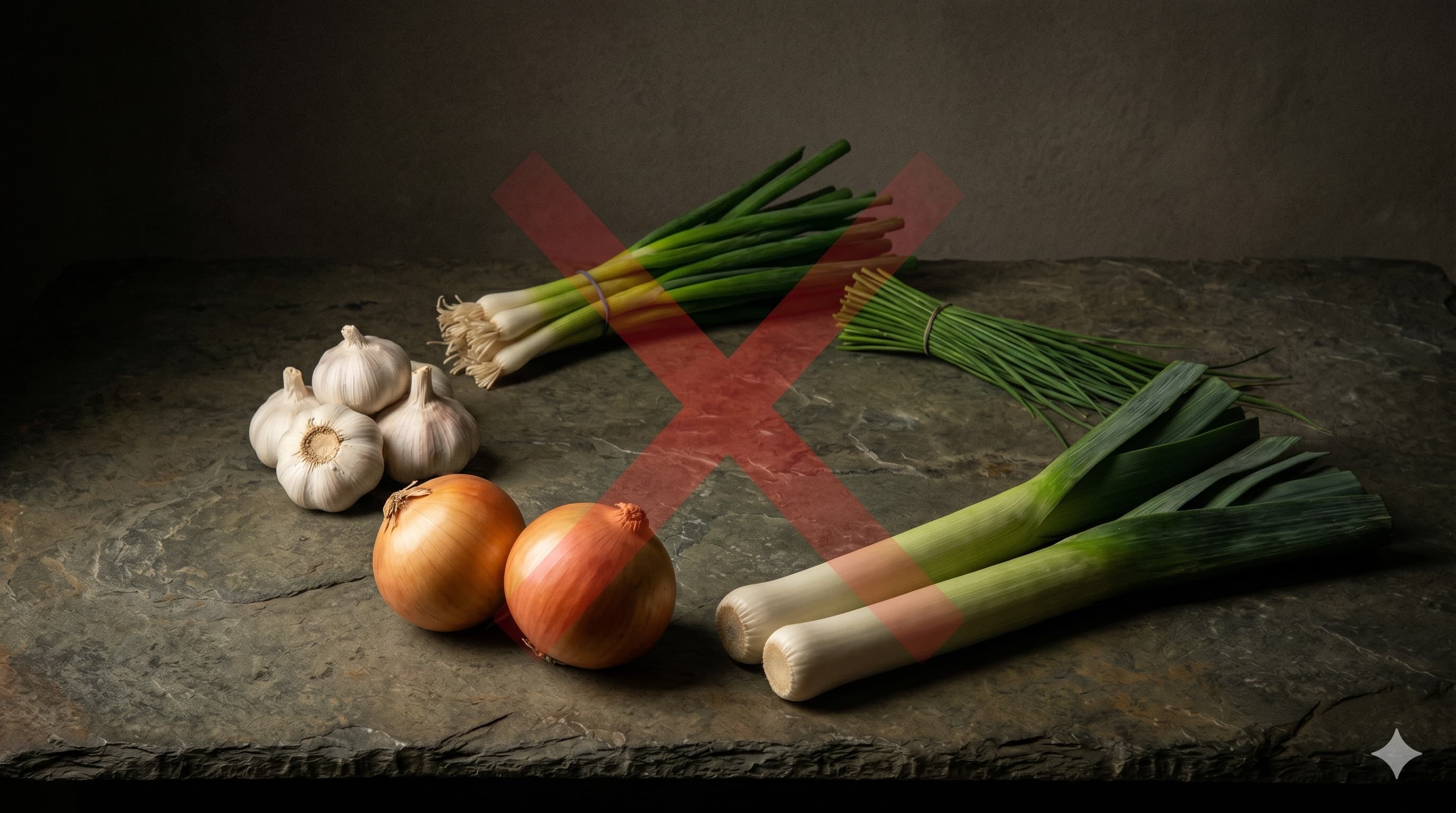
What are the Five Pungent Vegetables?
In Korean Buddhist cuisine, osinchae (오신채) refers to the five pungent vegetables that are strictly avoided. These are:
- Garlic (마늘 / maneul)
- Onions (양파 / yangpa)
- Green onions / scallions (파 / pa)
- Chives (부추 / buchu)
- Leeks / wild rocambole (달래 / dallae)
Why Are They Avoided?
The prohibition comes from the Surangama Sutra, a key Buddhist text. According to this teaching, the five pungent vegetables have specific effects on the body and mind:
- When eaten raw, they increase anger and irritability
- When eaten cooked, they stimulate desire and passion
- Both states cloud the mind and obstruct meditation
- Their strong odors are said to attract negative spirits and repel protective deities
From a traditional medicine perspective, these vegetables are considered overly stimulating to the body's internal heat and energy. The Donguibogam notes that excessive consumption of garlic and alliums can cause restlessness and disturb the body's equilibrium.
Flavor Alternatives for Cooking Without Alliums
Cooking without these aromatics might seem limiting, but temple cooks have developed centuries of techniques for building deep flavor:
- Ginger: Adds warmth and brightness without the pungent heat of garlic
- Perilla seeds and leaves: Provide a complex herbal aroma that fills the gap left by scallions
- Mushroom powder: Dried shiitake or king oyster mushrooms, ground fine, add concentrated umami
- Kelp broth: A simple dashima stock creates savory depth as a base for any dish
- Wild pepper (sancho): The numbing, citrusy tingle of wild pepper replaces the bite of raw alliums
- Fermented pastes: Doenjang and gochujang already contain so much flavor complexity that alliums become unnecessary
- Toasted sesame and perilla oils: Aromatic finishing oils that add richness and fragrance
Is Osinchae-Free Cooking Just for Buddhists?
Not at all. Many people choose to reduce or eliminate alliums for health reasons — those with IBS or FODMAP sensitivities often avoid garlic and onions. The flavor principles developed in Korean temple kitchens offer practical solutions for anyone cooking without these ingredients.
Trying It Yourself
Start by making a simple namul without any alliums. Season blanched spinach with soy sauce, toasted sesame oil, sesame seeds, and a pinch of ground perilla. You may be surprised at how satisfying the flavor is. Once comfortable, explore more complex temple-style stews and braised dishes that rely on fermented pastes and mushroom broths for their depth.