Preserving Korean Traditions: Jangajji Pickled Vegetables
What Is Jangajji?
Jangajji (장아찌) refers to vegetables preserved in one of Korea's fermented sauces — soy sauce (ganjang), soybean paste (doenjang), or chili paste (gochujang). Unlike the quick pickles of Western cuisine or the vinegar-based preserves common in Japanese cooking, Korean jangajji relies on the complex, living microbiome of fermented sauces to transform raw vegetables into deeply flavored, long-keeping banchan. The result is something unique in the world of preserved foods: pickles that taste not merely sour or salty, but rich, savory, and deeply complex, with the unmistakable character of Korea's great fermented pastes.
Jangajji has been a cornerstone of Korean home cooking for centuries, born from the practical need to preserve seasonal vegetables for year-round consumption. Before refrigeration, Korean households relied on a constellation of preservation techniques — fermentation (kimchi), drying (dried greens), salting (jeotgal), and jangajji — to maintain a varied and nutritious diet through the long winter months. While refrigeration has made some of these techniques less necessary for survival, jangajji persists because the flavors it produces are irreplaceable.
The Three Methods
Ganjang Jangajji (Soy Sauce Pickles): The most common method. Vegetables are submerged in a brine of soy sauce, water, vinegar, and sugar (or rice syrup). The brine is often boiled and cooled before pouring over the vegetables to ensure proper preservation. Some recipes call for boiling the brine, pouring it over the vegetables, then draining, re-boiling, and pouring again — repeating this process two or three times over several days. This technique ensures deep penetration of the seasoning and extends shelf life. Common ganjang jangajji include garlic (maneul jangajji), garlic scapes (maneuljjong jangajji), green chili peppers (gochu jangajji), perilla leaves (kkaennip jangajji), and onions (yangpa jangajji).
Doenjang Jangajji (Soybean Paste Pickles): Vegetables are buried in a thick layer of doenjang and left to cure for weeks or months. The paste slowly permeates the vegetables, imparting its complex fermented flavor while preserving them through its high salt content. Doenjang jangajji has a more intense, earthier flavor than the soy sauce version. Common candidates include garlic cloves, perilla leaves, green peppers, and small eggplants.
Gochujang Jangajji (Chili Paste Pickles): Similar to the doenjang method, but using gochujang as the curing medium. The result is sweet, spicy, and deeply savory. Dried radish strips (mupmallaengi) cured in gochujang are a beloved snack and banchan, with a chewy texture and addictive sweet-spicy flavor.
Popular Jangajji Varieties
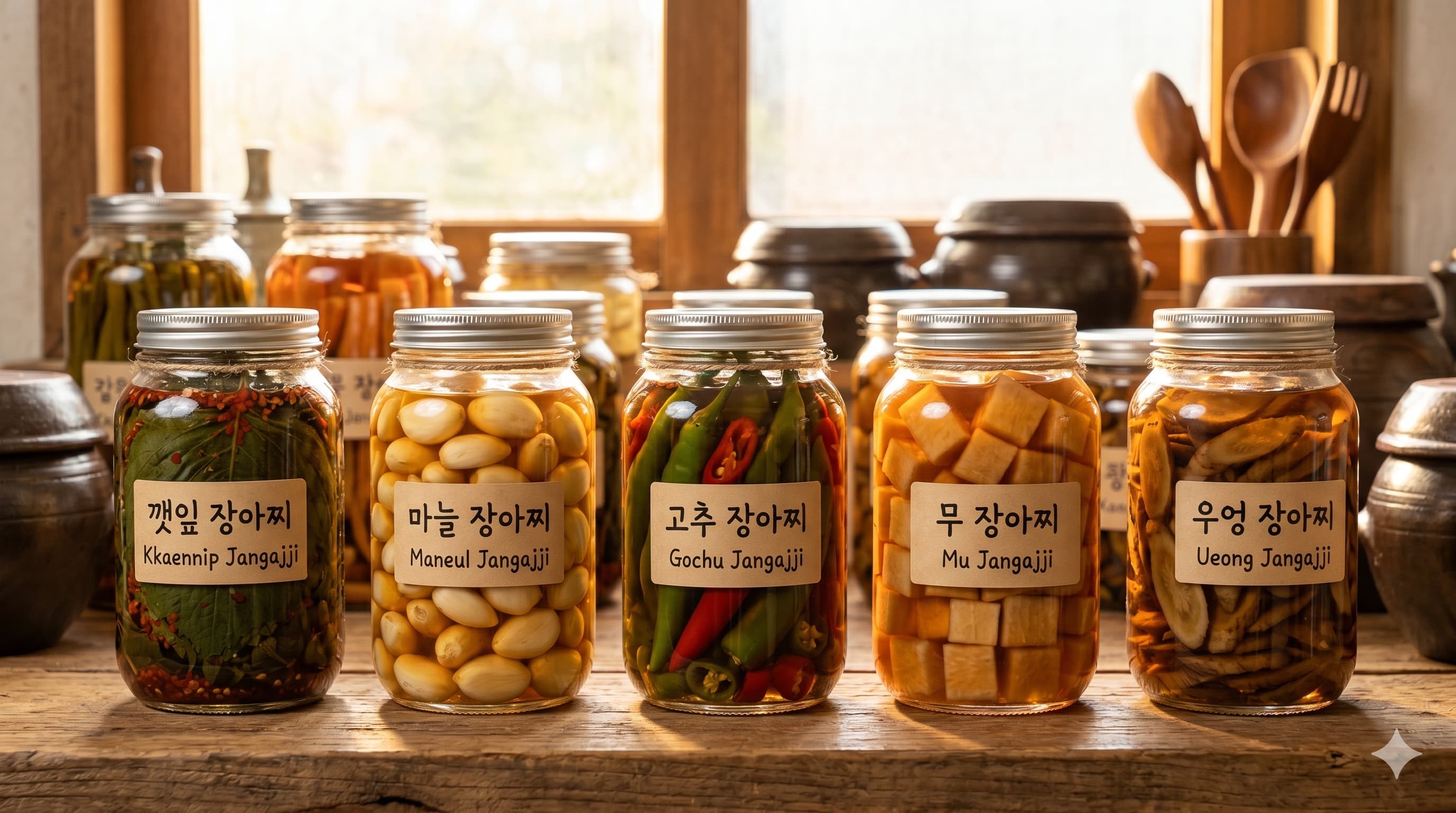
Kkaennip Jangajji (깻잎 장아찌): Perilla leaves stacked and preserved in soy sauce brine. The leaves absorb the soy sauce, becoming tender and deeply savory while retaining their distinctive herbal aroma. Each leaf is peeled off and eaten wrapped around a bite of rice — a simple pleasure that exemplifies the Korean art of flavor combination.
Maneul Jangajji (마늘 장아찌): Whole garlic cloves pickled in a sweet soy sauce brine. Over weeks, the garlic mellows dramatically, losing its harsh bite and developing a sweet, tangy, almost candy-like quality. Well-aged maneul jangajji (some families keep theirs for years) turns dark amber and develops extraordinary depth.
Gochu Jangajji (고추 장아찌): Fresh green chili peppers or shishito-type peppers preserved in soy sauce. They maintain a pleasant crunch and develop a salty-sweet-spicy flavor that makes them irresistible alongside rice.
Mu Jangajji (무 장아찌): Korean radish cut into chunks or slices and pickled in a sweet soy sauce brine. The radish stays crisp and develops a sweet-salty flavor and an appealing golden color.
Making Ganjang Jangajji at Home
The basic soy sauce jangajji method is straightforward and forgiving. Begin with clean, dry vegetables — moisture is the enemy of preservation, so wash and thoroughly dry your chosen vegetables before starting. Prepare a brine by combining one cup of soy sauce, one cup of water, half a cup of vinegar (rice vinegar is traditional), and a quarter cup of sugar in a pot. Bring to a boil, stirring to dissolve the sugar, then let it cool completely.
Pack the vegetables tightly into a clean glass jar and pour the cooled brine over them, ensuring they are fully submerged. Weight the vegetables down with a small plate or clean stone to keep them below the surface. Store in the refrigerator. The jangajji is edible after three to five days, but flavors improve significantly after two to three weeks. For longer preservation, use the drain-reboil-repour technique every few days for the first week.
Jangajji in Temple Cuisine
In Korean Buddhist temples, jangajji holds a special importance because the monastic diet avoids the five pungent vegetables. Without garlic and onion, temple cooks rely on jangajji to provide the deep, savory-sweet flavors that might otherwise come from allium aromatics. Temple jangajji preparations are often more creative than their secular counterparts — wild mountain plants, unusual roots, and seasonal greens are preserved in jang, creating a banchan library that varies from temple to temple and season to season.
Some temple jangajji are aged for years, developing flavors of extraordinary complexity. A perilla leaf jangajji that has spent two years in soy sauce brine bears little resemblance to a freshly made version — the flavors deepen, harmonize, and develop an almost wine-like complexity that rewards patience. This long-term approach to food reflects the Buddhist emphasis on mindful waiting and the understanding that the best things cannot be rushed.
Sustainability and Zero Waste
Jangajji embodies the Korean approach to food sustainability. By preserving seasonal abundance, nothing goes to waste. The brine itself, enriched by the vegetables it has pickled, becomes a seasoning — used to dress rice, flavor stir-fries, or season other dishes. In a world increasingly concerned with food waste, the jangajji tradition offers an elegant, time-tested solution: transform perishable vegetables into long-keeping, deeply delicious foods using nothing more than the fermented sauces already in your kitchen.