The Role of Sesame in Korean Nutrition and Medicine
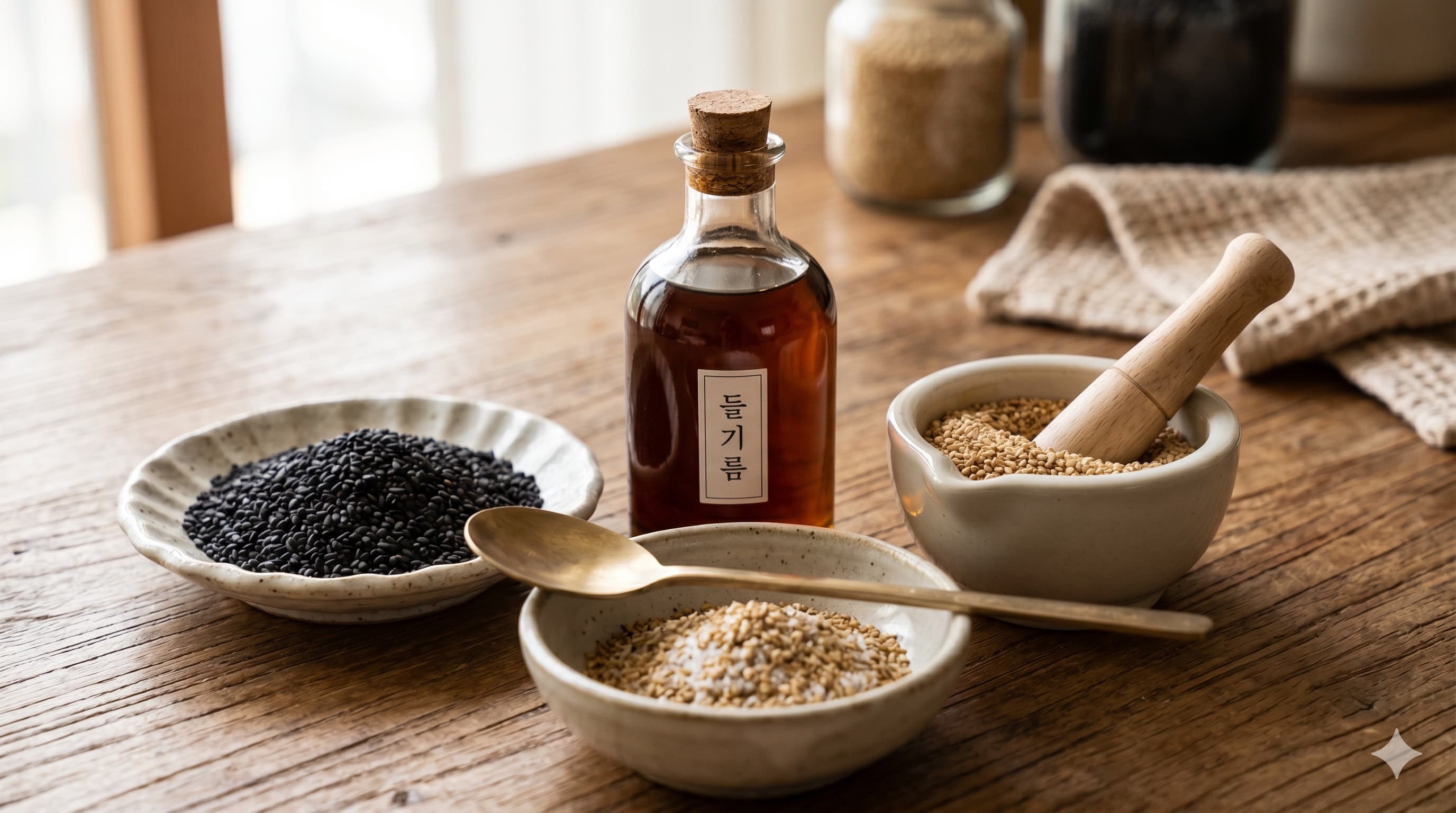
Sesame: Korea's Essential Aromatic
If there is one aroma that defines Korean cuisine, it is toasted sesame. That warm, nutty, slightly sweet fragrance rises from nearly every dish on the Korean table — drizzled over namul, swirled into bibimbap, brushed on grilled items, sprinkled as a finishing touch on soups and stews. Sesame in Korean cooking comes in three primary forms: chamgireum (참기름, toasted sesame oil), kkae (깨, sesame seeds, both white and black), and kkaesogeum (깨소금, ground sesame mixed with salt). Together, they form an aromatic triad that is as fundamental to Korean food as olive oil is to Mediterranean cuisine.
What distinguishes Korean sesame oil from its counterparts in other Asian cuisines is the degree of roasting. Korean sesame oil is made from deeply roasted seeds, producing an oil that is darker, more intensely aromatic, and richer in flavor than the lighter sesame oils used in Chinese or Japanese cooking. This deep roast creates a complexity that borders on smoky, with notes of caramel, hazelnut, and toasted grain. A few drops transform a simple dish.
Sesame in the Donguibogam
The Donguibogam devotes considerable attention to sesame, classifying it among the most beneficial of all plant foods. According to the text, sesame (cham-kkae) is sweet in flavor and neutral in thermal nature, making it appropriate for virtually all constitutions and seasons. It is described as nourishing the liver and kidneys, strengthening the tendons and bones, moistening the intestines, and promoting longevity. The text notes that sesame "fills the bone marrow, supplements the brain, and brightens the eyes" — language that reflects the traditional understanding of sesame as a deeply nourishing, restorative food.
Black sesame (heukimja, 흑임자) receives special emphasis in the Donguibogam as being particularly beneficial for the kidneys and for reversing the signs of aging. In the five-color system, black is associated with the kidney-water element, and black sesame is recommended for people with kidney weakness, premature graying of hair, or general signs of depletion. Modern nutritional science has confirmed that black sesame seeds are rich in calcium, iron, magnesium, and antioxidant lignans (sesamin and sesamolin).
Nutritional Profile
Sesame seeds are nutritional powerhouses, especially valuable in plant-based diets. A quarter-cup serving of sesame seeds provides approximately eight grams of protein, four grams of fiber, and significant amounts of calcium (comparable to dairy milk, ounce for ounce), iron, magnesium, zinc, and copper. The oil is rich in polyunsaturated and monounsaturated fatty acids, as well as unique lignans that function as antioxidants and may support hormonal balance.
For vegans concerned about calcium intake, sesame seeds are one of the best plant-based sources. The unhulled seeds (which retain their mineral-rich outer coating) contain roughly 975 milligrams of calcium per 100 grams — more than any common dairy product. Korean cuisine's liberal use of sesame seeds means that traditional Korean meals naturally provide substantial calcium without any dairy products.
Korean Sesame Preparations
Toasted Sesame Oil (Chamgireum): Used as a finishing oil, not a cooking oil. Its low smoke point and intense flavor mean it is best added at the end of cooking or drizzled over completed dishes. It is essential in virtually every namul recipe, in bibimbap, and as a component of dipping sauces. Buy the darkest, most fragrant Korean sesame oil you can find — quality varies enormously, and the best oils are made from small-batch roasted seeds.
Ground Sesame Salt (Kkaesogeum): Toasted sesame seeds ground with coarse salt, used as an all-purpose seasoning. Kkaesogeum adds crunch, nuttiness, and seasoning in a single ingredient. It is sprinkled over rice, namul, stir-fries, and soups. Making your own is easy: toast white sesame seeds in a dry pan until golden and fragrant, then grind coarsely with salt in a mortar or spice grinder.
Black Sesame Preparations: Black sesame seeds are ground into a paste for sweet and savory applications — heukimja juk (black sesame porridge) is a luxuriously silky, deeply nutty porridge served warm as a snack or light meal. Black sesame powder is also used to coat tteok (rice cakes) and as a flavoring for ice cream and baked goods.
Cooking Tips
To maximize the flavor of sesame in your cooking, always toast the seeds fresh rather than using pre-toasted seeds from a jar. Toast in a dry skillet over medium heat, shaking the pan frequently, until the seeds turn golden and begin to pop — about three to four minutes for white sesame, slightly less for black. The difference between freshly toasted and pre-packaged sesame seeds is as dramatic as the difference between freshly ground and pre-ground coffee.
Store sesame oil in the refrigerator after opening, as its high unsaturated fat content makes it prone to rancidity. Whole sesame seeds keep well in a cool, dark place for several months, but ground sesame loses flavor quickly and should be prepared in small batches. In a well-stocked Korean kitchen, sesame in its various forms is used multiple times daily — it is not a luxury ingredient but a fundamental building block of flavor, nutrition, and culinary identity.