Shun: Seasonal Japanese Cooking and Eating with Nature's Rhythm
What Is Shun?
Shun (旬) is the Japanese concept of eating foods at the peak of their natural season — the moment when an ingredient is at its most flavorful, nutritious, and abundant. Unlike the Western approach to food, where supermarkets offer most produce year-round regardless of season, traditional Japanese cuisine places enormous importance on what is available right now, in this specific week or month of the year. An ingredient that is in shun is considered to be at its best, and eating it is a way of aligning oneself with the natural world.
The concept of shun goes beyond mere freshness. It carries aesthetic, philosophical, and even spiritual significance. Eating seasonal food is a way of marking time, of noticing and appreciating the passage of the year. When a Japanese person eats the first bamboo shoots of spring or the first matsutake mushrooms of autumn, there is a sense of celebration — a recognition that this moment will not come again for another year.
The Japanese Calendar of Seasons
Japan divides the year with remarkable granularity. Beyond the four major seasons, the traditional Japanese calendar recognizes 24 solar terms (sekki) and 72 micro-seasons (ko), each lasting approximately five days. These micro-seasons have poetic names that describe natural phenomena: "the east wind melts the ice," "bush warblers sing in the mountains," "mist begins to linger." While modern Japanese people do not necessarily track all 72 micro-seasons, this system reflects how deeply seasonal awareness is embedded in Japanese culture.
For cooks, this means that "spring vegetables" is not a single category but a succession of specific ingredients, each arriving and departing in a particular order. Understanding this sequence — even in broad terms — allows you to shop and cook in harmony with the season.
Spring (Haru): March through May
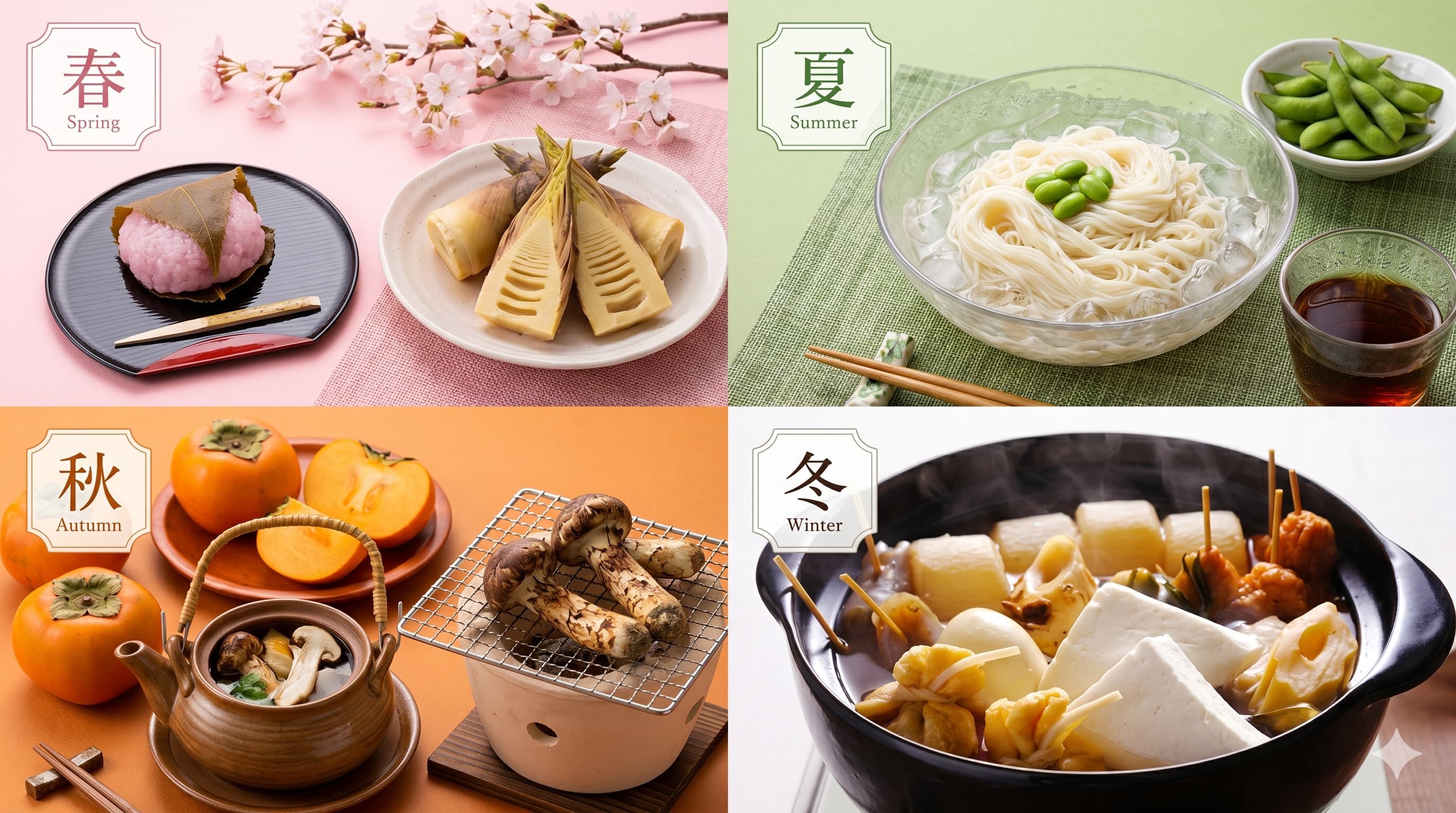
Spring is the season of renewal, and its ingredients reflect that energy. Early spring brings fuki-no-to (butterbur buds), one of the first sansai (wild mountain vegetables) to emerge. These small, intensely bitter buds are served as tempura or chopped into miso paste. As spring progresses, bamboo shoots (takenoko) appear — the defining vegetable of the season, served in rice, soup, and simmered dishes.
Other spring ingredients include nanohana (rapeseed blossoms), which are blanched and dressed with mustard and soy sauce; spring cabbage, which is sweeter and more tender than its winter counterpart; and fresh peas and fava beans. Spring is also the season for strawberries, which are celebrated with an enthusiasm that might surprise Western observers — Japanese strawberries are often eaten plain, selected individually for perfection.
Summer (Natsu): June through August
Summer cooking in Japan emphasizes cooling, refreshing foods that counteract the heat and humidity. Key summer vegetables include cucumbers (served in sunomono vinegar salads or as tsukemono pickles), eggplant (nasu, grilled with miso or simmered in dashi), tomatoes, green peppers (shishito), and edamame. Myoga ginger, with its delicate, fragrant flavor, is a distinctively Japanese summer herb used as a garnish for cold noodles and tofu.
Summer meals often feature cold preparations: hiyashi chuka (cold ramen), zaru soba (chilled buckwheat noodles with dipping sauce), and hiyayakko (chilled silken tofu). Watermelon and peaches are the quintessential summer fruits. The emphasis is on lightness, hydration, and bright flavors that stimulate the appetite in oppressive heat.
Autumn (Aki): September through November
Autumn is considered the peak eating season in Japan, expressed in the phrase shokuyoku no aki (autumn of appetite). The cooling weather brings hearty ingredients: sweet potatoes (satsumaimo), chestnuts (kuri), kabocha pumpkin, persimmons (kaki), and various mushrooms. Matsutake mushrooms, prized for their unique aroma, are the most celebrated autumn ingredient, though they command extremely high prices due to their rarity and resistance to cultivation.
Rice harvest occurs in autumn, and newly harvested rice (shinmai) is eagerly anticipated for its superior moisture and flavor. Autumn cooking shifts toward warming preparations: simmered dishes, rice cooked with seasonal ingredients (takikomi gohan with chestnuts or mushrooms), and hot soups. The season also brings various fruits including Asian pears (nashi), grapes, and apples.
Winter (Fuyu): December through February
Winter is the season of preservation and warmth. Root vegetables dominate: daikon radish, turnips (kabu), lotus root (renkon), gobo (burdock root), and taro (satoimo). Nabe (hot pot), a communal one-pot dish simmered at the table, becomes the defining winter meal — its warmth and sociability perfectly suited to cold evenings.
Citrus fruits brighten the winter table: yuzu, with its intensely fragrant rind, is used to flavor soups, sauces, and desserts. Mikan (satsuma mandarin oranges) are the everyday winter fruit. Winter greens like komatsuna and mizuna appear in soups and side dishes. Preserved foods — pickles, dried foods, fermented products — play a larger role in winter, reflecting the traditional need to rely on preserved stores during the lean months.
Applying Shun to Your Cooking
You do not need to live in Japan to benefit from the principle of shun. Wherever you are, paying attention to what is locally and seasonally available transforms your cooking. Visit farmers' markets and notice what appears and disappears throughout the year. Build meals around what is at its peak rather than shopping from a fixed recipe list. Embrace the excitement of the first asparagus of spring, the abundance of summer tomatoes, the richness of autumn squash, and the heartiness of winter roots.
Seasonal eating naturally provides nutritional variety, supports local agriculture, reduces the environmental impact of transporting food across great distances, and — most importantly — simply tastes better. An ingredient at its peak requires less seasoning, less technique, and less effort to taste extraordinary. Shun is not a restriction but a liberation: it invites you to let nature guide your cooking and to find joy in the ever-changing rhythm of the year.