Seasonal Korean Cooking: A Guide to Eating with the Seasons
The Korean Philosophy of Seasonal Eating
In Korean culinary tradition, jecheol eumsik (제철음식) — eating food in its proper season — is not merely a preference but a foundational principle of health and harmony. For centuries, Korean cooks have understood that ingredients harvested at their natural peak offer the best flavor, the highest nutritional value, and the greatest alignment with the body's seasonal needs.
The Donguibogam Perspective
The Donguibogam (동의보감), Korea's seminal text of traditional medicine compiled in 1613, emphasizes that food and medicine share the same root. It teaches that the body's energy (gi) shifts with the seasons, and that eating seasonally helps maintain equilibrium. Spring foods clear stagnation from winter. Summer foods cool internal heat. Autumn foods moisten dryness. Winter foods warm the core and store energy.
Spring (봄): Awakening and Cleansing
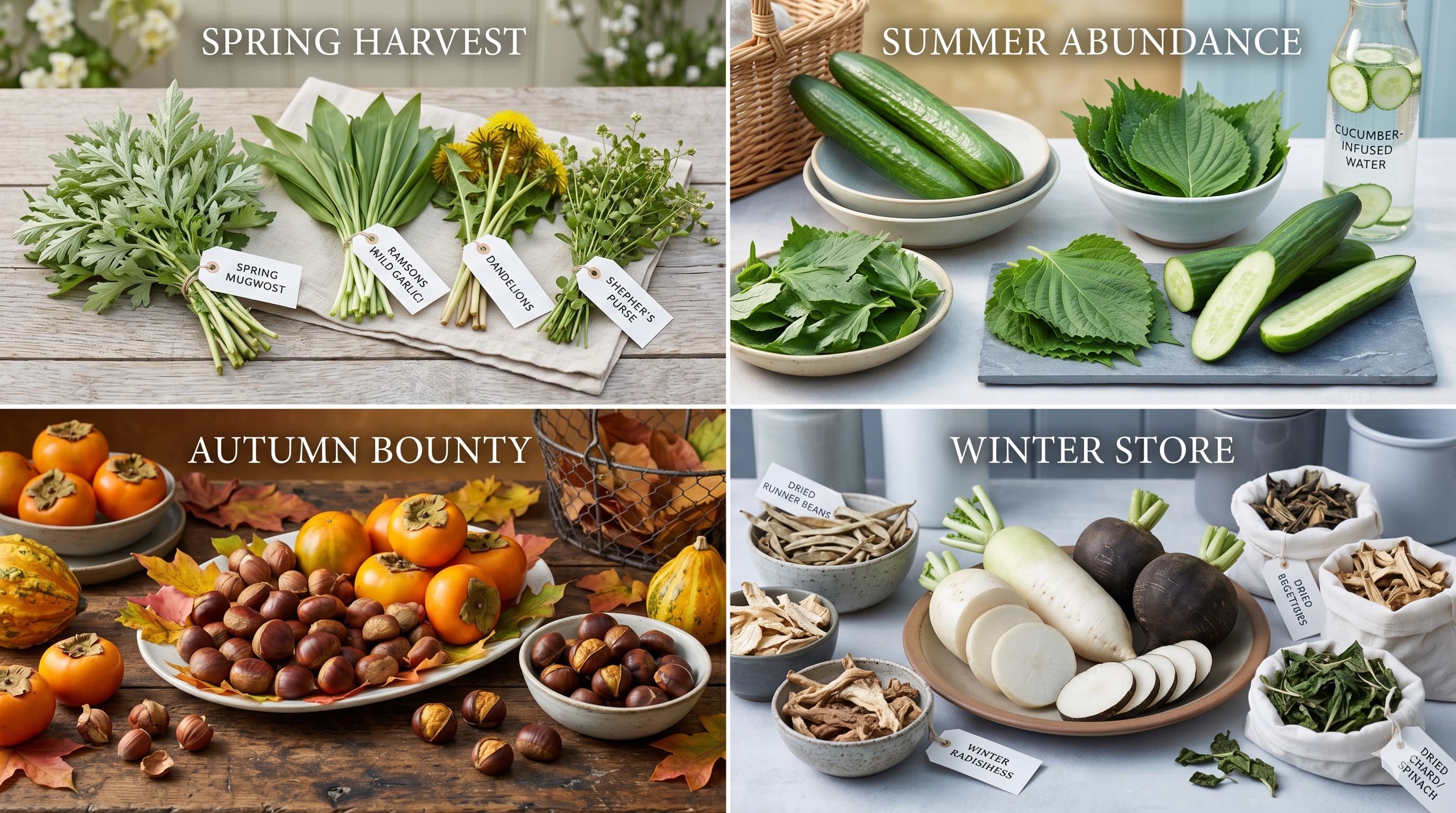
As the earth thaws, wild greens emerge with a characteristic mild bitterness that Korean medicine values for cleansing the liver and stimulating digestion after winter's heavy foods. Key spring ingredients include:
- Naengi (냉이): Shepherd's purse, with its earthy, slightly peppery flavor — excellent in doenjang-guk
- Ssuk (쑥): Mugwort, used in rice cakes (ssukbeomul-tteok) and soups to invigorate the blood
- Dalrae (달래): Wild chives, enjoyed raw as a salad with vinegary gochujang dressing
- Gosari (고사리): Bracken fern shoots, blanched and stir-fried with sesame oil
Summer (여름): Cooling and Replenishing
Korean summer cooking focuses on light, cooling dishes that combat heat and replenish fluids lost through perspiration. Traditional wisdom holds that cold-natured foods balance the season's excess heat:
- Oi (오이): Cucumbers in chilled soups (oi-naengguk) and fresh namul
- Hobak (호박): Young summer squash in light stews and porridge
- Kongnamul (콩나물): Soybean sprouts in cooling soups
- Minari (미나리): Water parsley, served raw or in chilled salads
Autumn (가을): Nourishing and Preserving
Autumn is the season of harvest and preparation. The body needs richer foods to build reserves for winter, and Korean kitchens shift toward heartier preparations:
- Beoseot (버섯): Wild mushrooms at their peak — pine mushrooms (songi), oyster mushrooms, wood ear
- Bam (밤): Chestnuts in rice dishes, desserts, and roasted as snacks
- Yeongeun (연근): Lotus root, sliced and braised in soy sauce (yeongeun-jorim)
- Kimjang season: The great annual kimchi-making tradition that preserves napa cabbage for winter
Winter (겨울): Warming and Sustaining
Winter foods prioritize internal warmth and sustained energy. Root vegetables and preserved ingredients take center stage:
- Mu (무): Korean radish in hearty stews (mu-guk) and braised dishes
- Ueong (우엉): Burdock root, rich in fiber and traditionally valued for strengthening the kidneys
- Dried vegetables: Siraegi (dried radish leaves), mumallaengi (dried radish strips), and dried greens reconstituted in warming soups
- Porridges (죽): Nurturing grain and seed porridges that warm the body gently
Applying Seasonal Eating Today
Even in modern kitchens far from Korea, the principle of seasonal eating is practical and rewarding. Visit farmers' markets, learn what grows locally in each season, and let nature guide your menu. Your body — and your palate — will notice the difference when you eat in rhythm with the world around you.