Tofu in Korean Cooking: From Sundubu to Dubu-Jorim
Korea's Deep Relationship with Tofu
Tofu, known as dubu (두부) in Korean, arrived on the Korean peninsula from China around the Goryeo dynasty (918-1392) and has since become one of the most essential ingredients in Korean cooking. Unlike in some Western contexts where tofu is treated as a bland meat substitute, Korean cuisine celebrates tofu in its own right, with specific preparations designed to highlight different textures and flavor-absorbing qualities. From the softest silken curds to the firmest pressed blocks, every form of tofu has its place on the Korean table.
In Buddhist temple cuisine, tofu holds a position of particular importance as a primary protein source. Temple cooks have developed sophisticated tofu preparations over centuries, treating the ingredient with the same reverence and skill that other traditions might reserve for prime cuts of meat. For the modern vegan cook, Korean tofu techniques offer a masterclass in transforming this humble ingredient into something truly memorable.
Sundubu (순두부) — Uncurdled Soft Tofu
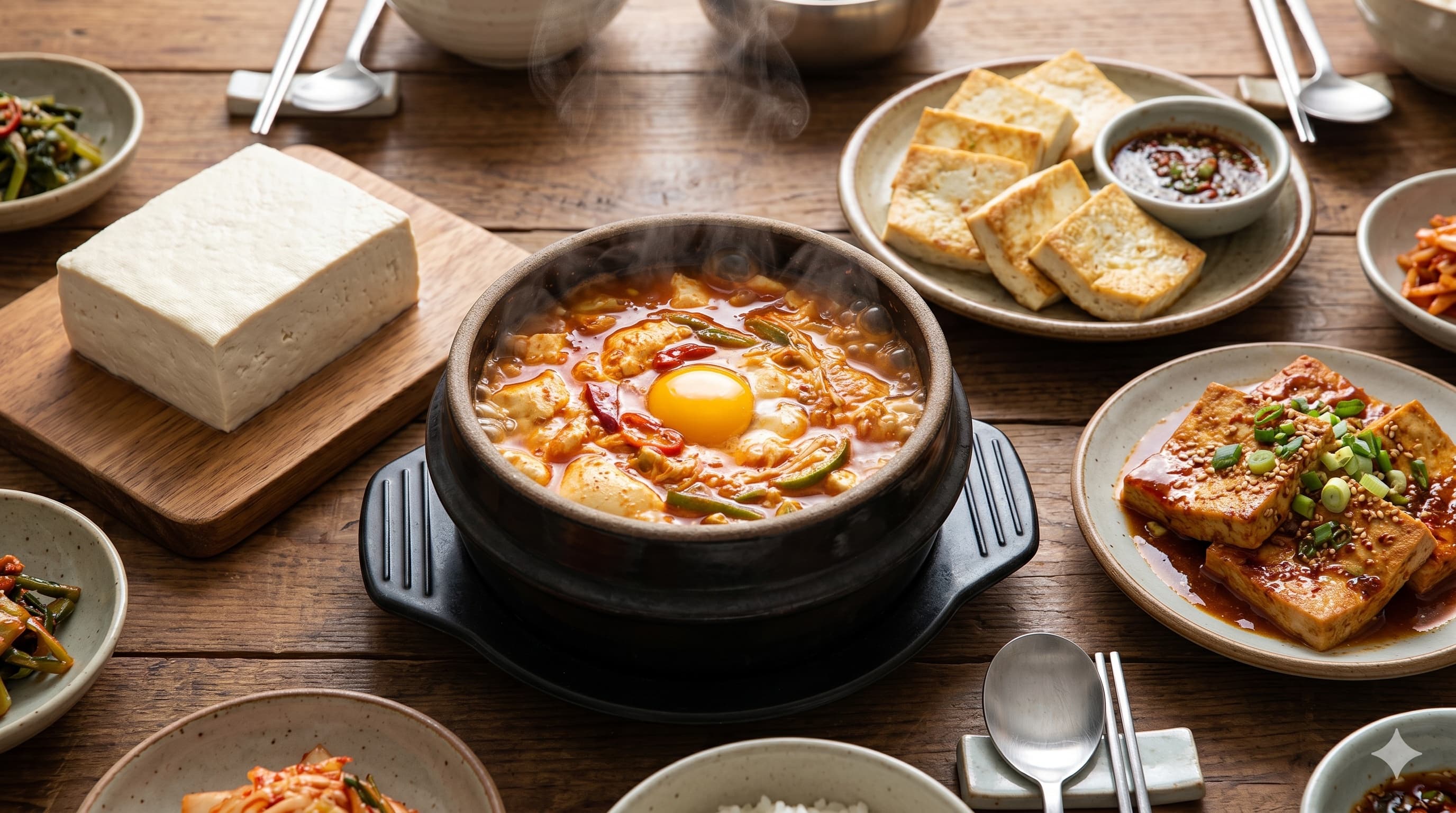
Sundubu is the softest form of Korean tofu — essentially fresh soy curds that have not been pressed. It has a custard-like texture, delicate sweetness, and a tendency to break into beautiful, cloud-like pieces in hot broth. Sundubu jjigae (soft tofu stew) is one of Korea's most beloved comfort foods, traditionally served bubbling in a stone pot.
The vegan version of sundubu jjigae is built on a rich base of dried shiitake mushrooms and kelp, seasoned with gochugaru, gochujang, soy sauce, and sesame oil. Vegetables like zucchini, mushrooms, and scallions are added to the pot, and the sundubu is gently spooned in at the end, barely stirred, so it heats through without breaking apart completely. The result is a spicy, warming, deeply satisfying stew that proves you need nothing from the animal kingdom to create profound comfort food.
Sundubu is also enjoyed simply, freshly made and still warm, drizzled with soy sauce and sesame oil and topped with a pinch of gochugaru. In this form, the pure, sweet flavor of the soybeans comes through clearly, and you understand why Koreans have treasured this food for centuries.
Dubu-Jorim (두부조림) — Braised Tofu
Dubu-jorim is the quintessential Korean tofu banchan: sliced firm tofu, pan-fried until golden on both sides, then simmered in a sauce of soy sauce, gochugaru, sesame oil, garlic (or ginger in temple versions), and a touch of sugar. The pan-frying creates a thin, slightly chewy skin on the outside while the inside remains soft, and the braising sauce penetrates the tofu with savory-sweet-spicy flavors.
The key to excellent dubu-jorim is patience. Slice the tofu about half an inch thick, press it gently between paper towels to remove excess moisture, and fry it in a well-oiled pan without moving the slices until they develop a genuine golden crust. This takes four to five minutes per side. Then pour the sauce over the tofu, add sliced scallions or mild peppers, and simmer until the sauce reduces and clings to each piece. Dubu-jorim keeps well in the refrigerator for several days and is a staple of Korean meal prep.
Dubu-Buchimgae (두부부침개) — Tofu Pancakes
Crumbled firm tofu mixed with vegetables and a light batter makes dubu-buchimgae, a protein-rich take on the Korean pancake tradition. The tofu is squeezed dry, mashed, and combined with finely chopped vegetables — carrots, scallions, perilla leaves, chili peppers — along with a binding mixture of flour, salt, and pepper. The mixture is shaped into small patties and pan-fried until crispy on both sides. Served with a soy-vinegar dipping sauce, these pancakes are satisfying, nutritious, and endlessly customizable.
Dubu-Gangjeong (두부강정) — Crispy Glazed Tofu
Borrowing the technique from the popular fried chicken preparation, dubu-gangjeong involves cubing firm tofu, coating it in cornstarch, deep-frying until shatteringly crispy, and then tossing it in a sticky, sweet-spicy glaze made from gochujang, soy sauce, rice syrup, garlic, and vinegar. The contrast between the crunchy exterior and the soft tofu interior, slicked with that addictive glaze, makes this one of the most popular modern Korean vegan dishes. It works beautifully as a snack, banchan, or main dish over rice.
Choosing and Preparing Tofu
Korean grocery stores typically carry several grades of tofu, from extra-soft sundubu to extra-firm bukeo dubu (pressed tofu). For stews and gentle preparations, use soft or medium tofu. For frying, braising, and grilling, use firm or extra-firm. When in doubt, press your tofu: wrap it in clean towels, place a weight on top, and let it drain for fifteen to thirty minutes. This removes excess water, improves texture, and allows the tofu to absorb seasonings more effectively.
Freezing and thawing tofu is another Korean technique worth learning. The freeze-thaw process creates a spongy, almost meat-like texture with larger pores that soak up sauces and marinades eagerly. Frozen-then-thawed tofu is excellent for stir-fries, stews where you want tofu that holds its shape, and any preparation where you want a chewier texture.
Tofu as a Complete Protein
For those concerned about protein on a plant-based diet, Korean tofu preparations offer reassurance. A single serving of firm tofu provides roughly fifteen grams of complete protein, containing all essential amino acids. When combined with the rice, beans, and fermented soybean products that constitute the rest of a Korean vegan meal, protein intake is more than adequate. The Donguibogam describes tofu as cooling in nature, beneficial for clearing heat, and gentle on the stomach — making it suitable for virtually everyone regardless of constitution.