Umami Without Meat: Building Depth in Korean Vegan Cooking
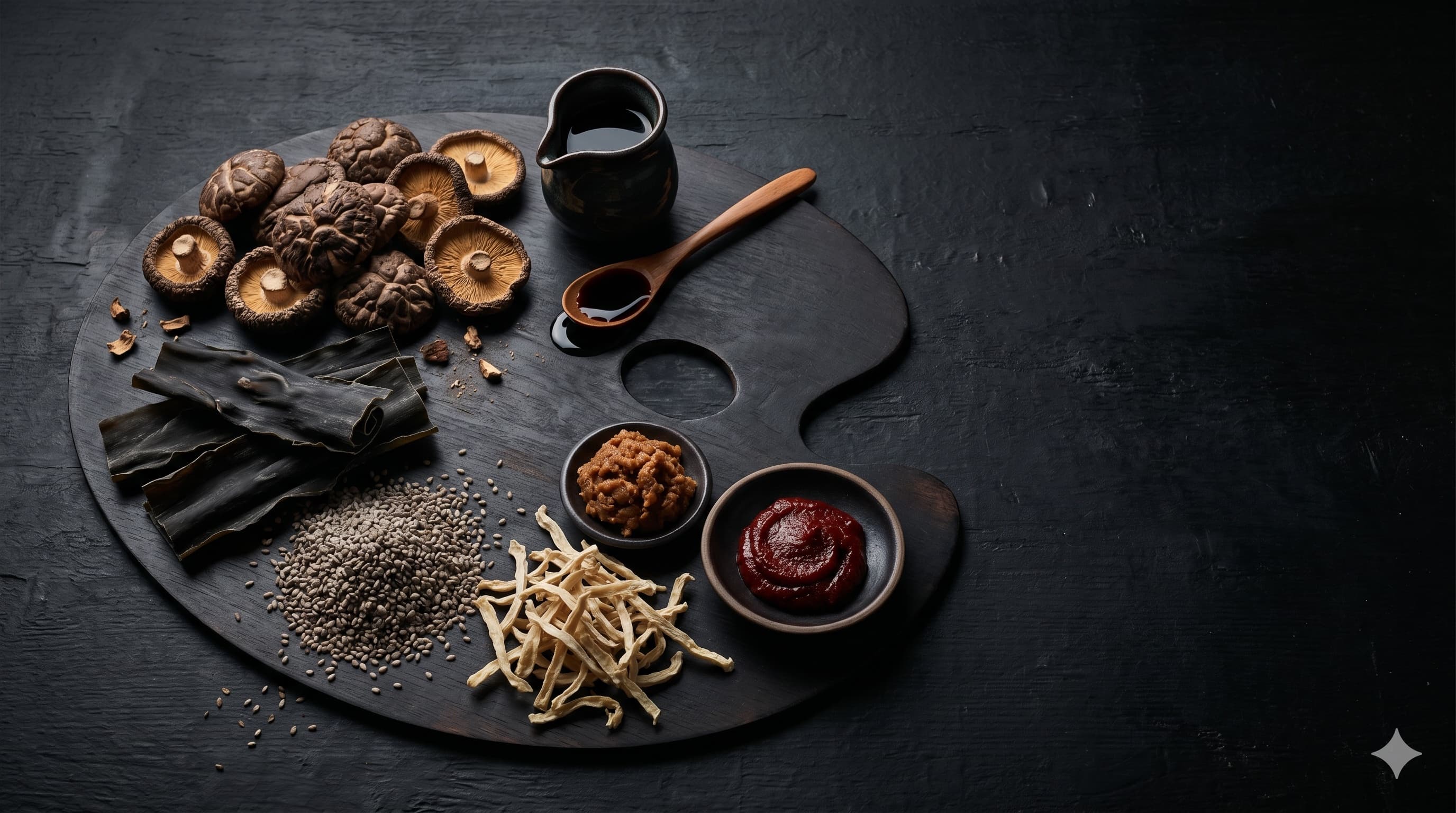
Understanding Umami
Umami, the "fifth taste" identified by Japanese chemist Kikunae Ikeda in 1908, is the savory, mouth-filling, deeply satisfying quality that makes certain foods irresistible. While umami was first isolated scientifically in the context of kombu seaweed, the concept describes a sensation that cooks have understood intuitively for millennia. It is the quality that makes a long-simmered stew more satisfying than a quickly boiled soup, that distinguishes a good broth from water, and that makes fermented foods taste richer and more complex than their fresh counterparts.
At a molecular level, umami is triggered by specific compounds that activate taste receptors on the tongue: glutamic acid (an amino acid), inosinate (found primarily in animal tissues), and guanylate (found in mushrooms). These compounds can work synergistically — combinations of glutamate with either inosinate or guanylate produce an umami sensation up to eight times more intense than any single compound alone. This synergy is the secret weapon of Korean vegan cooking, which routinely combines multiple plant-based umami sources to create flavors of extraordinary depth.
Korea's Umami Arsenal
Korean cuisine is arguably the world's most naturally umami-rich plant-based food tradition. This is not an accident — it is the result of centuries of developing fermentation techniques, foraging wild ingredients, and combining complementary flavors with sophisticated intuition. Here are the key umami sources in the Korean vegan kitchen:
Doenjang (된장): Fermented soybean paste is the umami motherlode of Korean cooking. During the months-long fermentation process, enzymes break down soybean proteins into free amino acids, including massive quantities of glutamic acid. Well-aged doenjang contains glutamate levels comparable to Parmesan cheese — one of the most umami-rich foods in the Western pantry. A tablespoon of doenjang stirred into a broth does more for depth of flavor than any amount of seasoning.
Ganjang (간장): Korean soy sauce, especially the traditionally brewed variety (yangjo ganjang) and the soup soy sauce (guk-ganjang) that is a byproduct of doenjang production, is another concentrated source of glutamic acid. Korean soup soy sauce is lighter in color but more intensely savory than regular soy sauce, with a complex, almost wine-like fermented character.
Gochujang (고추장): The fermented chili paste contributes glutamate from its soybean base, plus sugars from the rice that feeds the fermentation. Its umami is less concentrated than doenjang but is complemented by sweetness and heat, creating a multi-dimensional flavor impact.
Mushrooms: The Umami Multiplier
Dried shiitake mushrooms are the second pillar of Korean vegan umami, and their importance cannot be overstated. Dried shiitake contain high levels of guanylate, a nucleotide that synergizes with glutamic acid to multiply the perceived umami intensity. When you combine a doenjang-based broth with dried shiitake, you are not just adding two flavors together — you are creating a multiplicative synergy that makes the total umami effect dramatically greater than the sum of its parts.
Beyond shiitake, other mushrooms contribute their own umami profiles. King oyster mushrooms, when sliced thick and seared until deeply caramelized, develop an almost steak-like savoriness. Dried wood ear mushrooms add texture and subtle depth. Oyster mushrooms, torn and dry-fried until golden, concentrate their glutamate and develop complex flavors.
Seaweed: The Ocean's Gift
Dried kelp (dashima) was the original source from which glutamic acid was first isolated. Korean cooking uses dashima as the foundation of nearly every broth, and for good reason: it provides clean, pure glutamate without the sometimes-overwhelming intensity of fermented products. Dashima broth is the blank canvas onto which other umami elements are painted. Toasted gim (seaweed sheets), crushed and sprinkled over dishes, adds a quick hit of umami and minerals. Miyeok (wakame), used in soups, contributes a gentler seaweed umami along with significant calcium and iron.
Fermented and Aged Ingredients
Fermentation is essentially an umami amplification process. Microorganisms break down proteins and carbohydrates into their component parts, releasing free amino acids (including glutamate) and creating new flavor compounds. Every fermented ingredient in the Korean pantry — doenjang, ganjang, gochujang, kimchi, vinegar — is an umami source. Older, more deeply fermented versions of these products contain more free glutamate and therefore more umami. This is why well-aged doenjang commands premium prices and why kimchi jjigae made with old, sour kimchi is infinitely more flavorful than one made with fresh.
Technique: Layering Umami
The practical application of these principles is straightforward: layer multiple umami sources in every dish. Here is how Korean vegan cooks build flavor depth:
- Start with the broth: Dashima and dried shiitake, simmered gently, provide the base layer of umami.
- Add fermented pastes: Doenjang, gochujang, or both, dissolved into the broth, provide the second and most powerful layer.
- Include soy sauce: Ganjang adds a third dimension of fermented umami, plus salt and color.
- Incorporate mushrooms: Fresh or dried mushrooms in the dish itself provide textural umami — the chew and meatiness that makes a dish feel substantial.
- Finish with sesame: Toasted sesame oil and seeds add a final aromatic layer that ties everything together.
This layering approach is why a bowl of Korean doenjang jjigae, made entirely from plant-based ingredients, can satisfy in a way that a simple vegetable soup never could. Each layer adds its own umami contribution, and the synergistic interactions between them create a depth of flavor that is genuinely comparable to — and often superior to — meat-based cooking. The Korean vegan tradition proves that umami belongs to the plant kingdom as much as to the animal kingdom, and that the most satisfying flavors on earth can be built entirely without meat.