The Environmental Case for Veganism: How Your Plate Saves the Planet
The Hidden Cost of Animal Agriculture
When we talk about climate change, transportation and energy often dominate the conversation. Yet the food system — particularly animal agriculture — accounts for roughly 14.5% of global greenhouse gas emissions, according to the United Nations Food and Agriculture Organization. Some analyses place the figure even higher when land-use changes are included. The environmental case for shifting toward plant-based eating is one of the strongest arguments for veganism, supported by the world's leading scientific bodies.
Water: An Invisible Crisis
Producing one kilogram of beef requires approximately 15,400 liters of water — accounting for feed crops, drinking water, and processing. By contrast, one kilogram of tofu requires roughly 2,500 liters, and most vegetables require far less. In a world where freshwater scarcity affects over two billion people, the water footprint of our dietary choices matters enormously.
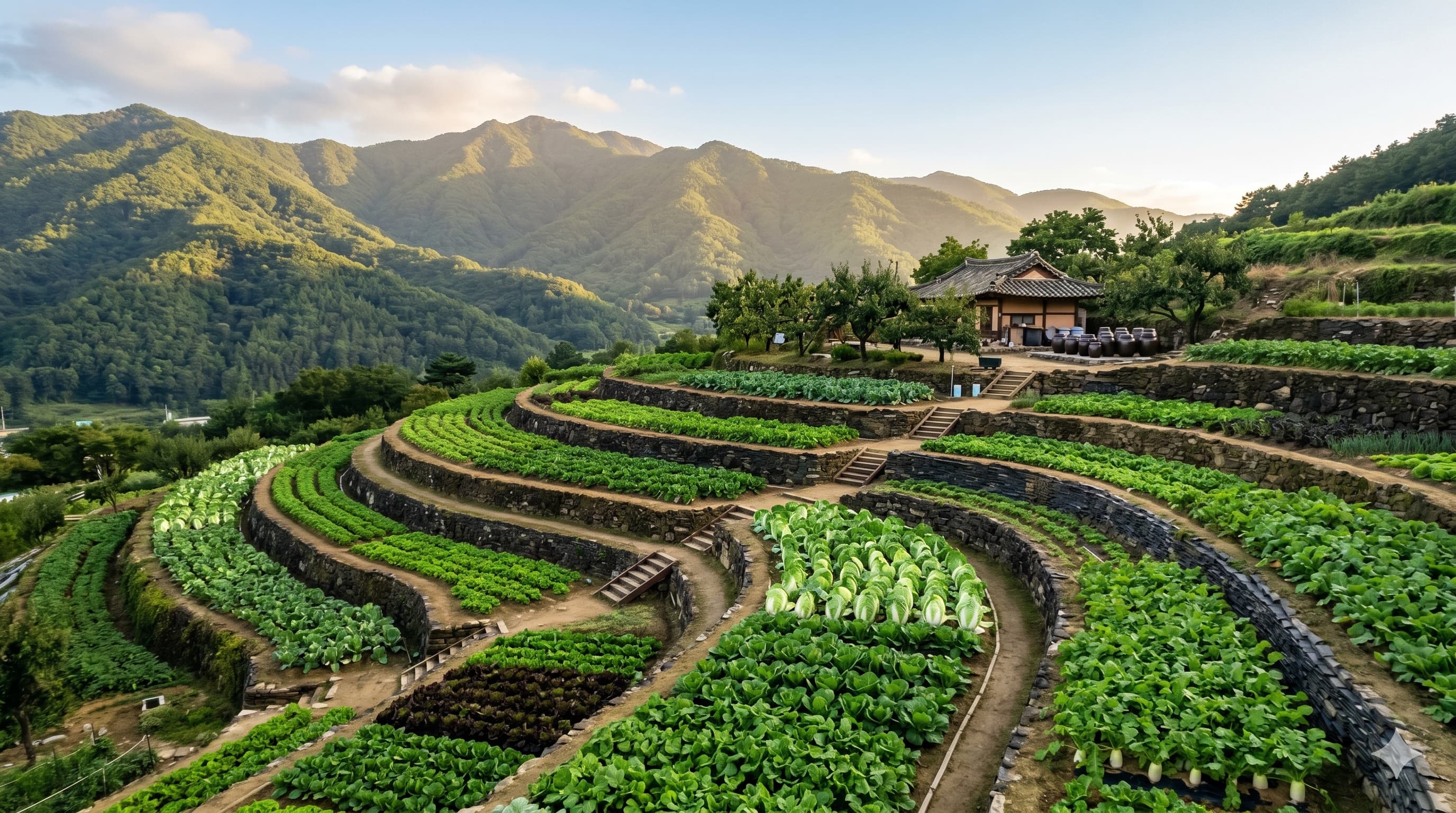
Korean temple food's reliance on locally gathered plants, seasonal vegetables, and fermented foods represents one of the most water-efficient dietary patterns possible — a model developed centuries before "sustainability" entered the modern vocabulary.
Carbon Emissions: The Methane Problem
Livestock produce methane — a greenhouse gas 80 times more potent than CO2 over a 20-year period. Cattle alone account for roughly 65% of the livestock sector's emissions. A comprehensive 2018 study published in Science by researchers at Oxford University found that even the lowest-impact animal products exceed the environmental costs of plant protein sources. The study's lead author concluded that "a vegan diet is probably the single biggest way to reduce your impact on planet Earth."
Land Use and Deforestation
Animal agriculture occupies 77% of global agricultural land while producing only 18% of the world's calories and 37% of its protein. This inefficiency drives deforestation — particularly in the Amazon, where cattle ranching is the leading cause of forest loss. Shifting to plant-based protein could free up vast tracts of land for rewilding, carbon sequestration, or more efficient food production.
Korea's Zero-Waste Temple Food Philosophy
Korean temple food offers an ancient model of environmental sustainability that extends beyond simply avoiding meat. Temple kitchens embody a zero-waste philosophy:
- Complete utilization: Every part of a vegetable is used — radish tops become namul, melon rinds become pickles, overripe fruit becomes vinegar
- Local and seasonal: Monasteries grow their own vegetables or forage nearby mountains, eliminating transportation emissions
- Preservation over waste: Fermentation, drying, and pickling extend the life of seasonal abundance without refrigeration energy
- Minimal processing: Food is prepared simply, using wood fires and ceramic vessels rather than energy-intensive machinery
- Compostable waste: What cannot be eaten returns to the soil to nourish next year's crops
This closed-loop system produces virtually zero food waste — compared to the average household which discards 30-40% of food purchased.
What One Person Can Do
Individual dietary change is not a substitute for systemic policy reform, but it is meaningful. Research suggests that adopting a vegan diet reduces an individual's food-related carbon footprint by 50-73% compared to a high-meat diet. Multiply this across millions of people, and the impact becomes substantial. Every meal is a choice — and choosing plants is one of the most direct environmental actions available to any person, anywhere, three times a day.
A Path Forward
The environmental case for veganism is not about guilt or perfection. It is about recognizing that our food system is the largest single driver of environmental destruction on Earth — and that plant-based eating offers a proven, delicious, culturally rich alternative. Korean temple food shows us that this is not deprivation. It is a 1,700-year tradition of abundance, creativity, and deep respect for the natural world.