Eating Vegan in Japanese Cuisine: Hidden Ingredients and Safe Choices
The Japanese Vegan Paradox
Japanese cuisine appears deceptively plant-friendly. Vegetables, tofu, seaweed, and rice feature prominently. Portions are modest, preparation is delicate, and the food looks clean and healthy. Yet for vegans, Japanese food presents a unique challenge: dashi. This foundational broth — made from bonito flakes (dried, smoked skipjack tuna) and kombu kelp — pervades nearly every savory Japanese dish. It hides in miso soup, simmers beneath soba noodles, seasons rice, glazes vegetables, and flavors pickles. Understanding the dashi problem is the key to eating vegan in Japanese cuisine.
The Dashi Problem
Standard Japanese dashi (出汁) uses katsuobushi (鰹節, bonito flakes) as its primary flavor component. This ingredient appears in:
- Miso soup: Nearly always made with bonito-kombu dashi in restaurants
- Soba and udon broth (tsuyu): Both hot and cold dipping sauces contain bonito
- Nimono (simmered dishes): Vegetables simmered in dashi-based liquid
- Chawanmushi (savory custard): Contains dashi and usually egg
- Tamagoyaki (rolled omelette): Dashi is mixed into the egg
- Okonomiyaki (savory pancake): Dashi in batter, bonito flakes on top
- Onigiri (rice balls): Many fillings contain katsuobushi or are seasoned with dashi
Even dishes that look purely vegetable-based — like ohitashi (blanched greens) or agedashi tofu — are typically finished with bonito dashi.
Vegan-Safe Dashi Alternatives
The good news: vegan dashi exists and is used in shojin ryori (Buddhist cuisine) and some modern restaurants:
- Kombu dashi (昆布出汁): Made from kelp alone — provides glutamate-rich umami
- Shiitake dashi (椎茸出汁): Soaked dried shiitake mushrooms create deep, savory broth
- Kombu + shiitake combined: The gold standard for vegan Japanese cooking — rivals bonito dashi in complexity
- Soy milk: Used as a broth base in some modern preparations (tonyu nabe)
Hidden Non-Vegan Ingredients Beyond Dashi
- Katsuobushi garnish: Shaved bonito flakes sprinkled on tofu, okonomiyaki, and vegetables
- Egg in ramen noodles: Many fresh ramen noodles contain egg (look for "tamago" on ingredients)
- Honey in desserts: Japanese sweets (wagashi) sometimes use honey as a sweetener
- Gelatin (젤라틴): Used in some Japanese jelly desserts and gummy candies
- Lard in ramen: Some ramen broths and gyoza wrappers contain pork fat
- Isinglass in sake: Some sake is filtered with fish-derived isinglass (though most is naturally vegan)
- Butter and cream: Japanese curry roux and many bakery items contain dairy
Safe Restaurant Orders
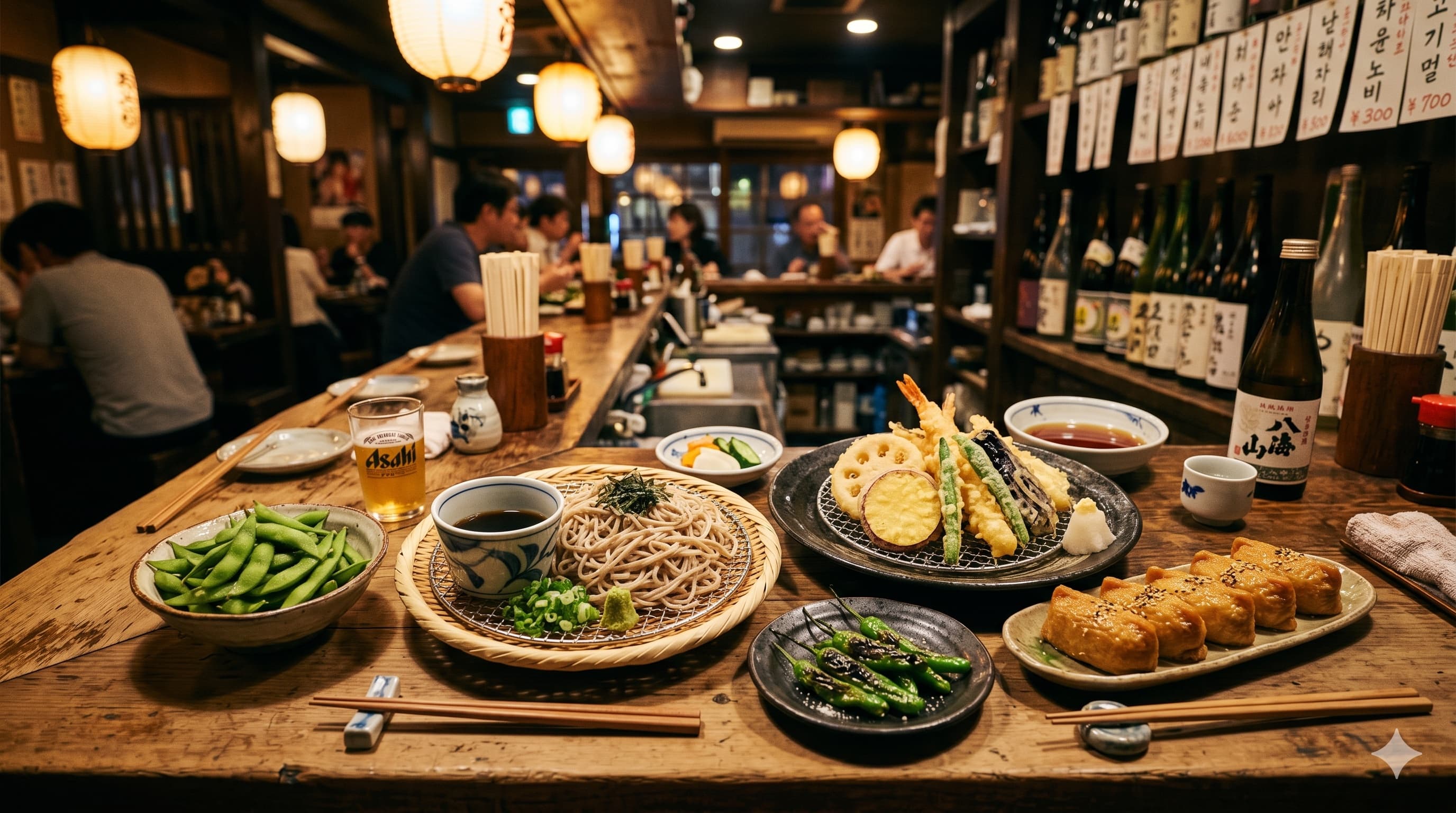
- Edamame (枝豆): Always vegan — boiled soybeans with salt
- Inari sushi (稲荷寿司): Sweet tofu pouches stuffed with rice — usually vegan (confirm no dashi in rice)
- Yasai tempura (野菜天ぷら): Vegetable tempura — batter is typically flour and water (some add egg, so ask)
- Zaru soba (ざるそば): Cold buckwheat noodles — the noodles themselves are often vegan, but CHECK THE DIPPING SAUCE (tsuyu), which almost always contains bonito. Ask for kombu-based or bring your own soy sauce
- Natto (納豆): Fermented soybeans — always vegan, often served with rice for breakfast
- Onigiri with umeboshi (梅干し): Pickled plum rice balls are usually vegan (confirm no bonito in rice seasoning)
- Vegetable curry: If made with a vegan roux (some contain animal fat — ask)
Useful Japanese Phrases
- "ビーガンです" (Biigan desu) — "I am vegan"
- "肉、魚、卵、乳製品は食べられません" (Niku, sakana, tamago, nyuuseihin wa taberaremasen) — "I cannot eat meat, fish, eggs, or dairy"
- "鰹出汁は使っていますか?" (Katsuo dashi wa tsukatte imasu ka?) — "Do you use bonito dashi?"
- "昆布出汁だけで作れますか?" (Kombu dashi dake de tsukuremasu ka?) — "Can you make it with only kombu dashi?"
- "動物性の食材は入っていますか?" (Doubutsusei no shokuzai wa haitte imasu ka?) — "Does it contain animal-derived ingredients?"
Vegan-Friendly Restaurant Types
- Shojin ryori restaurants (精進料理): Completely plant-based by definition — your safest option
- Natural food cafes (自然食カフェ): Health-focused restaurants that often have vegan options clearly marked
- Indian/Nepali restaurants in Japan: Often have clearly labeled vegan curries and naan
- Modern vegan restaurants: Tokyo, Kyoto, and Osaka now have thriving vegan scenes with dedicated restaurants
Recommended Cities for Vegan Travelers
Kyoto: Best for shojin ryori and temple food experiences. Many options near temple districts. Tokyo: Largest selection of modern vegan restaurants, especially in Shibuya, Shimokitazawa, and Asakusa. Osaka: Growing vegan scene with creative plant-based takes on local street food. Koyasan: Temple lodgings serve authentic shojin meals — an unmissable overnight experience.
With preparation and the right phrases, Japan transforms from challenging to rewarding for vegan travelers. The cuisine's emphasis on seasonality, presentation, and ingredient quality means that when you do find vegan options, they are often extraordinary.