Kimchi Without Fish Sauce: Authentic Vegan Kimchi Making
The Plant-Based Origins of Kimchi
Many people assume that fish sauce and salted shrimp paste are essential, time-honored components of kimchi. In reality, the earliest forms of kimchi — dating back to the Three Kingdoms period (37 BCE to 668 CE) — were simple salt-preserved vegetables with no seafood products at all. Fish sauce (aekjeot) and fermented shrimp paste (saeujeot) were later additions, becoming widespread only in the 18th and 19th centuries. Even gochugaru, the red chili flakes that define modern kimchi's fiery color, arrived in Korea only after chili peppers were introduced from the Americas via trade routes in the 16th century.
This means that making kimchi without fish sauce is not a modern compromise or a lesser version. It is, in fact, a return to the original tradition. Korean Buddhist temples have been making exceptional kimchi without any animal products for over a millennium, and their methods produce fermented vegetables with remarkable depth and complexity.
Why Fish Sauce Is Used — and What Replaces It
Fish sauce and fermented shrimp paste serve two primary functions in kimchi: they provide umami (savory depth) and they introduce specific bacteria that influence the fermentation process. To make vegan kimchi that rivals the conventional version, you need alternative sources of umami and a fermentation environment that supports the right lactobacillus cultures.
Fortunately, the plant kingdom offers abundant umami. Here are the most effective vegan substitutes:
- Soy sauce or soup soy sauce (guk-ganjang): Adds saltiness and fermented depth. Korean soup soy sauce, which is a byproduct of doenjang production, has a particularly complex flavor.
- Doenjang (fermented soybean paste): Dissolved in a small amount of water and strained, doenjang provides rich umami and beneficial microorganisms.
- Dried shiitake mushroom powder: Mushrooms are one of nature's greatest umami sources, containing high levels of glutamic acid and guanylate.
- Kelp (dashima) broth: Kombu seaweed simmered in water contributes glutamic acid and a subtle oceanic quality that hints at the marine character of traditional kimchi.
- Fermented soybean liquid: Some Korean cooks use the brine from fermenting soybeans, which is intensely savory.
The Rice Paste Foundation
One element that vegan and non-vegan kimchi share is the glutinous rice paste (chapssalpul) that acts as the "glue" of the kimchi paste. This paste feeds the lactobacillus bacteria during fermentation, encouraging the development of lactic acid that gives kimchi its characteristic tangy bite. To make it, cook two tablespoons of glutinous rice flour (or regular rice flour) with one cup of water over medium heat, stirring constantly until it thickens into a translucent porridge. Let it cool completely before using.
Some temple kimchi recipes use cooked rice or even persimmon or pear puree instead of rice paste, each contributing its own subtle sweetness and fermentation character. Experimentation is part of the tradition — every temple and every grandmother has a slightly different approach.
A Basic Vegan Baechu Kimchi Recipe
Begin with one large napa cabbage, quartered and salted with coarse sea salt (not iodized, as iodine can inhibit fermentation). Let it wilt for six to eight hours or overnight, turning occasionally. Rinse thoroughly three times and squeeze out excess water.
For the kimchi paste, combine: the cooled rice paste, four tablespoons of gochugaru, two tablespoons of soy sauce, one tablespoon of doenjang dissolved in two tablespoons of water (strained), two tablespoons of dried shiitake powder, a two-inch piece of ginger (finely grated), half a Korean radish (julienned), three scallions (cut into one-inch pieces), and optionally a quarter of a ripe pear (grated, for sweetness and enzymes).
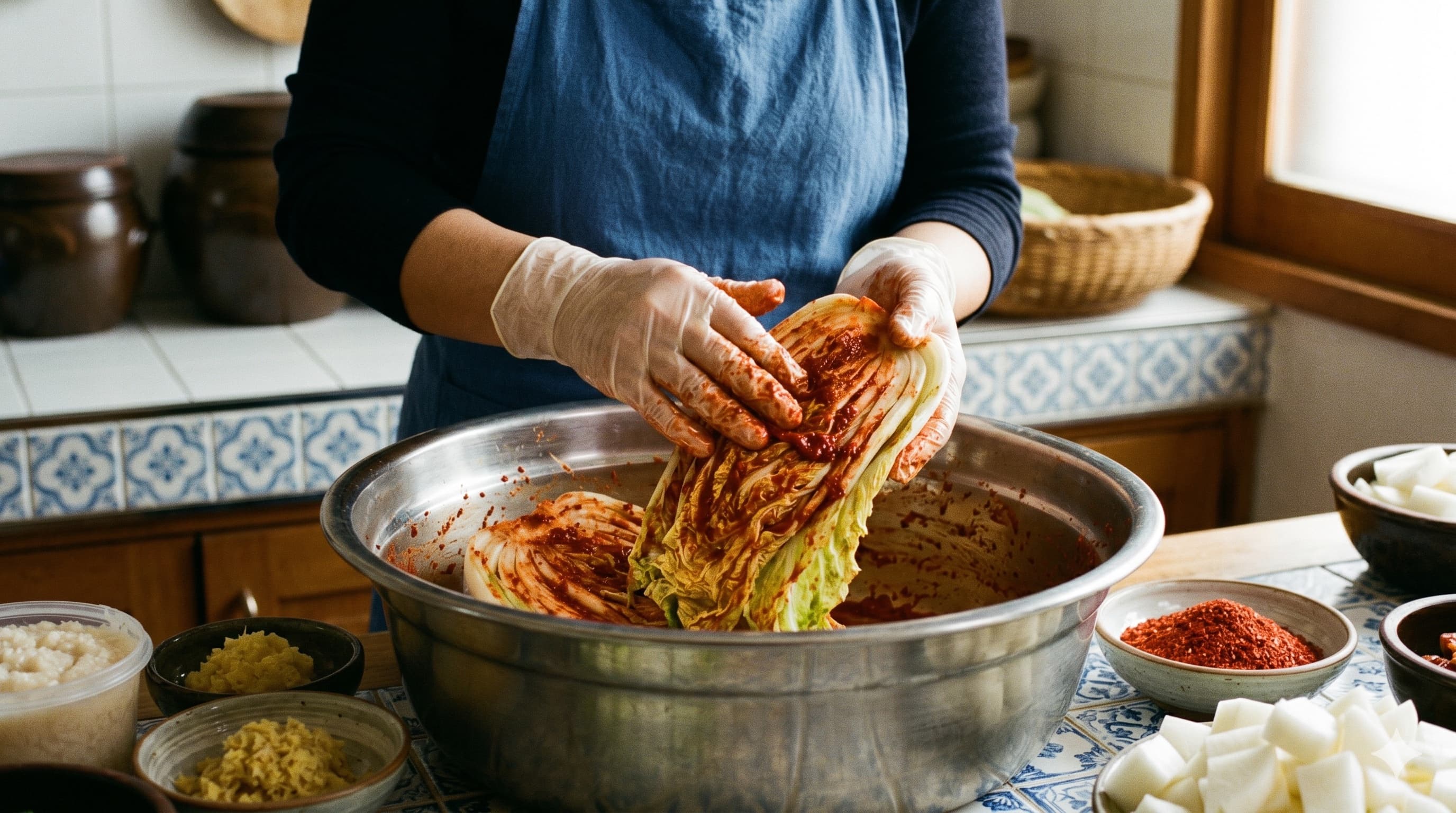
Mix the paste thoroughly, then work it between every leaf of the cabbage, ensuring even distribution. Pack the kimchi tightly into a clean jar or fermentation container, pressing down to eliminate air pockets. Leave at room temperature for one to three days (depending on the season and your preference for sourness), then refrigerate. The kimchi will continue to develop flavor over weeks and months in the refrigerator.
Temple-Style Kimchi Variations
Buddhist temple kimchi is distinctive not only for its lack of animal products but also for its omission of garlic, onion, and scallions — the osinchae that are avoided in monastic cooking. This might sound like an impossible restriction, but temple nuns have developed creative alternatives over centuries. Ginger is used more generously. Wild chives or buchu alternatives like wild garlic chives (which grow naturally and are not classified among the five pungent vegetables by some traditions) add aromatic quality. Perilla seed powder contributes a nutty, herbal depth. Pine nuts add richness.
White kimchi (baek kimchi) is another naturally vegan-friendly style that uses no chili pepper, resulting in a mild, refreshing fermented cabbage flavored with pine nuts, jujubes, chestnuts, and pear. It is especially popular in temple cuisine and makes an excellent introduction for those who find red kimchi too spicy.
Fermentation Tips for Success
The key to great vegan kimchi is patience and attention to your environment. Fermentation speed depends on temperature — kimchi ferments faster in warm conditions and slower in cold. Taste it daily once you begin the room-temperature fermentation phase. When it reaches a pleasant tanginess (usually one to two days at around 68-72 degrees Fahrenheit), transfer it to the refrigerator. Use clean utensils each time you take kimchi from the jar to prevent introducing unwanted bacteria. Keep the kimchi submerged under its own liquid to prevent mold on the surface. With these simple precautions, your vegan kimchi will develop the same complex, layered flavors that have made this fermented treasure one of the world's great foods.