Vegan Protein: Debunking Myths with Korean Ingredients
The Protein Question
"But where do you get your protein?" It is the question every vegan hears most frequently — and it reveals deep misconceptions about both protein needs and plant food composition. The reality is that protein deficiency is virtually non-existent among people eating adequate calories from varied whole foods, and Korean cuisine demonstrates this principle with extraordinary deliciousness.
Myth 1: Plant Proteins Are "Incomplete"
The outdated concept of "incomplete" plant proteins has persisted despite being thoroughly debunked by nutrition science. The idea originated from a 1971 book that the author herself later retracted. The truth: all plant foods contain all essential amino acids. Some have lower proportions of certain amino acids, but the body pools amino acids throughout the day. You do not need to combine specific foods at each meal.
Furthermore, soy — the foundation of Korean protein staples like tofu, doenjang, and cheonggukjang — contains all essential amino acids in proportions comparable to animal protein. It is, by any definition, "complete."
Myth 2: You Need Massive Amounts of Protein
The recommended dietary allowance for protein is 0.8 grams per kilogram of body weight — roughly 56 grams daily for the average adult male. Athletes may need more (1.2-2.0 g/kg), but even these elevated needs are easily met on a varied plant-based diet. Most people in developed countries consume far more protein than necessary, regardless of diet type.
Korean Protein Powerhouses
Korean cuisine is naturally rich in diverse plant protein sources. Here are the key players:
Tofu (두부) — The Versatile Foundation
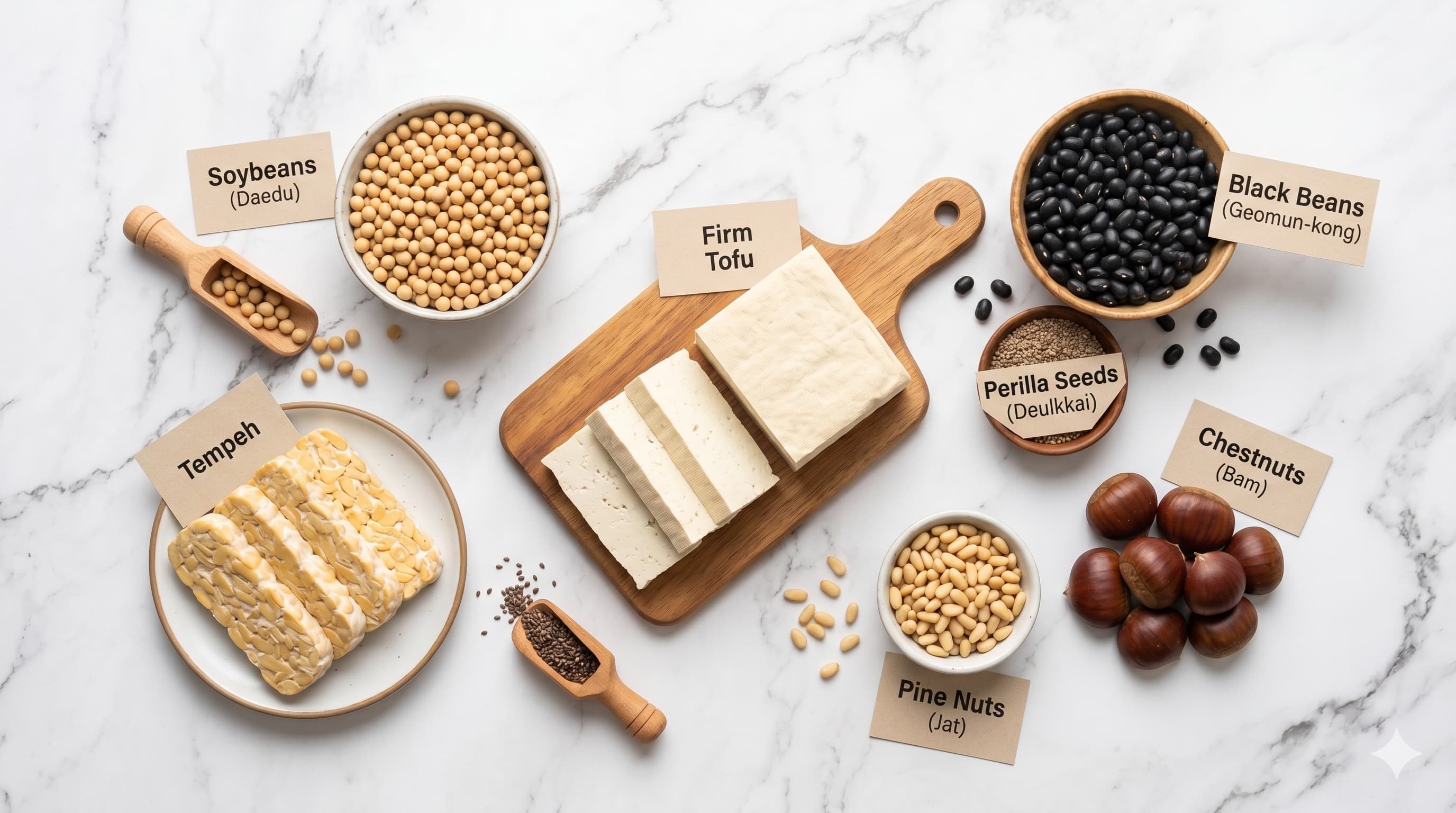
Korean cuisine uses tofu in dozens of forms: silken tofu in stews (sundubu-jjigae), firm tofu braised in soy sauce (dubu-jorim), frozen and reconstituted tofu for chewy texture, and pressed tofu sliced thin for wraps. A single serving of firm tofu provides roughly 20 grams of protein along with calcium and iron.
Cheonggukjang (청국장) — Fermented Protein Bomb
This fast-fermented soybean paste packs extraordinary nutritional density. The fermentation process breaks down proteins into easily absorbed peptides while generating vitamin K2 and probiotics. A serving in a hearty stew provides 15+ grams of highly bioavailable protein. Korean traditional medicine has long recognized it as strengthening and restorative.
Beans and Legumes (콩류)
Korean cuisine features an impressive variety of beans: black beans (geomeun-kong) in sweet braised preparations, red beans (pat) in porridges and rice, kidney beans in stews, and mung beans in pancakes (bindaetteok). Each cup of cooked beans provides 12-18 grams of protein along with fiber, iron, and folate.
Perilla Seeds (들깨)
Often overlooked as a protein source, perilla seeds contain roughly 20% protein by weight, along with omega-3 fatty acids and minerals. Ground perilla is used generously in Korean namul seasoning, soups (deulkkae-tang), and porridges — adding protein throughout the day almost invisibly.
Sesame Seeds (참깨)
Toasted sesame seeds, ubiquitous in Korean cooking, contribute protein with every sprinkle. They are also rich in calcium, iron, and zinc — minerals sometimes cited as concerns for plant-based eaters. The Korean habit of generously garnishing every dish with sesame provides steady micronutrient intake.
Mushrooms (버섯)
While not as protein-dense as legumes, mushrooms contribute meaningful protein along with unique compounds like ergothioneine and beta-glucans. Korean cuisine uses mushrooms extensively — shiitake, king oyster, enoki, and wood ear appear in soups, stir-fries, and braised dishes daily.
A Day of Korean Vegan Protein
Consider a typical day of Korean vegan eating: rice with mixed grains (8g protein), doenjang-jjigae with tofu for lunch (22g), a serving of braised beans as banchan (12g), namul seasoned with perilla and sesame (5g), kongnamul-guk for dinner (8g), and a snack of roasted nuts (7g). That totals over 60 grams — well above recommended intake — without any special planning or supplementation.
The Korean Example
Korean Buddhist monks have thrived on entirely plant-based diets for over 1,700 years, maintaining physical health well into advanced age while performing demanding daily routines of meditation, manual labor, and study. Their example is not theoretical — it is a living, centuries-long demonstration that plant-based diets provide all the protein humans need.