How to Veganize Korean Classics: Kimchi Jjigae, Japchae, and More
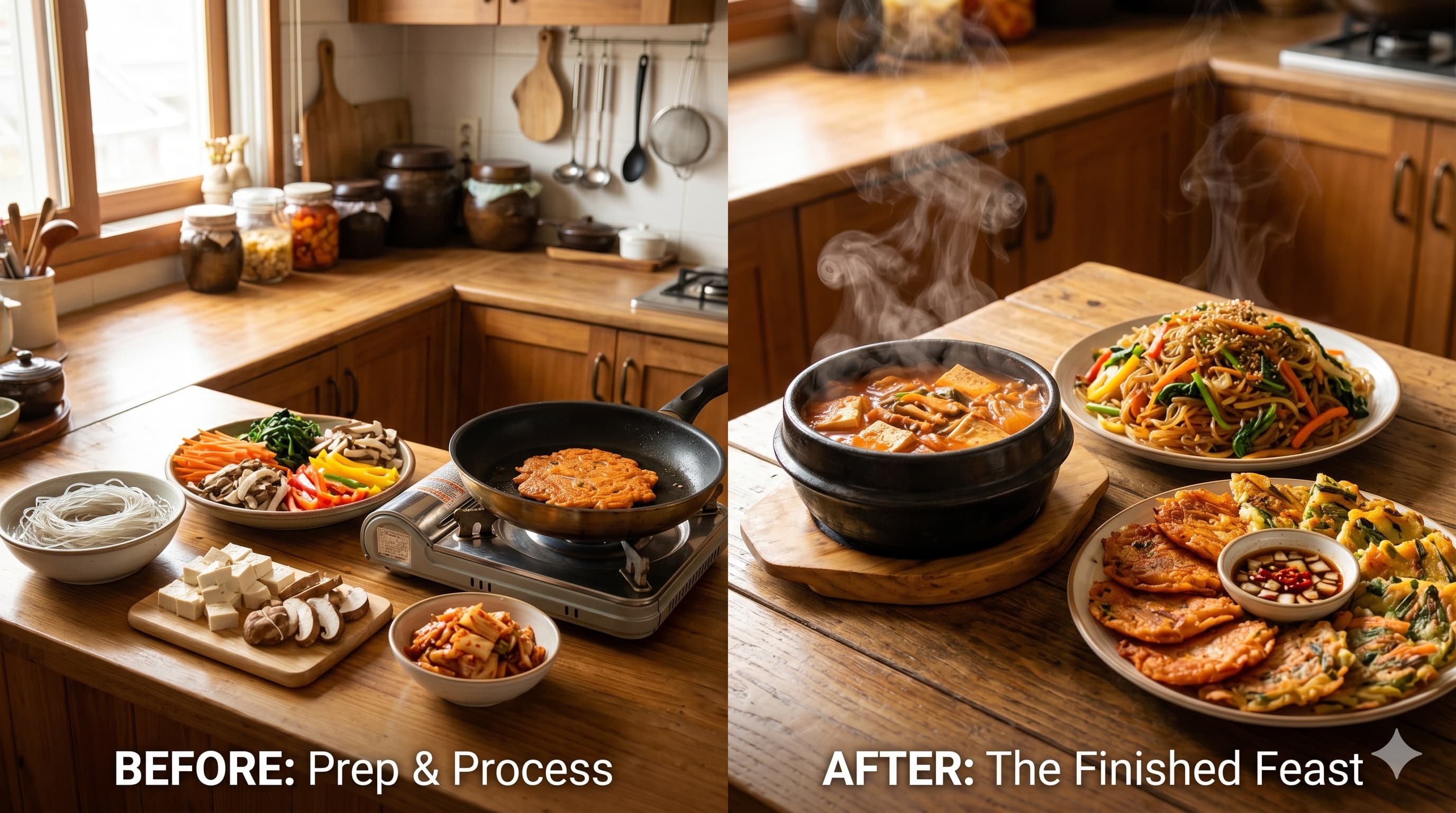
Korean Food Is Already (Almost) Vegan
Here is a secret that surprises many newcomers to Korean cooking: the vast majority of Korean dishes are either already vegan or require only minor modifications to become so. Korean cuisine is fundamentally vegetable-centered, with meat historically serving as a small accent rather than the main event. The main non-vegan elements hiding in otherwise plant-based dishes are anchovy-based broth, fish sauce (aekjeot), and occasional eggs. Once you know how to replace these three elements, hundreds of Korean recipes open up to you.
The Universal Swap: Vegan Korean Broth
Korean cooking uses broth (육수, yuksu) as the foundation of soups, stews, and braising liquids. The conventional version often includes dried anchovies. The vegan replacement is simple and arguably more flavorful:
- Dashima (dried kelp): 2-3 large pieces provide glutamate-rich umami
- Dried shiitake mushrooms: 4-5 caps add deep, savory complexity
- Dried radish (mu-mallaengi): A handful adds subtle sweetness
- Optional: dried soybeans or soybean sprout heads for extra body
Combine in cold water, bring to a gentle simmer for 20-30 minutes, strain. This broth works in every Korean soup and stew recipe that calls for anchovy stock.
Replacing Fish Sauce (액젓)
Fish sauce appears in kimchi, some stews, and dipping sauces. Effective replacements include:
- Korean soup soy sauce (국간장): Provides saltiness and fermented depth
- Soy sauce + seaweed broth: Mix regular soy sauce with a concentrated kelp infusion for oceanic notes
- Fermented soybean liquid: The thin liquid from doenjang jars adds complex umami
- Mushroom soy sauce: Commercial options infused with shiitake work well
Dish-by-Dish Guide
1. Kimchi Jjigae (김치찌개) — Kimchi Stew
Traditional version uses pork belly and anchovy broth. Vegan version: Use kelp-shiitake broth as your base. Add cubed firm tofu for protein. Use well-fermented vegan kimchi (made without fish sauce). A tablespoon of doenjang stirred in at the end adds the depth that pork would have provided. Finish with sesame oil. The result is a stew so deeply flavored that no one will miss the meat.
2. Japchae (잡채) — Glass Noodle Stir-Fry
Already nearly vegan — the main change is omitting the beef strips and egg garnish. Instead: add extra shiitake mushrooms (sliced thick for meatiness), use firm tofu cut into thin strips and pan-fried until golden, or add seasoned shredded king oyster mushroom which mimics pulled meat texture. Toss everything with the sweet potato noodles, soy sauce, sesame oil, and a touch of sugar.
3. Tteokbokki (떡볶이) — Spicy Rice Cakes
Most rice cakes (tteok) are naturally vegan — made from rice flour and water. The broth traditionally uses anchovy and kelp; simply use kelp-shiitake broth instead. The sauce of gochugaru, gochujang, soy sauce, and sugar remains unchanged. Add fish cake substitute (fried tofu strips work perfectly) and cabbage. Check that your gochujang brand does not contain shrimp paste.
4. Sundubu-jjigae (순두부찌개) — Soft Tofu Stew
Replace the seafood broth with a rich mushroom-kelp stock. Sizzle gochugaru in sesame oil as the base (this creates the signature red oil). Add your vegan broth, soft tofu, vegetables (zucchini, mushrooms, green onion), and season with soy sauce. The traditional egg cracked on top can be replaced with a tablespoon of nutritional yeast stirred in for richness, or simply omitted — the dish is complete without it.
5. Doenjang-jjigae (된장찌개) — Soybean Paste Stew
This is the easiest conversion because doenjang itself provides all the savory depth needed. Use kelp-shiitake broth, dissolve doenjang into it, add cubed tofu, sliced zucchini, mushrooms, potato, and chili. Some recipes call for anchovy broth as the base, but the best doenjang-jjigae lets the paste itself be the star. Many Korean grandmothers have made this stew with nothing but water, vegetables, and doenjang — it is inherently vegan in its purest form.
General Principles for Veganizing Korean Food
- Umami is everything: Korean food's depth comes from fermented ingredients (doenjang, ganjang, gochujang) — these are your allies
- Read commercial labels: Many pre-made Korean sauces contain anchovy or shrimp extract — seek certified vegan versions or make your own
- Embrace mushrooms: They provide the savory, meaty quality that makes Korean food satisfying
- Don't skip the sesame oil: This finishing touch adds richness that makes plant-based dishes feel complete and indulgent