Washoku and Plant-Based Eating: The UNESCO-Recognized Cuisine of Japan
What Is Washoku?
Washoku (和食), literally "Japanese food" or "harmonious food," refers to the traditional dietary culture of the Japanese people. In December 2013, UNESCO inscribed washoku on its Representative List of the Intangible Cultural Heritage of Humanity, recognizing it not as a set of specific recipes but as a comprehensive food culture — a social practice rooted in respect for nature, the use of seasonal ingredients, balanced nutrition, and the connection between food and community events.
The UNESCO inscription specifically highlighted four key features of washoku: the diverse use of fresh ingredients and respect for their inherent flavors; a nutritionally balanced diet supporting healthy living; an expression of natural beauty and seasonal change; and a close connection to annual events and life ceremonies. Each of these principles has a natural affinity with plant-based eating.
Ichiju Sansai: The Structure of a Washoku Meal
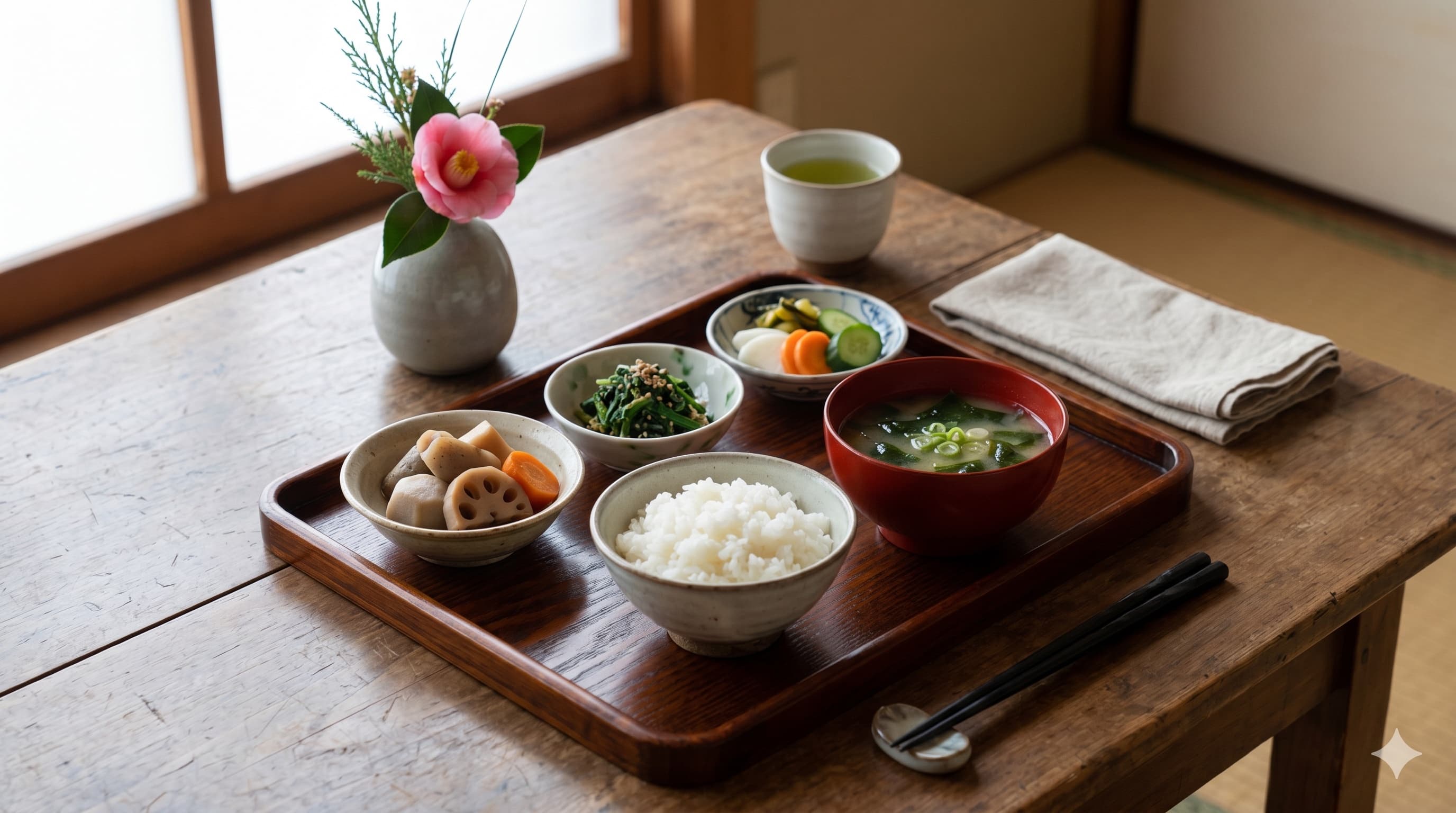
The foundation of washoku is the meal structure known as ichiju sansai (one soup, three dishes), served alongside rice and pickles. This format ensures variety and nutritional balance in every meal. The three dishes traditionally include one grilled item, one simmered item, and one raw or dressed item. While washoku is not exclusively vegetarian, this structure lends itself beautifully to plant-based meals: a miso soup, rice, pickles, simmered vegetables, a grilled tofu or mushroom dish, and a dressed salad or namasu (vinegared vegetables) creates a complete and satisfying vegan meal.
Seasonality: The Heart of Washoku
Perhaps no aspect of washoku is more important than shun (旬) — the concept of eating ingredients at their peak season. Japanese cuisine divides the year not into four seasons but into 24 micro-seasons (sekki) and 72 sub-seasons (ko), each associated with specific ingredients. Spring brings bamboo shoots, warabi ferns, and fresh peas. Summer offers eggplant, shiso, myoga ginger, and edamame. Autumn brings matsutake mushrooms, sweet potatoes, and chestnuts. Winter features daikon, kabu turnips, and various root vegetables.
This devotion to seasonality means that washoku is inherently diverse and nutrient-rich. By eating what nature provides at each moment, you consume a far wider range of plant foods throughout the year than any fixed diet could provide. For plant-based eaters, following the rhythm of shun is both a practical guide to shopping and a philosophical approach to eating that connects you to the natural world.
Umami: The Plant-Based Fifth Taste
Japanese cuisine gave the world the concept of umami — the fifth taste, identified by chemist Kikunae Ikeda in 1908 when he analyzed the savory flavor of kombu seaweed. Ikeda discovered that glutamic acid was responsible for the deep, satisfying savoriness of kombu dashi, and he coined the term "umami" (literally "pleasant savory taste") to describe it.
This is significant for plant-based eating because umami was literally discovered in a plant-based ingredient. The richest natural sources of umami include kombu kelp, dried shiitake mushrooms, fermented soy products (miso, soy sauce), and ripe tomatoes — all plant-based. Washoku's sophisticated use of these ingredients demonstrates that deeply satisfying savory flavors do not require meat or fish.
The Role of Fermentation
Fermented foods are central to washoku and are overwhelmingly plant-based. Miso, soy sauce, rice vinegar, mirin (sweet rice wine), sake, natto (fermented soybeans), and various tsukemono (pickles) are all products of fermentation. These foods provide umami, preserve ingredients, and support gut health through beneficial bacteria. The Japanese fermentation tradition represents centuries of accumulated knowledge about transforming simple plant ingredients into complex, flavorful foods.
Washoku and Health
The traditional Japanese diet, based on washoku principles, has long been associated with longevity and low rates of certain chronic diseases. The Japanese diet is typically high in vegetables, soy products, seaweed, and whole grains, and relatively low in saturated fat and processed sugar. While traditional washoku does include fish, the plant-based components of the diet — particularly the abundant vegetables, soy foods, fermented products, and seaweed — are widely credited as major contributors to its health benefits.
Applying Washoku Principles to Plant-Based Cooking
You do not need to be Japanese to benefit from washoku principles. The core ideas translate beautifully to any plant-based kitchen: eat seasonally, seeking out produce at its peak. Structure meals with variety — include something raw, something cooked, something fermented. Build umami through kombu, mushrooms, miso, and soy sauce. Present food beautifully, using colors and arrangements that reflect the natural world. And approach eating as a communal, grateful act rather than mere fuel consumption. These principles, refined over centuries, offer a timeless framework for plant-based eating that is both nutritious and deeply satisfying.