What is Korean Temple Food? A Complete Guide
The Ancient Roots of Korean Temple Food
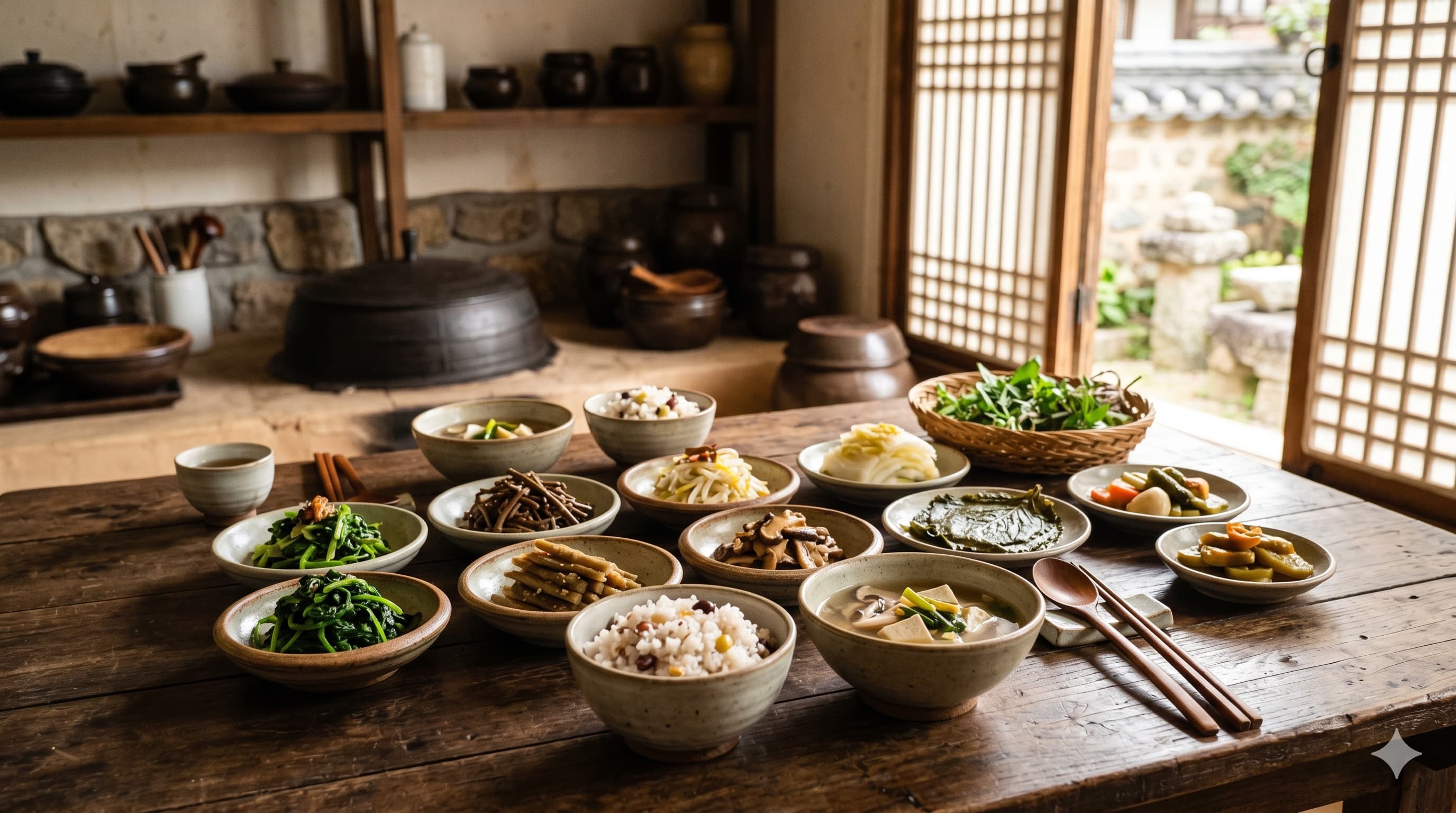
Korean temple food, known as sachal eumsik (사찰음식), is a plant-based culinary tradition that has been practiced in Korean Buddhist monasteries for over 1,700 years. Far more than simply "vegan cooking," it represents a complete philosophy of mindful eating that connects the practitioner to nature, health, and spiritual well-being.
Buddhist Principles Behind the Cuisine
Temple food follows the Buddhist precept of non-harm (ahimsa). No animal products are used — no meat, fish, eggs, or dairy. But the restrictions go further than modern veganism. The cuisine also eliminates the five pungent vegetables (osinchae): garlic, onions, green onions, chives, and leeks. Buddhist teachings hold that these foods agitate the mind and body, hindering meditation practice.
Key Characteristics of Temple Food
- Seasonal and local: Monks gather wild greens, mushrooms, and roots according to the season, honoring nature's rhythms.
- Minimal waste: Every part of the vegetable is used — stems, leaves, and roots alike. Nothing is discarded.
- Natural fermentation: Temple kitchens rely heavily on fermented staples like doenjang (soybean paste), ganjang (soy sauce), and gochujang (chili paste), all made on-site.
- Simple seasoning: Flavors come from natural ingredients — perilla seeds, sesame, wild herbs, and mushroom broths rather than artificial additives.
- Balanced nutrition: Meals are designed following principles of traditional Korean medicine, balancing flavors (sweet, salty, sour, bitter, spicy) and colors (white, black, green, red, yellow).
Temple Food in the Modern World
In recent decades, Korean temple food has gained international recognition. The Korean Cultural Center operates the Temple Food Center in Seoul, where nuns like Venerable Jeong Kwan have become global culinary ambassadors, featured in Netflix's Chef's Table. UNESCO has recognized Korean temple food for its cultural significance.
Health Benefits
Temple food naturally provides abundant fiber, antioxidants, and plant proteins while being low in processed sugars and unhealthy fats. The emphasis on fermented foods supports gut health, while the variety of wild greens supplies micronutrients often missing from modern diets. Traditional Korean medicine, as documented in the Donguibogam, has long recognized the healing properties of the herbs and preparations used in temple kitchens.
Getting Started
You don't need to be Buddhist to enjoy temple food. Start with simple namul (seasoned vegetable dishes), try making your own fermented pastes, and experiment with replacing the five pungent vegetables with alternatives like ginger, perilla, and wild garlic chives. The key is approaching cooking with mindfulness and gratitude.