Wild Greens of Korea: A Seasonal Foraging Calendar
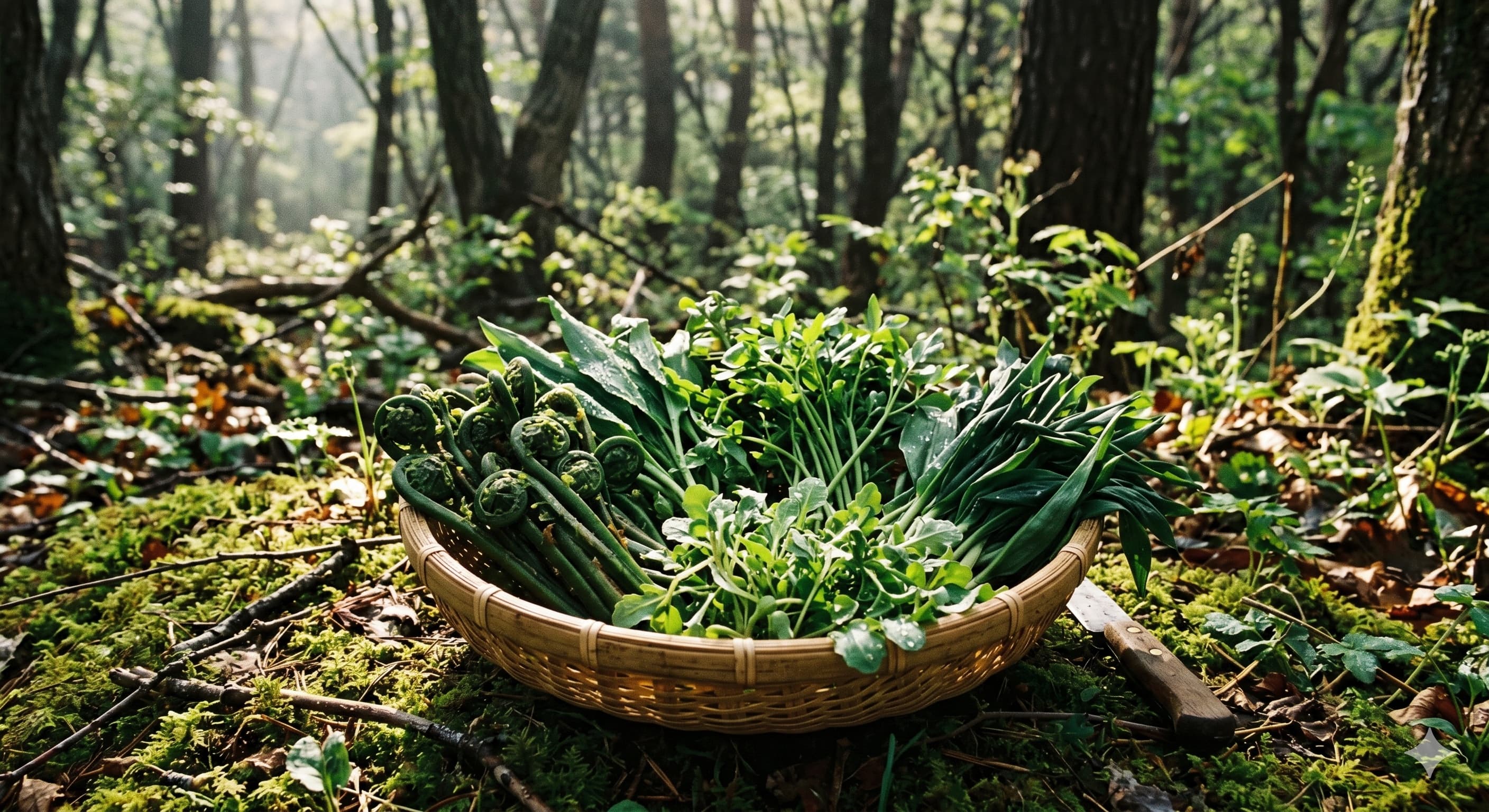
Korea's Living Pantry
For thousands of years, the mountains and fields of the Korean peninsula have served as a living pantry — a source of wild plants, mushrooms, roots, and herbs that supplement cultivated crops and provide flavors impossible to replicate with garden vegetables. This foraging tradition, far from being a relic of premodern subsistence, remains vibrant in contemporary Korea. Every spring, millions of Koreans head to the mountains for sanchaejip (산채집), the gathering of mountain vegetables. Markets sell bundles of wild greens alongside cultivated produce, and restaurants compete to offer the freshest wild seasonal ingredients.
What makes the Korean approach to wild food distinctive is its integration with traditional medicine. Every foraged plant is understood not just as food but as medicine — its thermal nature, organ affinity, and therapeutic properties documented in texts like the Donguibogam. Eating with the seasons is not merely a preference in Korean food culture; it is a health practice, a way of aligning the body with the changing energies of the natural world.
Early Spring (March-April): The Awakening
The Korean foraging year begins in early spring, when the first green shoots push through the thawing earth. This is the most celebrated foraging season, as the body craves fresh, cleansing greens after the heavy, preserved foods of winter.
Naengi (냉이, Shepherd's Purse): One of the very first spring greens, appearing in March. Its delicate, nutty flavor is beloved in doenjang soups. Traditional medicine considers it beneficial for the liver and eyes — exactly the organ system associated with spring.
Dallae (달래, Wild Garlic/Rocambole): Tiny bulbs and slender leaves with a mild garlic flavor. Chopped raw and mixed with soy sauce, vinegar, and gochugaru, dallae makes a classic spring condiment. Note that dallae is classified among the osinchae and is not used in temple cooking.
Ssuk (쑥, Mugwort): Perhaps the most iconic Korean spring green, used to make ssuk tteok (mugwort rice cakes), added to soups, and used medicinally. The Donguibogam describes ssuk as powerfully warming and blood-circulating, used to treat cold constitutions and menstrual difficulties. Its distinctive herbal aroma defines the taste of Korean spring.
Late Spring (May-June): Abundance
As temperatures rise, the mountains explode with green growth. This is the peak foraging season.
Gosari (고사리, Fernbrake): The tightly curled fiddleheads of bracken fern are gathered in May before they unfurl. After proper preparation (boiling and extended soaking to remove tannins), gosari develops its characteristic slippery-chewy texture and earthy flavor. It is essential for bibimbap and dozens of temple dishes.
Chwinamul (취나물, Aster Greens): Various species of wild aster are gathered for their aromatic, slightly bitter leaves. Most commonly dried for year-round use, chwinamul has a concentrated, almost smoky flavor when reconstituted. It is a staple of Korean mountain cuisine.
Doraji (도라지, Balloon Flower Root): The crisp, slightly bitter roots are dug in late spring. After the characteristic preparation of splitting, salting, and squeezing to extract bitterness, doraji becomes a distinctive banchan with a satisfying crunch unlike any other vegetable.
Summer (July-August): Heat and Hydration
Summer foraging shifts toward cooling and hydrating plants that help the body manage the intense heat and humidity of the Korean monsoon season.
Minari (미나리, Water Parsley): Growing along streams and in waterlogged soil, minari has a clean, peppery freshness that cuts through summer's heaviness. Eaten raw in salads, blanched as namul, or added to soups, it is one of summer's most refreshing greens. The Donguibogam classifies it as cooling, making it ideal for the hottest months.
Chamnamul (참나물, Pimpinella): A delicate herb with a clean, celery-like flavor, chamnamul is gathered in mountain meadows. It is eaten raw as a salad green or lightly blanched and dressed with sesame oil. Its cooling nature makes it a summer favorite.
Autumn (September-November): The Harvest
Autumn is mushroom season and the time for gathering the last wild harvests before winter.
Songi (송이, Pine Mushroom): The most prized wild mushroom in Korea, appearing in September and October in pine forests. Its intense cinnamon-pine aroma and firm texture make it a luxury ingredient prepared with utmost simplicity — grilled, sliced raw, or cooked with rice.
Neungi (능이, Sarcodon): Another highly prized wild mushroom harvested in autumn from oak forests. Its deep, truffle-like fragrance perfumes any dish it touches.
Dorotorimuk (도토리묵 acorns): Acorns are gathered in autumn, processed into starch, and set into a firm jelly called dotorimuk. This nutty, slightly astringent jelly is sliced and dressed with soy sauce and vegetables. Acorn processing is labor-intensive — the tannins must be leached out through repeated soaking — but the result is a unique, protein-rich food that has sustained Korean mountain communities for millennia.
Winter: Rest and Preservation
Winter foraging is minimal. This is the season for consuming dried and preserved greens from the spring and autumn harvests, fermented vegetables, and root vegetables stored in the cold earth. The practice of kimjang (김장), the large-scale autumn kimchi-making that prepares enough fermented cabbage to last through winter, is itself a kind of harvest — preserving the abundance of autumn for the lean months ahead. Winter is a time of rest for both the forager and the land, building energy for the cycle to begin again with the first green shoots of March.