Zen Buddhism and Food Philosophy: Ichi-go Ichi-e in the Kitchen
Cooking as Spiritual Practice
In Zen Buddhism, there is no separation between spiritual practice and daily activity. Washing dishes, sweeping floors, and preparing food are not distractions from meditation — they are meditation. This insight, central to Zen philosophy, transforms the kitchen from a place of mere utility into a space of practice and awakening. The Zen approach to cooking offers profound lessons for anyone interested in plant-based eating, regardless of religious background.
Dogen, the thirteenth-century founder of the Soto Zen school, made this explicit in his Tenzo Kyokun (Instructions for the Cook), written in 1237. He assigned the position of head cook (tenzo) as one of the most important roles in the monastery — not because food is the most important thing, but because cooking provides a continuous opportunity to practice attention, care, and selfless service. "When you prepare food," Dogen wrote, "do not see with ordinary eyes and do not think with ordinary mind."
Ichi-go Ichi-e: One Time, One Meeting
The phrase ichi-go ichi-e (一期一会) is often translated as "one time, one meeting" or "once in a lifetime." Originally associated with the tea ceremony and attributed to the sixteenth-century tea master Sen no Rikyu's disciple, it expresses the understanding that each gathering is unique and can never be precisely repeated. Even if the same people meet in the same room, the moment is different — the season, the light, the state of mind of each participant.
Applied to cooking, ichi-go ichi-e means approaching each meal as a unique event. The vegetables you bought today will never be exactly the same again — their ripeness, moisture content, and sweetness are specific to this moment. The person you are cooking for may be hungry, tired, or joyful, and the food should respond to their present condition. This awareness transforms routine cooking into a practice of presence and creativity. Rather than mechanically following recipes, you engage with ingredients as they actually are, right now.
Shoshin: Beginner's Mind
Shoshin (初心), or beginner's mind, is the Zen concept of approaching each activity with openness and eagerness, free from preconceptions — even (especially) when you are experienced. Shunryu Suzuki, the Soto Zen teacher who founded the San Francisco Zen Center, famously wrote in Zen Mind, Beginner's Mind: "In the beginner's mind there are many possibilities, but in the expert's there are few."
In the kitchen, beginner's mind means staying curious about ingredients you have used a thousand times. What happens if you cut the carrot differently, cook it longer, pair it with something unexpected? It means not assuming you already know the best way to make miso soup, but tasting carefully each time, adjusting to today's particular miso, today's particular dashi. Beginner's mind prevents cooking from becoming mechanical and keeps it alive as a creative practice.
The Three Minds of the Tenzo
Dogen described three mental qualities essential for the monastery cook, which apply equally to anyone preparing food:
- Kishin (joyful mind): Approaching cooking with gladness and gratitude rather than obligation or resentment. The opportunity to nourish others is itself a source of joy.
- Roshin (parental mind): Caring for those you feed as a parent cares for a child — with warmth, attentiveness, and selflessness. This means considering the needs and preferences of those eating, not just your own.
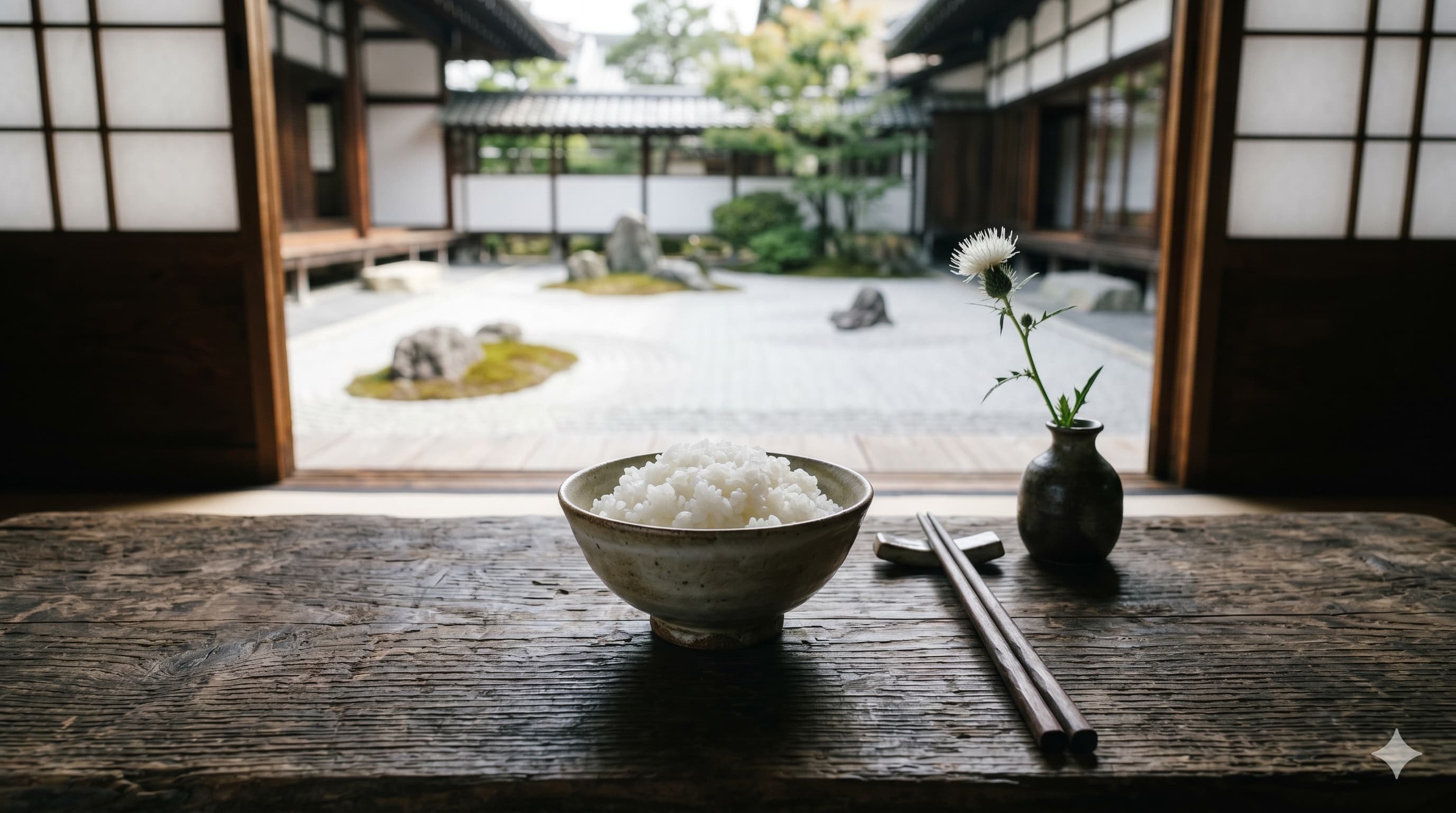
- Daishin (great mind): A mind free from discrimination — not dividing ingredients into superior and inferior, not favoring elaborate dishes over simple ones. A bowl of plain rice, prepared with full attention, is equal to the most complex meal.
Respecting Ingredients
Zen cooking philosophy places great emphasis on respecting every ingredient, no matter how humble. Dogen instructed the tenzo to handle even a single grain of rice or a leaf of vegetable with the same care as one's own eyes. This means no waste — using vegetable trimmings for stock, finding uses for leaves and stems that might otherwise be discarded. It also means thoughtful sourcing — choosing ingredients that were grown with care, preferably local and seasonal.
This respect extends to the cooking process itself. Zen cooking favors methods that honor the ingredient's inherent nature rather than masking it. A perfectly ripe tomato needs little beyond slicing. A fresh shiitake mushroom, grilled simply with a touch of salt, expresses itself most fully. The cook's role is not to impose will on ingredients but to bring out what is already there.
Silence and Attention in the Kitchen
In Zen monasteries, cooking is typically done in silence or near-silence. This is not austerity for its own sake but a practical aid to attention. When you cook without distraction — without music, conversation, or a phone screen — you notice things you would otherwise miss: the exact moment the onion changes color, the precise sound of water approaching a boil, the shifting aroma of roasting sesame seeds. This quality of attention, cultivated in silence, naturally improves your cooking because you are actually present with what is happening.
Eating as Practice
The Zen approach to food does not end when cooking is done. In Zen monasteries, eating follows a formal practice called oryoki, in which monks eat from nested bowls in silence, consuming everything served without waste. Each bite is taken with awareness, the food chewed thoroughly, and gratitude is expressed at the beginning and end of the meal. While few of us will adopt full oryoki practice, its underlying principles — eat with attention, without distraction, with gratitude, and without waste — can transform any meal into an act of mindfulness.
Bringing Zen Into Your Kitchen
You do not need to be Buddhist to benefit from Zen food philosophy. Start small: choose one meal a day to prepare and eat with full attention. Put away your phone. Feel the weight of the knife in your hand, hear the sound of the vegetable being cut, smell the aroma as it hits the hot pan. Taste your food as you cook, adjusting with care. Sit down to eat without a screen in front of you. These simple practices, drawn from centuries of Zen tradition, can transform cooking from a chore into a source of daily meaning and satisfaction.