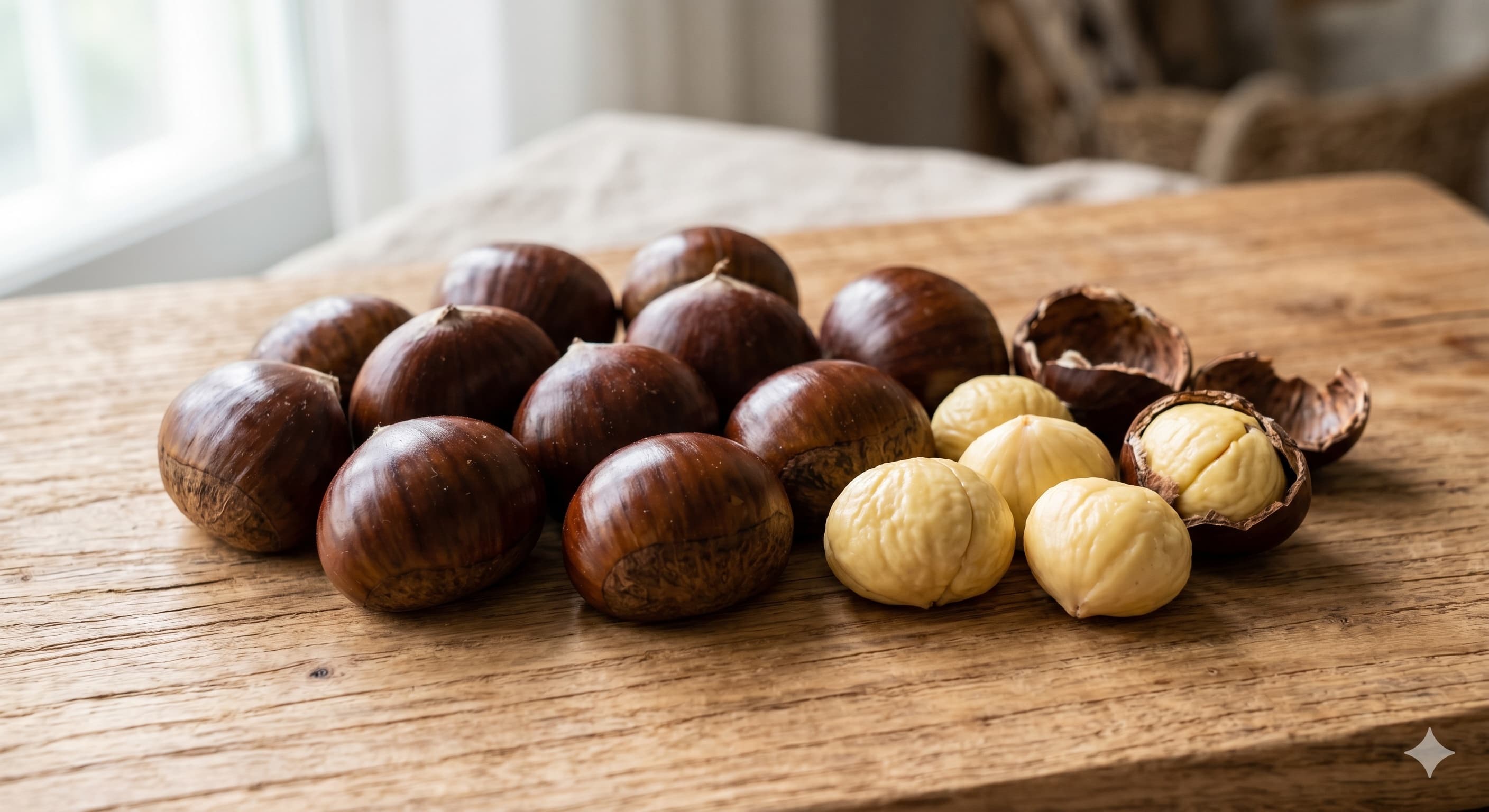
Chestnut
Castanea crenata
Chestnuts have been a treasured food in Korea for over two thousand years, deeply woven into both cuisine and ceremony. The Donguibogam classifies chestnuts under the fruit section, noting their warm nature and ability to tonify the kidneys and strengthen the spleen. In Korean Confucian ancestral rites (jesa), chestnuts are one of the essential offerings placed on the ceremonial table, symbolizing the descendants' filial devotion. Korean chestnuts (Castanea crenata) are distinctly smaller, sweeter, and more aromatic than European varieties, prized for their dense, starchy flesh that becomes almost custard-like when roasted.
Traditional Medicine
Source: Donguibogam
Nature (性)
Warm (溫)Flavor (味)
sweet
Target Organs (歸經)
Kidney (腎), Spleen (脾), stomach
Benefits
- digestion
Nourishes the spleen and stomach, strengthens the intestines
비위를 보하고 장을 튼튼하게 한다
Source: Donguibogam
- circulation
Invigorates qi and blood, strengthens muscles and bones
기혈을 활발하게 하고 근골을 튼튼하게 한다
Key Compounds
This information is based on traditional Korean medicine texts (Donguibogam) and is for cultural reference only. It does not constitute medical advice.
Seasonal Availability
Fresh chestnuts peak in October. Dried/peeled chestnuts available year-round.
Culinary Profile
Flavor
Sweet, starchy, nutty
Texture
Firm and crumbly when cooked
Common Uses
Western Substitutes
Related Recipes
Lotus Leaf Rice
연잎밥
Medium | 70 min
Kuri Gohan (Chestnut Rice)
쿠리 고항 (밤솥밥)
Medium | 60 min
Chestnut Sticky Rice
밤 찹쌀밥
Hard | 0 min
Sweet Red Bean Porridge with Chestnuts
팥밤죽
Medium | 160 min
Sweet Sticky Rice with Nuts and Jujubes
약밥
Medium | 80 min
Sweet Chestnut Paste (Kuri-Kinton)
쿠리킨톤
Medium | 60 min
Chestnut Steamed Buns (Kuri Oni-Manju)
밤 오니만주
Easy | 60 min
Chestnut Paste (Kuri-An)
밤앙금
Easy | 60 min