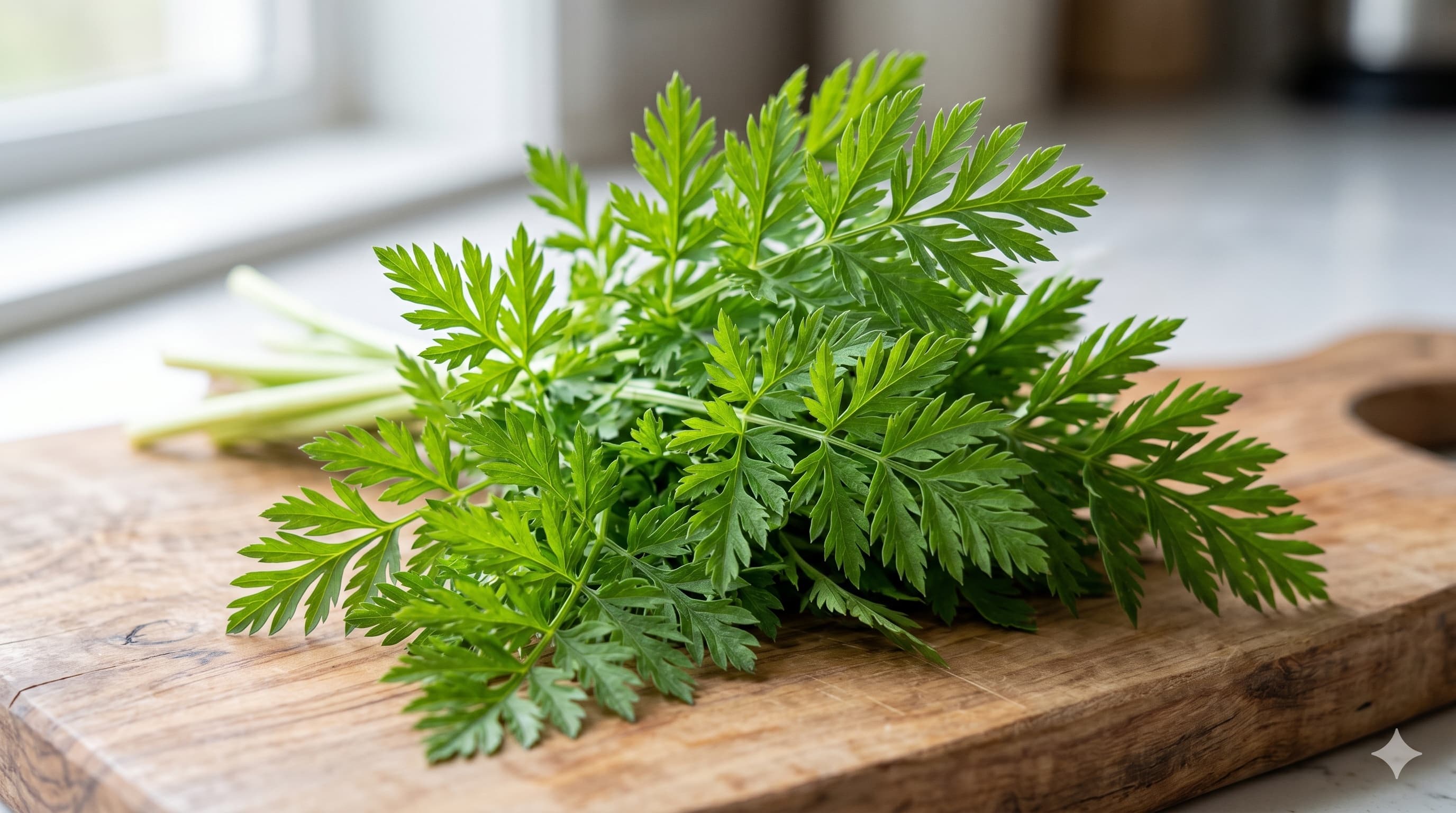
Bangpung Greens (Saposhnikovia)
Saposhnikovia divaricata
Bangpung is one of the most important herbs in traditional Korean and Chinese medicine, and its name — meaning prevent wind — immediately tells you its primary purpose. In East Asian medicine, wind is a major cause of illness, responsible for colds, headaches, joint pain, skin conditions, and even strokes. Bangpung is the premier herb for defending the body against wind invasion. While the root is the primary medicinal part, Korean cuisine uniquely celebrates the tender spring leaves as a seasonal delicacy. This practice — medicine and food sharing the same origin — is a cornerstone of Korean food philosophy.
New to Bangpung Greens (Saposhnikovia)?
Is this edible?
Yes — though bangpung is primarily known as a medicinal herb, the tender spring leaves are a well-established Korean green vegetable.
What does it taste like?
Warm, aromatic, and slightly medicinal in the best way — like celery mixed with fennel and a gentle peppery note.
Where to buy
Very rare in the US. Occasionally found at well-stocked Korean groceries or ordered online from Korean specialty food retailers.
How to prepare
Wash gently. For namul: blanch for just 10-15 seconds, shock in cold water, squeeze dry, and dress with soy sauce, sesame oil, and garlic. For ssam: serve raw leaves alongside rice and gochujang.
Pro tip: Bangpung is one of the few Korean namul with a warm nature (most are cool). This makes it especially good as a spring food when the weather is still chilly — it warms the body from within.
Traditional Medicine
Source: Donguibogam (동의보감)
Nature (性)
Warm (溫)Flavor (味)
sweet, pungent
Target Organs (歸經)
bladder, Liver (肝), Spleen (脾)
Benefits
- pain relief
Expels pathogenic wind from the body, relieving joint pain, headaches, and body aches caused by wind-cold invasion
풍을 몰아내고 관절 통증과 두통을 완화한다
Source: 동의보감 [탕액편] 채부
- immunity
Releases the exterior and treats early-stage cold symptoms — used at the onset of wind-cold type common colds
표를 풀어 감기 초기 증상을 치료한다
Source: 동의보감 [탕액편] 채부
Key Compounds
This information is based on traditional Korean medicine texts (Donguibogam) and is for cultural reference only. It does not constitute medical advice.
Seasonal Availability
Tender young leaves harvested in early spring (March-April). This is primarily a medicinal herb whose roots are the main medicinal part, but the young spring leaves are eaten as a delicacy namul.
Complementary Ingredients (궁합 재료)
Processing Methods (법제)
The tender spring leaves are mild enough to eat raw in salads or with just a brief blanch. Over-cooking destroys the aromatic oils.
Consumption Tips by Health Goal
Cold prevention
Eat bangpung-namul at the very first sign of a cold. Dress with ginger and scallion for enhanced warming effect.
Joint health
Consume regularly during the windy spring season to prevent wind-related joint pain and stiffness.
Culinary Profile
Flavor
Uniquely aromatic with a warm, slightly medicinal herbaceousness balanced by sweetness — reminiscent of a cross between celery and fennel with a gentle peppery finish
Texture
Tender, feathery leaves on thin stems; soft and slightly succulent when fresh, becoming silky when lightly blanched
Common Uses
Western Substitutes