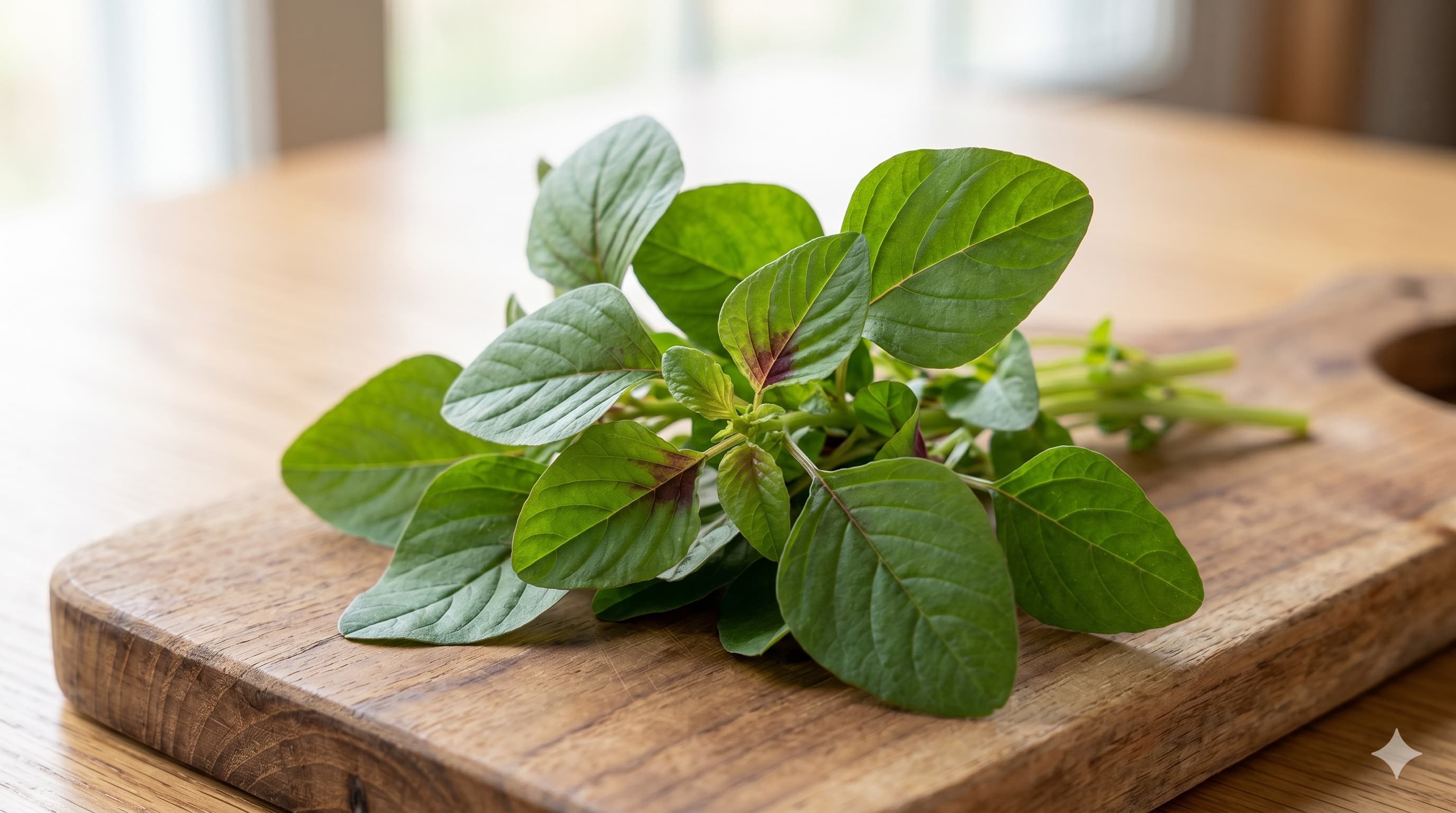
Amaranth Greens (Bireum)
Amaranthus mangostanus
Bireum — amaranth greens — has been a summer staple in Korean kitchens for centuries. The Donguibogam specifically notes its value as a cooling food during the hot months, and Korean grandmothers have long served bireum-namul as a way to beat the summer heat. Amaranth grows prolifically in warm weather and was historically one of the most accessible vegetables for common people, thriving even in poor soil and requiring minimal care. The red-stemmed variety was particularly valued in folk medicine. Interestingly, while Western health food trends have recently discovered amaranth as a superfood grain, Koreans have quietly been eating the leaves as a humble summer side dish for generations.
New to Amaranth Greens (Bireum)?
Is this edible?
Yes! If you've ever had callaloo in Caribbean cuisine, you've eaten a close relative. Amaranth greens are eaten worldwide.
What does it taste like?
Very mild, like a softer, gentler version of spinach. Almost no bitterness. One of the most beginner-friendly Korean greens.
Where to buy
Check Asian grocery stores or Caribbean markets (where it's sold as callaloo). Some farmers' markets carry amaranth greens in summer. You can also easily grow it.
How to prepare
Wash well, trim tough stem ends. Blanch the whole stems and leaves for just 20-30 seconds. Shock in cold water, squeeze dry, cut into bite-sized pieces, and season.
Pro tip: Bireum is one of the rare Korean namul that works beautifully with doenjang dressing rather than the usual soy sauce. The earthy doenjang complements the mild greens perfectly.
Traditional Medicine
Source: Donguibogam (동의보감)
Nature (性)
Cool (涼)Flavor (味)
sweet
Target Organs (歸經)
large intestine, small intestine
Benefits
- digestion
Benefits the large and small intestines, moistens the bowels and promotes smooth digestion
대소장을 이롭게 하고 장을 윤택하게 한다
Source: 동의보감 [탕액편] 채부
- detox
Clears heat-toxins and relieves summer heat — a traditional summer cooling food
열독을 풀어주고 여름철 더위를 식힌다
Source: 동의보감 [탕액편] 채부
Key Compounds
This information is based on traditional Korean medicine texts (Donguibogam) and is for cultural reference only. It does not constitute medical advice.
Seasonal Availability
A quintessential summer green, thriving in hot weather (June-August). Young shoots are most tender. Rarely dried — best enjoyed fresh in season.
Complementary Ingredients (궁합 재료)
Processing Methods (법제)
Brief blanching (20-30 seconds) wilts the tender leaves and stems perfectly. Over-blanching turns them mushy — bireum cooks very fast.
Consumption Tips by Health Goal
Summer heat relief
Blanch bireum and dress with doenjang and sesame oil as a cooling summer banchan.
Intestinal health
Eat bireum-namul regularly during summer months to keep the intestines moistened and prevent constipation caused by heat.
Culinary Profile
Flavor
Very mild, slightly sweet with a gentle, clean green taste — similar to spinach but lighter and less mineral-heavy
Texture
Tender, soft leaves and stems that wilt quickly when cooked; slightly slippery when blanched, similar to malabar spinach
Common Uses
Western Substitutes