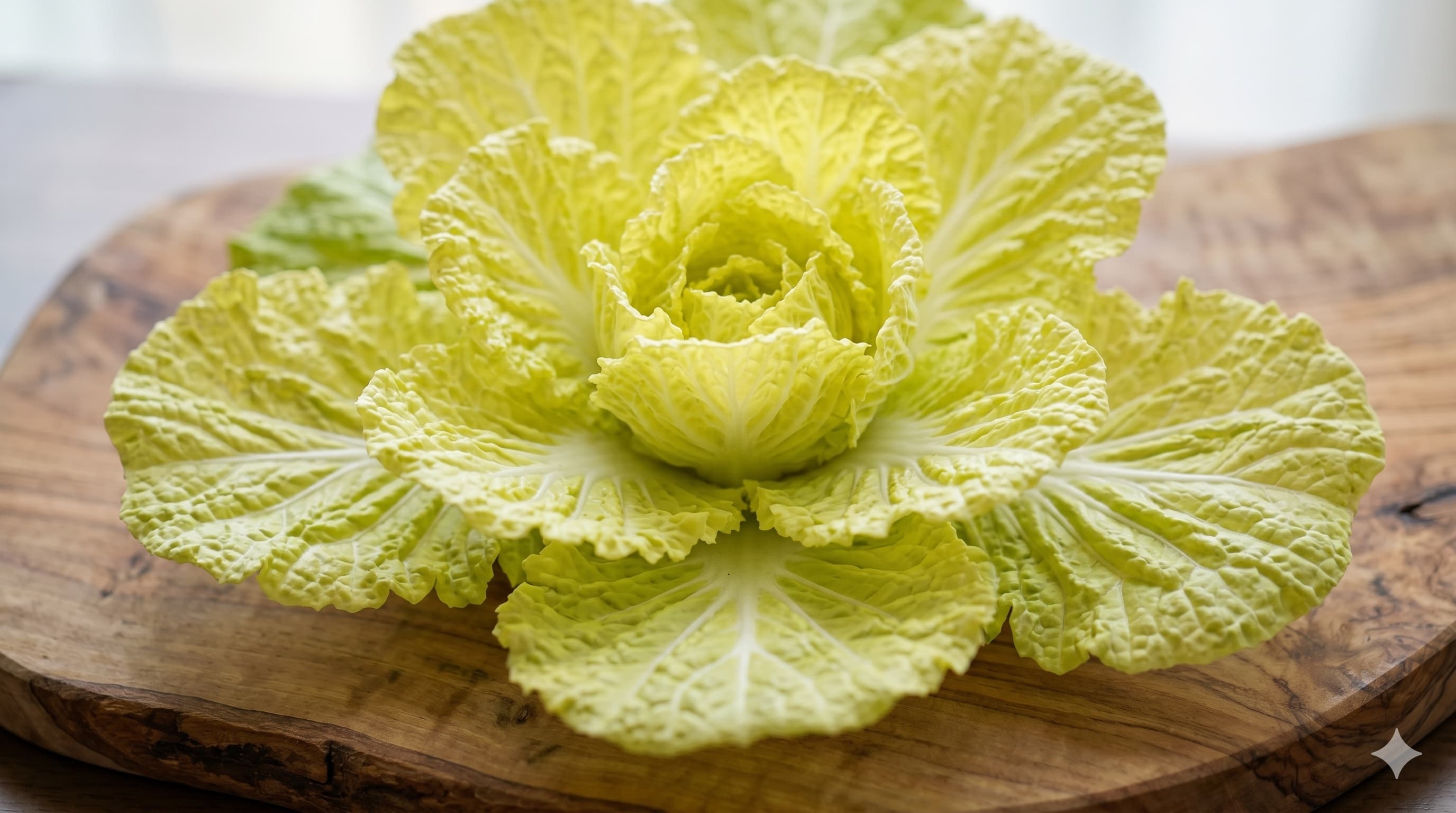
Spring Cabbage (Bomdong)
Brassica rapa var. narinosa
Bomdong is a beloved harbinger of spring in Korea — its name literally means spring cabbage. Unlike regular napa cabbage that forms a tight, upright head, bomdong grows flat against the ground in an open rosette, hugging the earth through winter's cold. This ground-hugging habit is an adaptation: the plant survives winter by staying low, and the repeated freezing and thawing transforms its starches into sugars, producing an extraordinary natural sweetness. When bomdong appears at Korean markets in February and March, it signals that spring is truly arriving. Bomdong-geotjeori — fresh, unfermented kimchi made with these sweet leaves — is one of Korea's most anticipated seasonal foods.
New to Spring Cabbage (Bomdong)?
Is this edible?
Absolutely — it's just a special variety of napa cabbage. If you eat regular cabbage or lettuce, you'll love bomdong. It's sweeter and more tender than any cabbage you've likely tried.
What does it taste like?
Imagine the sweetest, most tender napa cabbage you've ever had, then make it even sweeter. The winter cold works magic on this plant.
Where to buy
Korean grocery stores in late winter and early spring (February-April). Look for flat, open rosettes of cabbage. H Mart and similar stores carry it seasonally.
How to prepare
Separate the leaves, wash, and eat! For geotjeori: tear leaves into pieces, toss with gochugaru, minced garlic, a splash of soy sauce, sesame oil, and a pinch of sugar. Let sit 10 minutes.
Pro tip: Bomdong-geotjeori should be eaten the same day — unlike regular kimchi, this fresh version doesn't improve with age. Make only what you'll eat in one sitting.
Traditional Medicine
Source: Donguibogam (동의보감)
Nature (性)
Neutral (平)Flavor (味)
sweet
Target Organs (歸經)
stomach, large intestine
Benefits
- digestion
Settles the spleen-stomach system and aids digestion — its mild, sweet nature is gentle on sensitive stomachs
비위를 편하게 하고 소화를 돕는다
Source: 동의보감 [탕액편] 채부
- detox
Clears heat from the chest and relieves thirst — a gentle, nourishing coolant for the body
가슴의 번열을 내리고 갈증을 해소한다
Source: 동의보감 [탕액편] 채부
Key Compounds
This information is based on traditional Korean medicine texts (Donguibogam) and is for cultural reference only. It does not constitute medical advice.
Seasonal Availability
Unique seasonal window: planted in late autumn, overwinters in the field, and harvested in late winter to early spring (February-April). The cold exposure develops its signature sweetness. Only available for about 2-3 months per year.
Complementary Ingredients (궁합 재료)
Processing Methods (법제)
Bomdong's thin, flat leaves are perfect for geotjeori — fresh, unfermented kimchi that showcases the sweet, crunchy leaves.
The naturally flat, wide leaves require no preparation — just wash and use as wraps for rice and ssamjang.
Consumption Tips by Health Goal
Digestive comfort
Eat bomdong as fresh geotjeori at the start of a meal. Its gentle nature prepares the stomach for heavier dishes.
Spring nutrition
Consume bomdong raw or minimally cooked during its short spring season to maximize vitamin C intake after the long winter.
Culinary Profile
Flavor
Notably sweeter and more tender than regular napa cabbage — the winter cold converts starches to sugars, giving it an almost fruit-like sweetness with a fresh, clean crunch
Texture
Flat, open leaves (unlike napa's tight head) with thin, juicy ribs; delightfully crisp and succulent, almost lettuce-like in tenderness
Common Uses
Western Substitutes